

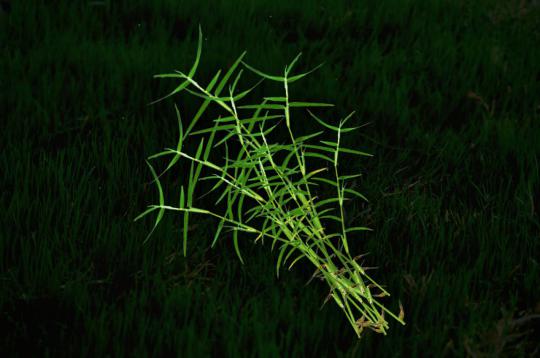
Cynodon dactylon, Poaceae
Introduction
Durva, also known as Doob Grass, is one of the most sacred and powerful medicinal plants in Ayurveda. It is commonly found all over India and is widely used in religious rituals as well as natural medicine.
In Ayurveda, Durva is valued for its cooling, healing, and blood-purifying properties. It is especially beneficial in bleeding disorders, urinary problems, skin diseases, and digestive issues.
Durva is one of the most sacred and widely used medicinal grasses in Ayurveda, traditionally valued for supporting wound healing, immunity, blood purification, urinary wellness, and overall body balance. Scientifically known as Cynodon dactylon, Durva is commonly called Bermuda Grass and holds both medicinal and spiritual importance in Indian tradition.
In Ayurveda, Durva is highly appreciated for its cooling, soothing, and healing properties. It is traditionally used to help manage bleeding disorders, burning sensation, skin irritation, urinary imbalance, and Pitta-related conditions. The whole plant is considered medicinal and is commonly used in fresh juice, herbal paste, decoction, and external applications.
Durva is traditionally beneficial for:
- Wound healing
- Blood purification
- Bleeding disorders
- Urinary support
- Skin wellness
- Pitta balance
- Cooling and detoxification
Ayurveda also considers Durva a sacred grass often used in religious rituals and offerings, especially in worship associated with Ganesha.
Botanical Description of Durva
🔹 Scientific Classification
- Scientific Name: Cynodon dactylon
- Family: Poaceae (Grass family)
- Common Names: Durva, Doob Grass, Bermuda Grass
- Plant Type: Perennial creeping medicinal grass
General Habit of the Plant
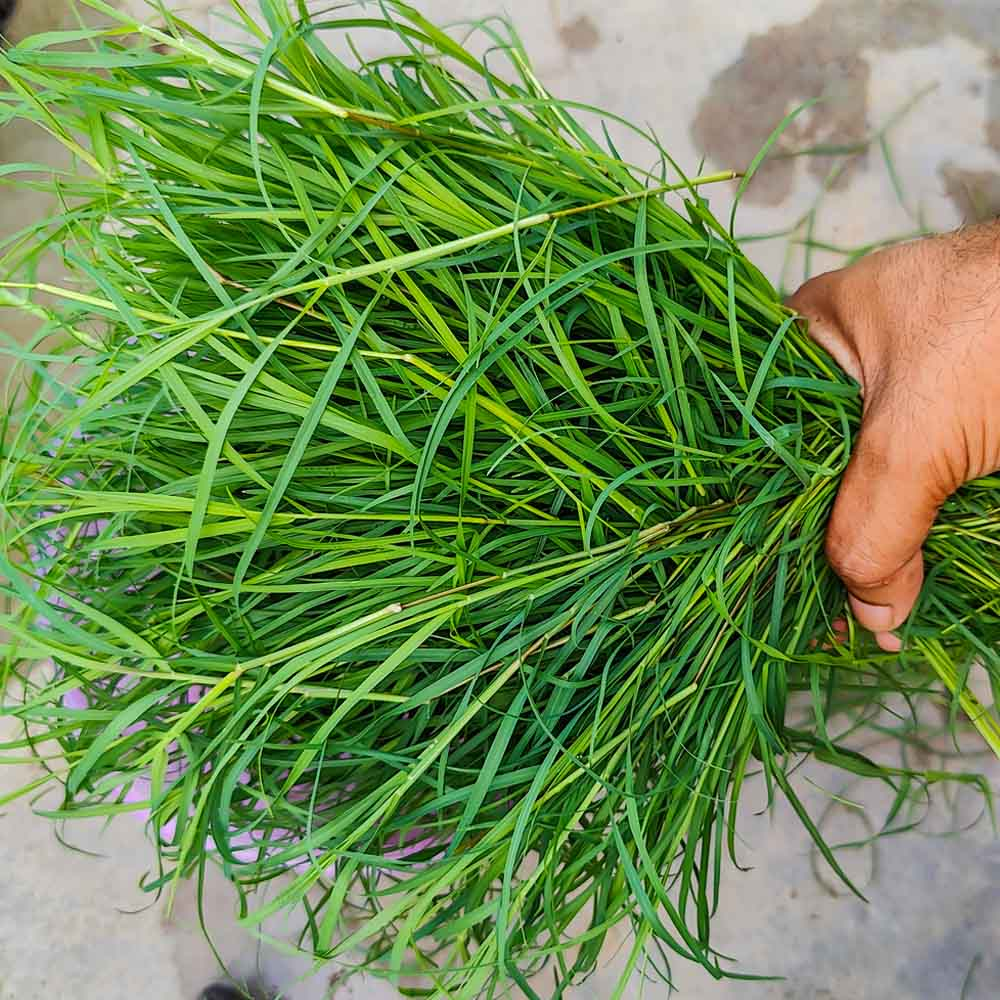
Durva is a fast-growing perennial grass widely found in tropical and subtropical regions. It is known for its:
- Creeping growth habit
- Dense green mat formation
- Strong spreading ability
- Medicinal and sacred importance in Ayurveda
The plant spreads rapidly across soil surfaces through runners and underground stems.
Root System
- Fibrous root system
- Deep penetrating roots
- Strong underground rhizomes
Root Characteristics:
- Helps prevent soil erosion
- Supports rapid regrowth
- Enables survival in dry conditions
Roots are highly resilient and allow the plant to recover quickly after cutting.
Stem
Durva has two types of stems:
🔸 Creeping Stolons
- Spread horizontally over the ground
- Produce roots at nodes
- Help rapid multiplication
🔸 Underground Rhizomes
- Grow beneath the soil
- Store nutrients
- Support perennial growth
Stem Features:
- Slender and flexible
- Green in color
- Smooth surface
The spreading stem system helps Durva cover large areas quickly.
Leaves of Durva
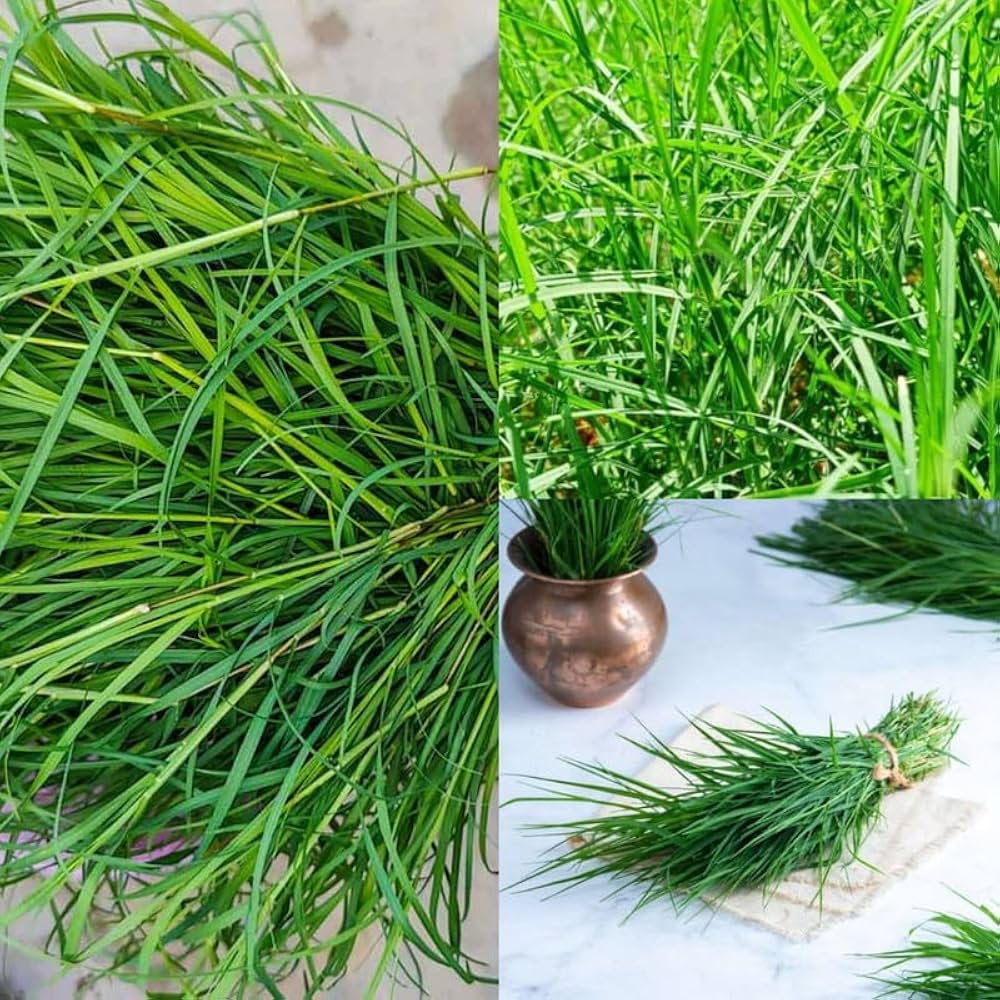
- Narrow linear leaves
- Soft green texture
- Pointed leaf tips
- Alternate arrangement
Leaf Characteristics:
- Small and slender
- Smooth or slightly rough margins
- 2–15 cm long
Leaves remain green throughout most seasons under suitable conditions.
Flowers of Durva
- Small greenish or purplish flowers
- Arranged in finger-like spikes
Flower Structure:
- Usually 3–7 slender spikes arise from one point
- Flower clusters resemble a star-shaped arrangement
Flowering Season:
- Mainly during warm and rainy seasons
Flowers are tiny but easily recognizable because of their distinct spike arrangement.
Fruits & Seeds
🔸 Fruits
- Tiny dry grains (caryopsis type)
- Contain a single seed
🔸 Seeds
- Very small and light
- Spread naturally through wind, water, and animals
The plant reproduces both by seeds and vegetative spread.
Habitat & Distribution
Durva naturally grows in:
- India
- Asia
- Africa
- Europe
- Tropical and subtropical regions worldwide
Commonly found in:
- Lawns
- Roadsides
- Agricultural lands
- Open grassy fields
Preferred Growing Conditions
🔹 Climate
- Warm tropical and subtropical climate
- Tolerates heat and drought well
🔹 Soil
- Adaptable to many soil types
- Grows well in fertile, well-drained soil
🔹 Sunlight
- Prefers full sunlight
- Can tolerate partial shade
Extremely hardy and adaptable plant.
Growth & Lifecycle
- Plant Type: Perennial grass
- Growth Habit: Creeping and spreading
- Propagation: Through seeds, stolons, and rhizomes
- Growth Rate: Very fast
Durva can regenerate quickly even after repeated cutting.
Special Botanical Features
- Creeping stolon growth
- Strong underground rhizomes
- Dense green carpet formation
- Highly drought-resistant
- Sacred and medicinal importance
Identification in Nature
Durva can generally be identified by:
- Fine creeping grass structure
- Finger-like flowering spikes
- Dense spreading growth
- Narrow pointed leaves
Its rapid spreading nature makes it one of the easiest grasses to recognize.
Spiritual & Traditional Importance
In Indian tradition, Cynodon dactylon is considered sacred and is commonly used in worship rituals, especially associated with Ganesha. It symbolizes:
- Purity
- Prosperity
- Longevity
- Spiritual protection
Important Botanical Note
Durva is highly resilient and can survive harsh environmental conditions. Because of its medicinal and sacred value, it has been traditionally preserved and cultivated in Ayurvedic and spiritual practices for centuries.
Summary
Durva (Cynodon dactylon) is a sacred medicinal perennial grass known for its creeping stems, fibrous roots, narrow leaves, and finger-like flower spikes. Traditionally valued in Ayurveda for supporting healing, blood purification, urinary wellness, cooling balance, and skin health, Durva remains one of the most important medicinal grasses in traditional Indian healthcare naturally.
Ayurvedic Properties of Durva
Overview in Ayurveda
Cynodon dactylon, commonly known as Durva, is one of Ayurveda’s most sacred and cooling medicinal grasses. It is traditionally valued for supporting blood purification, wound healing, urinary wellness, skin health, detoxification, and Pitta balance.
Ayurveda especially appreciates Durva for its soothing, healing, and bleeding-control properties. It is widely used in conditions involving:
- Excess body heat
- Bleeding disorders
- Burning sensation
- Skin irritation
- Urinary discomfort
- Pitta aggravation
Its cooling and stabilizing nature makes it highly beneficial in maintaining internal balance and tissue healing naturally.
🔹 Rasa (Taste)
Durva possesses:
- Kashaya (Astringent)
- Madhura (Sweet)
Ayurvedic Significance:
These tastes help:
- Control excessive bleeding
- Support tissue healing
- Reduce excess heat
- Nourish body tissues gently
Astringent taste helps stabilize tissues and promote healing.
🔹 Guna (Qualities)
- Laghu (Light)
- Ruksha (Dry)
Ayurvedic Significance:
These qualities help:
- Reduce heaviness and excess moisture
- Support detoxification
- Improve metabolic balance
Light quality helps maintain healthy circulation and digestion.
🔹 Virya (Potency)
- Shita Virya (Cooling Potency)
Benefits:
- Reduces excess heat
- Calms burning sensation
- Helps balance aggravated Pitta
- Soothes inflammatory conditions
Cooling nature makes Durva especially useful in heat-related disorders.
🔹 Vipaka (Post-Digestive Effect)
- Madhura Vipaka (Sweet post-digestive effect)
Benefits:
- Supports tissue nourishment
- Maintains body strength
- Promotes healing and balance
Helps restore tissues after detoxification and healing.
🔹 Dosha Effect
Helps Balance:
- Pitta
- Kapha
Excessive use may aggravate Vata due to its cooling and drying qualities.
Particularly beneficial in:
- Burning sensation
- Bleeding disorders
- Skin irritation
- Urinary discomfort
Durva is considered one of Ayurveda’s best cooling herbs for Pitta balance.
Main Ayurvedic Actions of Durva
🔸 Raktastambhaka
Traditionally supports:
- Control of excessive bleeding
- Stabilization of blood vessels
- Reduction of Pitta-related bleeding disorders
Commonly used in nosebleeds and minor bleeding conditions.
🔸 Vranaropana
Supports:
- Wound healing
- Tissue repair
- Recovery of damaged skin
🔸 Dahahara
Helps reduce:
- Burning sensation
- Internal heat
- Pitta-related irritation
🔸 Mutrala
Traditionally supports:
- Healthy urination
- Urinary tract cleansing
- Reduction of urinary burning sensation
🔸 Raktashodhaka
Traditionally valued for:
- Blood purification
- Supporting healthy skin and tissues
Effect on Agni (Digestive Fire)
Durva gently supports:
- Balanced digestion
- Reduction of heat-related digestive irritation
- Maintenance of healthy metabolism
Useful when excess Pitta disturbs digestion.
Role in Detoxification
Traditionally used to:
- Purify blood
- Remove excess heat and toxins
- Support natural cleansing pathways
Frequently included in cooling and detox-supportive Ayurvedic therapies.
Role in Skin Wellness
Durva is especially valued for:
- Reducing skin irritation
- Supporting wound healing
- Maintaining healthy skin naturally
Commonly applied externally in herbal pastes and fresh juice preparations.
Effect on Pitta & Kapha
🔹 For Pitta
Helps:
- Reduce heat and inflammation
- Calm burning sensation
- Support cooling balance
🔹 For Kapha
Supports:
- Reduction of excess moisture
- Cleansing and lightness
Balanced use helps maintain internal harmony.
Effect on Dhatus (Body Tissues)
Traditionally supports:
- Rakta Dhatu (blood tissue)
- Twak Dhatu (skin tissue)
- Rasa Dhatu (nutritive fluids)
Helps maintain nourishment and healing.
Effect on Srotas (Body Channels)
Supports:
- Raktavaha Srotas (blood channels)
- Mutravaha Srotas (urinary channels)
Helps maintain proper circulation and elimination.
Traditional Ayurvedic Uses
Durva is traditionally used for:
- Bleeding disorders
- Burning urination
- Wounds and cuts
- Skin irritation
- Blood purification
- Excess body heat
Ayurvedic Precautions
Excessive use may:
- Increase coldness and dryness
- Aggravate Vata in sensitive individuals
Use cautiously in:
- Cold digestive disorders
- Excess Vata constitutions
- Very weak digestion
Balanced use under Ayurvedic guidance is preferred.
Traditional Ayurvedic Preparations
Durva may be used in:
- Fresh juice (Swarasa)
- Herbal decoctions
- Cooling formulations
- External herbal pastes
Summary
Cynodon dactylon is a sacred and cooling Ayurvedic herb traditionally valued for supporting blood purification, wound healing, urinary wellness, skin health, detoxification, and Pitta balance. Its soothing, healing, and stabilizing properties make it especially beneficial in conditions involving bleeding, burning sensation, skin irritation, and excess body heat.
When used properly in Ayurvedic care, Durva may help maintain healthy skin, proper healing, balanced urinary function, internal cooling, purified blood, and overall wellness naturally.
Health Benefits of Durva
1. Controls Bleeding
Durva is well-known for stopping bleeding. It is useful in:
- Nosebleeds
- Piles bleeding
- Heavy menstrual bleeding
- Wounds and cuts
Fresh Durva juice helps in clot formation and healing.
2. Improves Digestive Health
Durva helps in:
- Treating acidity
- Reducing stomach heat
- Improving appetite
- Relieving indigestion
It cools the digestive system naturally.
3. Supports Urinary Health
Durva is beneficial in:
- Burning urination
- Urinary infections
- Kidney heat
- Frequent urination
It works as a natural diuretic.
4. Purifies Blood
Durva helps remove toxins from the blood and improves skin health.
Useful in:
- Acne
- Pimples
- Rashes
- Allergies
5. Heals Wounds and Skin Problems
Durva paste helps in:
- Faster wound healing
- Reducing swelling
- Treating eczema
- Relieving itching
6. Controls Blood Sugar
Some traditional uses suggest that Durva helps in managing blood sugar levels when used regularly in small amounts.
7. Strengthens Immunity
Durva improves natural immunity and helps protect the body from infections.
8. Reduces Body Heat
Due to its cooling nature, Durva is excellent for:
- Heat stroke
- Excess sweating
- Burning sensation
- Summer weakness
Uses of Durva in Ayurveda
1. Fresh Juice (Swarasa)
Most powerful form of Durva.
Used for:
- Bleeding disorders
- Urinary problems
- Acidity
2. Powder (Churna)
Made from dried grass.
Used for:
- Digestion
- Immunity
- Detoxification
3. Paste (Lepa)
Applied externally.
Used for:
- Wounds
- Burns
- Skin diseases
4. Decoction (Kadha)
Prepared by boiling Durva.
Used for:
- Fever
- Weak digestion
- Urinary disorders
Vernacular names
Bengli : Durva
English : Creeping Cynodon, Conch Grass
Gujarati : Khadodhro, Lilidhro, Dhro
Hindi : Doob
Kannada : Garike Hullu
Malayalam : Koruka Pullu
Marati : Doorva, Hariyalee, Harlee
Punjabi : Dubada
Tamil : Aruvam Pullu
Telugu : Garika, Pacchgaddi
Urdu : Doob Ghas, Doob
Conclusion
Cynodon dactylon, traditionally known as Durva, is one of Ayurveda’s most sacred and versatile medicinal grasses valued for supporting healing, blood purification, urinary wellness, skin health, detoxification, and overall body balance. Its cooling, soothing, and stabilizing properties make it especially beneficial in conditions involving Pitta aggravation, such as burning sensation, bleeding disorders, skin irritation, inflammation, and excess body heat.
For centuries, Ayurveda has used Durva in both internal and external applications to promote wound healing, maintain healthy blood circulation, support urinary comfort, and calm inflammatory imbalance naturally. Its astringent and sweet qualities help stabilize tissues, control minor bleeding, and nourish the body gently while supporting natural detoxification processes.
Durva is also highly valued for its role in maintaining healthy skin and tissue repair. Traditional Ayurvedic practices often use fresh Durva juice and herbal pastes for cuts, wounds, skin irritation, and localized burning sensation. Its cooling nature helps soothe heat-related discomfort while supporting faster tissue recovery and natural skin balance.
Another important Ayurvedic benefit of Durva is its support for urinary wellness and internal cooling. It is traditionally used to help reduce burning urination, support proper urinary flow, and calm excess internal heat. Its blood-purifying and detox-supportive properties further contribute to overall wellness and metabolic harmony.
Beyond its medicinal importance, Durva also holds deep spiritual significance in Indian tradition. It is considered sacred and is commonly offered in worship rituals associated with Ganesha, symbolizing purity, prosperity, longevity, and divine blessings.
Modern herbal research also supports many traditional uses of Cynodon dactylon by highlighting its antioxidant, anti-inflammatory, antimicrobial, and wound-healing potential. These properties contribute to its continuing relevance in natural wellness and traditional healthcare systems.
When used properly and under Ayurvedic guidance, Durva may help maintain healthy skin, proper healing, purified blood, balanced urinary function, cooling body balance, strengthened immunity, and overall long-term wellness naturally.
