


Introduction
Chakramarda is a well-known medicinal herb in Ayurveda traditionally valued for supporting skin health, detoxification, digestion, and overall body cleansing. Scientifically identified as Senna tora, Chakramarda has been used for centuries in Ayurvedic medicine for managing various skin disorders, itching, fungal conditions, and toxin-related imbalances.
Ayurveda especially values Chakramarda for its cleansing and Kapha-Pitta balancing properties. The seeds, leaves, and roots of the plant are traditionally used in herbal preparations for promoting healthy skin, improving digestion, and supporting natural detoxification processes.
Chakramarda is traditionally beneficial for:
- Skin disorders
- Itching and irritation
- Fungal skin conditions
- Digestive imbalance
- Detoxification support
- Blood purification
- Kapha and Pitta imbalance
Its bitter and cleansing qualities help reduce toxin accumulation (Ama), improve skin clarity, and support healthy metabolism naturally.
Modern studies on Senna tora suggest the presence of anthraquinones, flavonoids, antioxidants, and antimicrobial compounds that support many of its traditional Ayurvedic uses.
Botanical Description
- Scientific Name: Senna tora
- Family: Fabaceae
- Common Names: Chakramarda, Panwar, Sickle Senna
- Plant Type: Annual medicinal herb
🔹 Morphology
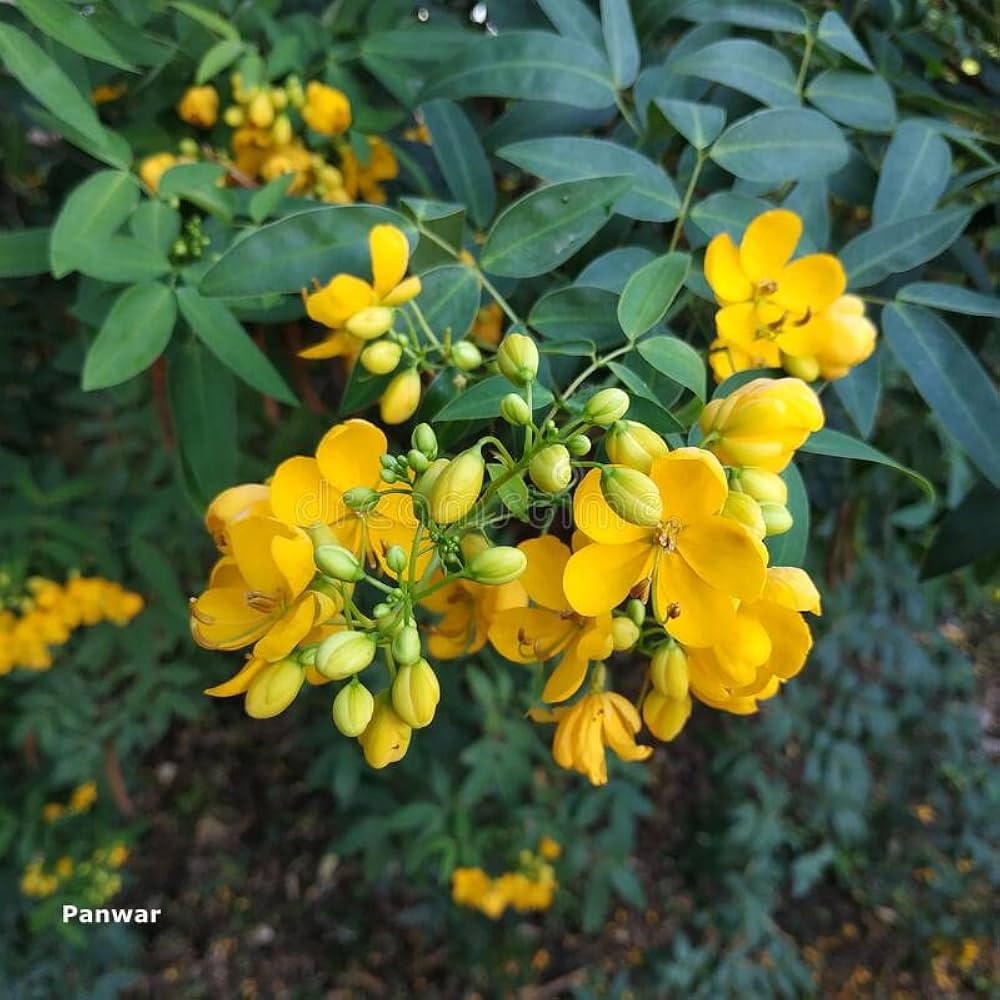
- Small bushy herb
- Green pinnate leaves
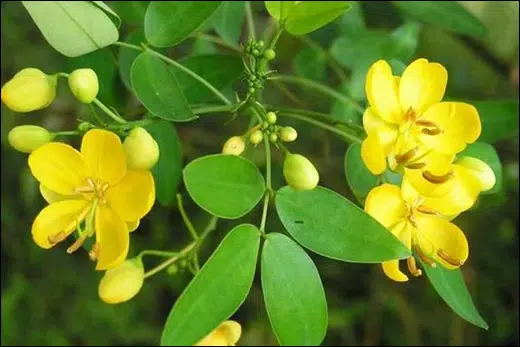
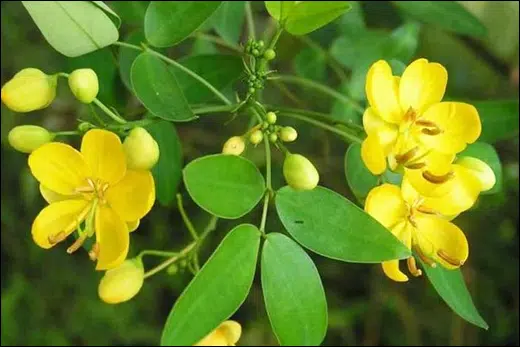
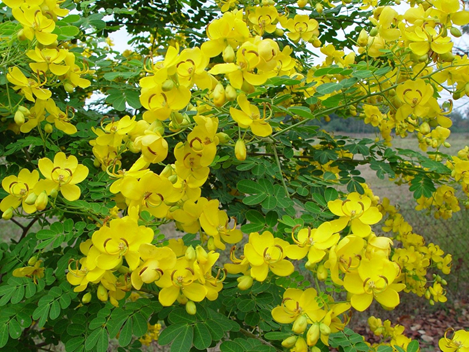
- Yellow flowers
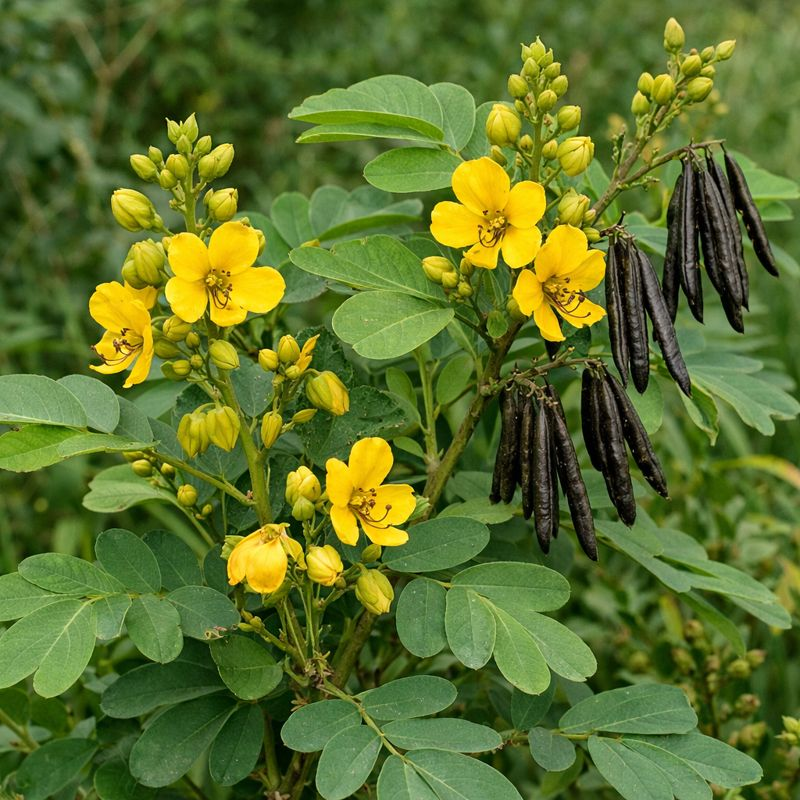
- Curved sickle-shaped seed pods
Seeds and leaves are widely used medicinally.
General Habit
Chakramarda is a small erect herb commonly found in tropical regions.
Key Features:
- Green branching stems
- Compound leaves
- Yellow flowers
- Curved seed pods
Seeds and leaves are commonly used medicinally.
Traditional Health Benefits of Chakramarda
1. Supports Skin Health
Traditionally used for:
- Itching
- Skin irritation
- Fungal skin conditions
- Minor skin eruptions
2. Helps Detoxification
May support:
- Removal of toxins (Ama)
- Cleansing of body channels
- Blood purification
3. Supports Digestive Wellness
Traditionally beneficial in:
- Sluggish digestion
- Kapha-related digestive imbalance
- Poor metabolism
4. Helps Maintain Healthy Skin Appearance
Its cleansing properties may help:
- Improve skin clarity
- Reduce excess oiliness
- Support healthy complexion
Therapeutic Applications
🔹 Skin Disorders
- Itching
- Fungal conditions
- Skin impurities
- Mild inflammatory skin imbalance
🔹 Digestive Disorders
- Weak digestion
- Ama accumulation
- Kapha imbalance
🔹 Detoxification Support
- Blood cleansing
- Internal purification support
Description
Chakramarda is a well known wild herb which is known for its medical attributes in Asian countries. In Ayurveda this plant constitutes as “Dadrugani vati” which is useful in the treatment of various kinds of Skin Diseases such as ringworm infection, skin infection, leucoderma, pain, leprosy and allied skin disorders. In modern science, various ethnomedicinal properties such as Antioxidant, antimicrobial, anti diabetic, anti inflammatory, hypolipidemic, immunostimulatory, anti tumour, hepatoprotective, oxytocic are discovered and many more are in queue.
Main Ayurvedic Actions of Chakramarda
🔸 Kushtaghna
Traditionally supports:
- Skin purification
- Relief from itching
- Management of skin imbalance
Widely used in Ayurvedic skin-supportive formulations.
🔸 Krimighna
Traditionally believed to help combat:
- Harmful microbes
- Skin impurities
- External toxin accumulation
🔸 Deepana
Helps:
- Stimulate digestive fire (Agni)
- Improve appetite and metabolism
🔸 Pachana
Supports digestion of:
- Ama (toxins)
- Metabolic waste accumulation
Important for maintaining digestive balance.
🔸 Raktashodhaka
Traditionally valued for:
- Blood purification
- Supporting healthy skin complexion
Synonyms
- Andagaja
- Gajakhya
- Edagaja
- Cakri
- Punnada
- Tarvata
- Mesahvaya
Other Vernacular Names
- In Hindi – Cakavada, Pavanda
- In English – Sickle senna, Ring-worm plant, coffee pod, foetid cassia
- In Malaysia – Bunga siam
- In Gujarati – Kuvadio
- In Bengali – Cavuka
- In Tamil – Tagharai
- In Telugu – Tantemu
- In French – Gomme de cassia
Taxonomical Classification
- Kingdom – Plantae
- Order – Fabales
- Family – Fabaceae
- Genus – Cassia
- Species – C.tora linn.
- Phylum – Spermatophyta
- Class – Magnoliopsida
Habitat
Chakramarda is an annual shrub that grows all over the tropical areas. It is a common rain weed, especially in waste places, roadsides, forest edges etc. It is generally found in warm places. The plant grows as a weed in the Himalayan regions up to 1450m. It is found in the plains of UP, Bihar, Rajasthan, Orisa, Maharashtra, Bengal, Punjab and Tamil Nadu.
Morphology
Chakramarda is a short, erect, smooth, semi woody, annual herb, 1-2 metres tall. Leaves are 6.0- 12.5 cm long, leaves in pairs of 3, membranous, ovate, subordinate glands on the last two pairs, showing sleepy movements at night. Flowers are bright yellow coloured usually in pairs. Pods are thick 4 angled, 15-25 cm long. Seeds are green, rhombohedral in shape.
Chemical Composition
Irimeda has various phytochemicals due to these compounds, it shows a variety of pharmacognostic activities. These are:
| Part of the Plant | Phytonutrients | Properties |
| Leaves | Myricyl alcohol, glycosides, mannitol, flavonoids. Emodin, stigmasterol, friendlen, palmitic, stearic, succinic acid and tartaric acid, Kaempferol etc. | Anti diabetic, Anti microbial, Anthelmintic. Anti inflammatory, Anti proliferative. |
| Roots | Anthraquinone, Emodin, beta-sitosterol, choline, Rudrofusrain, chrysophanic acid. | Anti tumour, anti oxidant. |
| Seeds | Emodin, subrofusarin, chryophanic acid, rubro-fusarin, quercetn, phenolic glycoside, gentiobioside, tri glucoside and torachrysone etc. | Hypolipidemic, Antiulcer, hepatoprotective, Anti mutagenic, oxytocic, Anti diabetic. |
Classical Categorisation
Chakramarda is the one of the most important plants vividly described in the Ayurvedas in almost every nighantu due to its medicinal properties. These classical contexts are following:
- Bhavaprakash nighantu / Hareetakyadi varga
- Raj nighantu / Satahvadi varga
- Kaiyadeva nighantu / Aushadi varga
- Dhanvantari nighantu / Karaveeradi varga
- Charaka / Shaka varga
Ancient Verse
Shloka – 1
चक्रमर्दः प्रपुन्नाटो दद्रुघ्नो मेषलोचनः |
पद्माटः स्यादेडगजश्चक्री पुन्नाट इत्यपि ||
चक्रमर्दो लघुः स्वादू रूक्षः पित्तानिलापहः |
हृद्यो हिमः कफश्वासकुष्ठदद्रुकृमीन्हरेत् ||
हन्त्युष्णं तत्फलं कुष्ठकण्डूदद्रुविषानिलान् |
गुल्मकासक्रिमिश्वासनाशनं कटुकं स्मृतम् ||
Reference – Bhavaprakash nighantu / haritakyadi varga / shloka 210-212
Interpretation of Shloka – Firstly, this shloka explains the synonyms of chakramarda such as Punnata, Dadrughna, Mesahvaya, Edagaja, Cakri, and Punnada. This shlokas also describes the various properties such as light to digest (laghu), sweet (svadu), dry (rooksha), balances fire and air elements of the body (pittanilahara), act as cardiac tonic (hrudya hitkari), decreases kapha. It is used for the treatment of asthma and chronic respiratory disorders (shwasa), skin diseases (Kushta), worm infection (krimi), ringworm infection (dadru).
Shloka – 2
चक्रमर्दः कटुस्तीव्रो मेदोवातकफापहः |
व्रणकण्डूतिकुष्ठार्तिदद्रुपामादिदोषनुत् ||२००||
Reference – Raj nighantu / Satahvadi varga/ shloka 200
Interpretation of Shloka – In this shloka various medicinal properties of chakramada are explained as it helps to treat skin infections, leprosy, ulcers and pain. It also helps in wound healing.
Ayurvedic Properties
- Rasa (Taste) – Katu (pungent)
- Guna (Properties) – Laghu (light to digest) and Rooksha (dry)
- Vipaka – Katu (pungent after digestion)
- Veerya (Potency) – Ushna (hot)
Chakramarda is widely used to treat vitiated tridoshas.
Effect on Kapha & Pitta
🔹 For Kapha
Helps:
- Reduce heaviness
- Improve metabolism
- Dry excess moisture and oiliness
🔹 For Pitta
Supports:
- Cleansing and purification
- Reduction of inflammatory skin imbalance
Balanced use helps maintain healthy skin and digestion.
Effect on Dhatus (Body Tissues)
Traditionally supports:
- Rakta Dhatu (blood tissue)
- Twak Dhatu (skin tissue)
Helps maintain healthy skin nourishment and purification.
Effect on Srotas (Body Channels)
Supports:
- Raktavaha Srotas (blood channels)
- Annavaha Srotas (digestive channels)
Helps improve circulation and detoxification.
Traditional Ayurvedic Uses
Chakramarda is traditionally used for:
- Itching
- Fungal skin conditions
- Skin impurities
- Sluggish digestion
- Blood purification
- Detoxification support
Ayurvedic Precautions
Excessive use may:
- Increase dryness
- Aggravate Vata in sensitive individuals
Use cautiously in:
- Excess Vata constitutions
- Severe weakness
- Pregnancy without guidance
Balanced and guided use is preferred.
Traditional Ayurvedic Preparations
Chakramarda may be used in:
- Herbal powders
- Skin-supportive oils and pastes
- Detox formulations
- Herbal decoctions
Summary
Senna tora is a cleansing and detox-supportive Ayurvedic herb traditionally valued for maintaining healthy skin, balanced digestion, blood purification, and proper metabolic function. Its bitter, warming, and Kapha-reducing properties make it especially useful in skin disorders, itching, Ama accumulation, and sluggish digestion.
When used properly in Ayurvedic care, Chakramarda may help support clear skin, improved digestion, natural detoxification, balanced metabolism, and overall wellness naturally.
Role in Detoxification
Traditionally used to:
- Cleanse body channels
- Support blood purification
- Reduce Ama accumulation
Commonly included in detox-supportive Ayurvedic therapies.
Dosage
- Seed Powder : 1-3 gm
- Leaf Juice : 5-10 ml
Ayurvedic Products
There are various classical formulations prepared from chakramarda such as:
- Dadrugani Vati
- Edagajadi Lepa
- Chakramarda Tailam
Ayurvedic Formulations
Chakramarda may be used in:
- Herbal powders
- Skin-supportive formulations
- Detox therapies
- Herbal decoctions
Traditional Usage
🔹 Herbal Paste
Traditionally applied externally for skin support.
🔹 Decoction
Traditionally consumed for digestion and detoxification support.
Dosage Guidelines
| Form | Dosage |
|---|---|
| Powder | 2–5 grams |
| Decoction | 20–40 ml |
Use according to Ayurvedic guidance.
Side Effects & Precautions
Excessive use may:
- Cause dryness
- Increase body heat in sensitive individuals
Use cautiously in:
- Excess Vata conditions
- Pregnancy without guidance
Proper guidance is recommended for therapeutic use.
Modern Research
Studies on Senna tora suggest:
- Antimicrobial properties
- Antioxidant activity
- Anti-inflammatory potential
- Skin-supportive effects
Habitat & Distribution
Chakramarda naturally grows in:
- India
- Tropical Asia
- Africa
- Warm subtropical regions
Commonly found in open fields and roadsides.
Conclusion
Senna tora, traditionally known as Chakramarda, is one of Ayurveda’s valuable herbs for supporting skin purification, detoxification, digestive balance, and overall body wellness. Its bitter, cleansing, and warming nature makes it especially beneficial in conditions associated with Kapha and Pitta imbalance, including itching, skin irritation, fungal discomfort, sluggish digestion, and toxin accumulation (Ama).
For centuries, Ayurveda has utilized Chakramarda in herbal powders, decoctions, and external applications to help maintain healthy skin, improve metabolism, purify blood, and support the body’s natural cleansing processes. The herb is particularly appreciated for its ability to promote internal purification while also helping maintain clearer and healthier skin naturally.
Its digestive-supportive properties help stimulate Agni (digestive fire), reduce heaviness, and improve metabolic balance, while its traditional antimicrobial and skin-supportive actions make it useful in various external applications for skin wellness. Ayurveda also considers Chakramarda beneficial for maintaining proper circulation of body channels and reducing toxin-related imbalance.
Modern herbal research further supports many of its traditional uses by highlighting its antioxidant, antimicrobial, anti-inflammatory, and detox-supportive potential. Because of these qualities, Chakramarda continues to remain an important herb in Ayurvedic wellness practices and natural healthcare traditions.
When used properly and under appropriate Ayurvedic guidance, Senna tora may help support healthy skin, improved digestion, blood purification, natural detoxification, balanced metabolism, and overall long-term wellness naturally.
