

Aristolochia indica, Aristolochiaceae
Introduction to Isvari
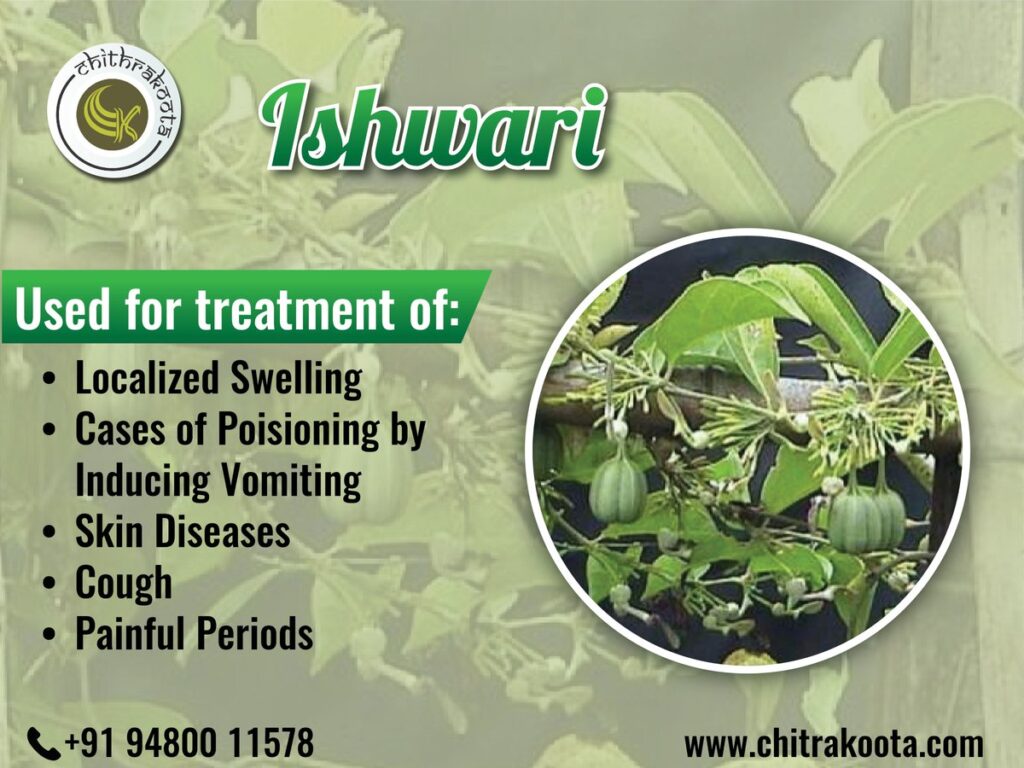
Isvari, also known as Ishvari, is an important medicinal plant in Ayurveda, mainly used for women’s health, digestion, skin diseases, and detoxification therapies. It is especially famous for its traditional use in childbirth-related problems and gynecological disorders.
In classical Ayurvedic texts such as Bhavaprakasha Nighantu, Isvari is mentioned for its cleansing, stimulating, and healing properties.
Because of its special role in female health, Isvari is sometimes called a “Herb of Women’s Wellness” in traditional medicine.
Isvari is a well-known medicinal herb in Ayurveda traditionally valued for its powerful role in supporting skin health, detoxification, wound healing, and overall wellness. Botanically identified as Aristolochia indica, this climbing herb has been used in classical Ayurvedic formulations for centuries.
In Ayurveda, Isvari is especially appreciated for its ability to balance Kapha and Vata doshas while helping remove toxins (Ama) from the body. It is commonly used in traditional remedies for skin disorders, insect bites, wound care, digestive disturbances, and detoxification therapies.
The herb possesses strong cleansing and stimulating properties that help improve circulation, support healthy skin function, and aid natural detox processes. Due to its sharp and heating nature, Isvari has traditionally been employed in external applications and carefully controlled internal formulations.
Modern herbal studies also suggest that Isvari may possess antimicrobial, anti-inflammatory, antioxidant, and detox-supportive properties, supporting some of its traditional uses in herbal medicine.
Botanical Description (Detailed)
Isvari, scientifically known as Aristolochia indica, is a medicinal climbing herb widely used in traditional Ayurvedic medicine for its detoxifying and skin-supportive properties. It belongs to the Aristolochiaceae family and is commonly found in tropical regions of India and Southeast Asia.
🔹 Scientific Classification
- Kingdom: Plantae
- Order: Piperales
- Family: Aristolochiaceae
- Genus: Aristolochia
- Species: A. indica
🔹 Morphology
- Slender climbing vine
- Leaves are smooth and heart-shaped
- Flowers are tubular and greenish-purple
The roots are the primary medicinal part.
General Habit
Isvari is a perennial twining climber or trailing herb with slender stems that spread over shrubs and small trees. It grows naturally in forests, hedges, and humid tropical environments.
🔸 Root System
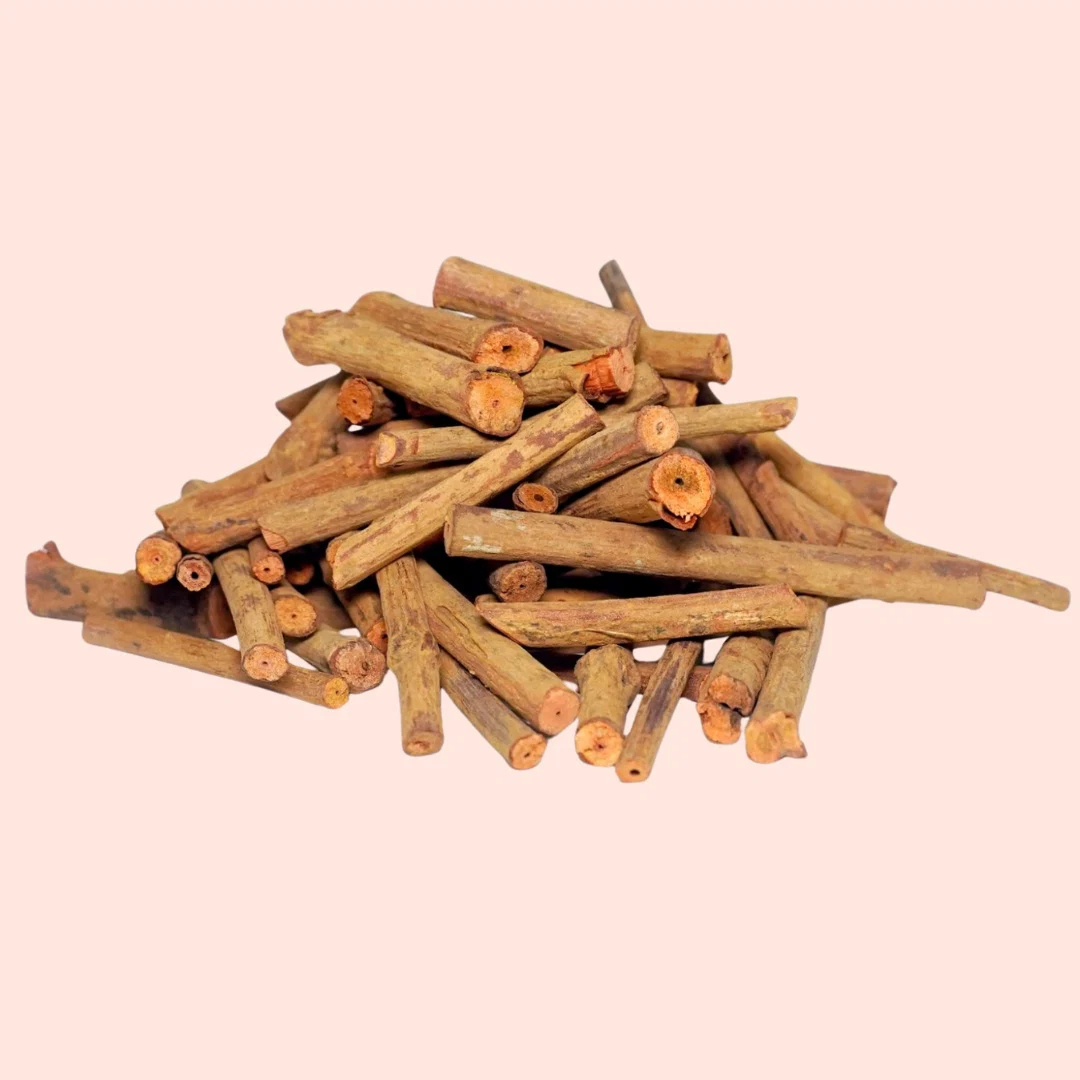
- Slender cylindrical roots
- Brownish outer surface
- Aromatic and medicinally important
The roots are the primary part used in traditional medicine.
🔸 Stem
- Thin, flexible climbing stem
- Green when young and slightly woody with age
- Smooth surface with branching habit
The climbing nature helps the plant spread across nearby vegetation.
🔸 Leaves
- Simple and alternate leaves
- Heart-shaped (cordate) appearance
- Smooth surface with pointed tips
- Dark green color
Leaves contain bioactive compounds used in herbal preparations.
🔸 Flowers
- Unusual tubular or curved flowers
- Greenish-purple or brownish color
- Funnel-shaped appearance
Flowers are distinctive and help identify the plant botanically.
🔸 Fruits
- Capsule-like elongated fruits
- Split open when mature
- Contain numerous flat seeds
Fruits are less commonly used medicinally.
🔸 Seeds
- Small, flat, and triangular seeds
- Light brown in color
Seeds help in natural propagation.
Habitat & Distribution
Isvari is commonly found in:
- India
- Sri Lanka
- Bangladesh
- Southeast Asia
Naturally grows in:
- Forest areas
- Moist tropical regions
- Hilly and semi-shaded locations
Growth Conditions
- Soil: Moist, fertile, well-drained soil
- Water: Moderate moisture required
- Sunlight: Partial shade preferred
- Climate: Warm and humid tropical climate
Thrives best in monsoon-rich environments.
Growth & Lifecycle
- Type: Perennial climber
- Growth Rate: Moderate
- Flowering Season: Rainy and warm seasons
- Propagation: Mainly through seeds and stem growth
Special Botanical Features
- Distinctive curved tubular flowers
- Climbing vine habit
- Aromatic medicinal roots
- Strong traditional medicinal importance
Identification in Nature
Isvari can be identified by:
- Twining climbing stems
- Heart-shaped leaves
- Curved greenish-purple flowers
- Thin woody vine structure
Important Note
The roots and leaves of Aristolochia indica are traditionally used in Ayurveda. However, due to the presence of certain potent compounds, the herb should be used carefully and preferably under professional guidance.
Summary
Isvari (Aristolochia indica) is a tropical medicinal climbing herb known for its heart-shaped leaves, tubular flowers, and detoxifying properties. Its roots and leaves have long been valued in Ayurveda for supporting skin health, detoxification, wound care, and Kapha balance, though modern safety awareness emphasizes cautious and supervised use.
Ayurvedic Properties (Detailed)
Isvari, botanically known as Aristolochia indica, is a potent Ayurvedic herb traditionally valued for its role in detoxification, skin care, wound healing, and Kapha-related disorders. Its sharp, bitter, and heating qualities help remove toxins (Ama), stimulate circulation, and support cleansing processes in the body.
🔹 Rasa (Taste)
- Tikta (Bitter)
- Katu (Pungent)
These tastes help:
- Detoxify the body
- Reduce excess Kapha
- Improve digestion and metabolism
- Support skin purification
🔹 Guna (Qualities)
- Laghu (Light)
- Tikshna (Sharp/Penetrating)
These qualities support:
- Rapid penetration into tissues
- Clearing blocked channels
- Reducing heaviness and stagnation
🔹 Virya (Potency)
- Ushna (Hot/Warming)
Heating potency helps:
- Stimulate circulation
- Enhance detoxification
- Reduce cold and sluggish conditions
🔹 Vipaka (Post-digestive Effect)
- Katu (Pungent Vipaka)
This contributes to:
- Improved metabolism
- Kapha reduction
- Enhanced cleansing action
🔹 Dosha Effect (Doshic Action)
- Pacifies Kapha and Vata
- May aggravate Pitta if overused
Particularly beneficial in:
- Toxin accumulation
- Skin disorders
- Kapha-related stagnation
Functional Ayurvedic Actions
Isvari possesses several important Ayurvedic actions:
🔹 Vishaghna (Detoxifying)
Traditionally used for:
- Toxin management
- Insect and poisonous bites
- Cleansing therapies
🔹 Kushtaghna (Supports Skin Health)
Helps in:
- Skin disorders
- Itching and irritation
- Wound management
🔹 Krimighna (Antimicrobial/Antiparasitic)
Helps combat:
- Harmful microbes
- Parasitic conditions
🔹 Deepana-Pachana
Stimulates:
- Digestive fire (Agni)
- Metabolism
- Ama digestion
🔹 Shothahara (Anti-inflammatory)
Helps reduce:
- Swelling
- Local inflammation
- Tissue irritation
Effect on Agni (Digestive Fire)
Isvari:
- Stimulates weak digestion
- Reduces toxin accumulation
- Enhances metabolic activity
Useful in sluggish Kapha digestion.
Effect on Dhatus (Body Tissues)
Isvari mainly acts on:
- Rakta Dhatu (Blood tissue): Supports purification
- Rasa Dhatu (Plasma): Enhances circulation and cleansing
- Twak (Skin tissue): Helps maintain healthy skin
Strongest influence is on blood and skin tissues.
Role in Skin & Detoxification
Isvari is traditionally used for:
- Skin infections
- Itching and irritation
- Wound cleansing
- Detoxification support
Commonly applied externally in herbal preparations.
Role in Circulation & Cleansing
Its sharp and heating nature helps:
- Improve blood circulation
- Reduce stagnation
- Support elimination of toxins
Effect on Srotas (Body Channels)
Isvari supports:
- Raktavaha Srotas (blood channels)
- Swedavaha Srotas (sweat channels)
Helps maintain proper cleansing and circulation.
Dosha-Specific Benefits
🔹 For Kapha
- Reduces heaviness and mucus accumulation
- Enhances detoxification
🔹 For Vata
- Warming effect helps reduce coldness and stagnation
🔹 For Pitta
- Use cautiously in hot or inflammatory conditions
- Excess may increase heat and irritation
Practical Ayurvedic Insight
- Traditionally preferred for:
- External applications
- Detox therapies
- Skin-supportive formulations
- Often combined with:
- Neem (skin support)
- Turmeric (purification)
- Manjishta (blood cleansing)
Combination enhances detox and skin benefits.
Ayurvedic Precautions
Important Safety Consideration:
Some compounds present in Aristolochia indica are associated with toxicity risks if improperly used.
Avoid:
- Self-medication
- Excessive internal use
- Long-term unsupervised use
- Use during pregnancy
Internal use should only occur under qualified Ayurvedic supervision.
Summary
Isvari (Aristolochia indica) is a sharp, bitter, and warming Ayurvedic herb with strong detoxifying and cleansing actions. It is traditionally used for supporting skin health, wound care, circulation, and toxin removal, primarily by balancing Kapha and Vata doshas.
Due to its potency and safety considerations, Isvari should be used carefully and preferably under professional guidance, especially for internal applications.
Plant Description
Isvari is a climbing plant with:
- Thin, twining stems
- Heart-shaped leaves
- Purple-brown tubular flowers
- Long roots with medicinal value
It grows mainly in tropical regions of India and Southeast Asia. The roots and stems are mostly used in medicine.
Active Chemical Components
Isvari contains important bioactive compounds such as:
- Aristolochic acids
- Alkaloids
- Glycosides
- Flavonoids
- Essential oils
- Resins
Some compounds are toxic in high dose, so careful use is necessary.
Health Benefits of Isvari
1. Supports Women’s Health
Isvari is traditionally used for gynecological problems.
Benefits:
- Helps in difficult labor
- Regulates menstruation
- Reduces uterine weakness
- Supports post-delivery recovery
(It should be used only under expert supervision.)
2. Improves Digestive System
Isvari strengthens digestion.
- Improves appetite
- Reduces gas and bloating
- Treats indigestion
- Removes intestinal toxins
It improves Agni (digestive fire).
3. Useful in Skin Diseases
Isvari helps in chronic skin disorders.
Benefits:
- Reduces itching
- Treats eczema
- Helps in psoriasis (supportive)
- Purifies blood
It is used in blood-cleansing formulations.
4. Helps in Detoxification
Isvari supports natural detox.
- Removes toxins (Ama)
- Cleans intestines
- Purifies blood
- Improves metabolism
It is used in purification therapies.
5. Reduces Inflammation and Pain
Isvari has anti-inflammatory properties.
- Relieves joint pain
- Reduces swelling
- Helps in arthritis
- Reduces muscular pain
It is useful in Vata disorders.
6. Supports Respiratory Health
Isvari helps in Kapha-related problems.
- Reduces mucus
- Helps in cough
- Supports asthma (supportive)
- Clears chest congestion
7. Antimicrobial Action
Isvari has natural antibacterial and antifungal effects.
- Protects against infections
- Improves immunity
- Supports wound healing
8. Helps in Wound Healing
External application of Isvari paste is used for:
- Cuts and wounds
- Insect bites
- Skin infections
(Under guidance only)
Uses of Isvari in Ayurveda
Isvari is used in traditional formulations such as:
- Uterine tonics
- Detox medicines
- Blood-purifying yogas
- Pain-relief formulations
It is mainly used in specialized treatments.
Forms of Isvari Available
1. Root Powder (Churna)
Most commonly used form.
2. Decoction (Kashaya)
Prepared by boiling roots.
3. Paste (Lepa)
For external use.
4. Classical Formulations
Used in traditional compounds.
Dosage of Isvari
Warning: Isvari is a potent and potentially toxic herb. Never self-medicate.
General Dosage (Under Doctor’s Supervision)
| Form | Quantity |
|---|---|
| Powder | 125–500 mg |
| Decoction | As prescribed |
| Paste (External) | As required |
Dosage varies based on patient condition.
Best Time to Take Isvari
- For women’s disorders → As advised
- For detox → During therapy
- For digestion → After meals (doctor’s advice)
Home Remedies Using Isvari
Isvari is NOT recommended for home remedies due to safety concerns.
Always consult an Ayurvedic physician.
Side Effects of Isvari
Improper or excess use may cause:
- Kidney damage
- Nausea and vomiting
- Abdominal pain
- Weakness
- Toxic reactions
Long-term misuse is dangerous.
Precautions
- Never self-medicate
- Avoid during pregnancy
- Not for children
- Avoid in kidney disease
- Use only under supervision
- Buy from trusted source
Isvari in Modern Research
Modern studies show that Aristolochia species contain aristolochic acids, which may be harmful to kidneys and increase cancer risk if misused.
Therefore, modern Ayurveda emphasizes:
✅ Controlled dosage
✅ Limited duration
✅ Professional supervision
Importance of Isvari in Ayurveda
Isvari plays an important role in:
- Women’s health management
- Detox therapies
- Blood purification
- Chronic disease support
It is a specialized therapeutic herb, not meant for daily consumption.
Vernacular names
Assamese : Jarvande
Bengali : Isheri
English : Indian Birthwort, Serpent Root
Gujarati : Ruhimool, Iswarimool
Hindi : Ishwari
Kannada : Ishwari Beru, Toppalu
Malayalam : Karaleyan
Marati : Sapsan
Oriya : Gopikaron
Tamil : Perumarundu, Ichchuramule
Telugu : Iswari, Nallaiswari
Urdu : Zarawand Hindi
Medicinal Uses
- Insects bite: Isvari leaves paste
applied or rubbed well over the
bitten area. Also 10-20 ml of leaf
juice is given with pepper powder
internally for 6-7 times daily for
insects bite and also in poisonous
bites of snakes. The leaf juice is
the best medicine for all sort of
toxic bites. - Fever: The juice of the whole
plant of Isvari in the dose of 5-10
ml given thrice a day is useful in
fever and diarrhoea etc. - Joint pains: The whole plant
paste of Isvari, mildly heated with
castor oil and applied locally is
beneficial in joint pains. - Bronchial asthma: The root
powder of Isvari is given in dose
of 3 grams with honey in cases
of toxicities, bronchial asthma,
cough and fever. - Anaemia: Administration of 5gms
of Isvari leaves powder along with
water twice daily is beneficial in
anaemia. - Headache: The paste of Isvari
leaves and turmeric is applied on
forehead twice daily is beneficial.
Conclusion
Isvari (Ishvari / Indian Birthwort) is a powerful but sensitive medicinal plant in Ayurveda. It is mainly used for women’s disorders, detoxification, skin problems, and pain relief. When used correctly under expert guidance, it can provide strong healing benefits.
However, due to its toxic nature in high doses, Isvari must always be used carefully and responsibly.
Isvari, scientifically known as Aristolochia indica, is a traditionally important Ayurvedic herb valued for its powerful benefits in supporting skin health, detoxification, wound care, and circulation. Its bitter, pungent, and warming properties help balance Kapha and Vata doshas, making it useful in conditions associated with toxin accumulation, sluggish metabolism, skin irritation, and poor circulation.
For centuries, Isvari has been used in Ayurvedic and folk medicine for cleansing therapies, external skin applications, and supportive care in various traditional remedies. Its sharp and penetrating qualities help stimulate natural detoxification processes and promote healthier skin and tissue function.
However, because the herb contains potent bioactive compounds, it should be used with caution and preferably under the supervision of a qualified Ayurvedic practitioner, especially for internal use. When applied appropriately and responsibly, Isvari can serve as a valuable natural herb for promoting detoxification, skin wellness, and overall balance naturally.
