


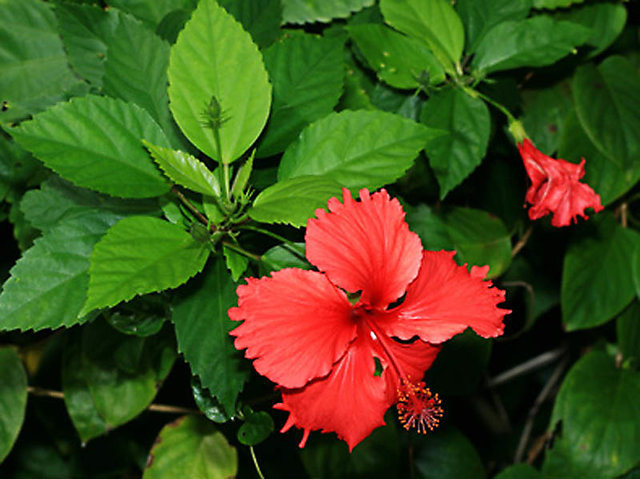
Hibiscus rosa-sinensis, Malvaceae
Introduction to Japa
Japa, commonly known as Hibiscus or Gudhal, is a highly respected medicinal and spiritual plant in Ayurveda. It is widely used for hair care, skin health, menstrual disorders, heart health, and fertility support.
In classical Ayurvedic texts such as Bhavaprakasha Nighantu, Japa is described as a cooling, nourishing, and rejuvenating herb that supports both physical and mental well-being.
Because of its beauty and healing power, Japa is also considered a symbol of health, purity, and vitality.
Japa, commonly known as Hibiscus, is one of the most valued herbs in Ayurveda for promoting healthy hair, glowing skin, and overall beauty care. Scientifically identified as Hibiscus rosa-sinensis, this vibrant flowering plant is widely used in traditional herbal remedies and natural cosmetics.
In Ayurveda, Japa is especially appreciated for its cooling, nourishing, and rejuvenating properties. It is considered highly beneficial for balancing Pitta dosha, which is often associated with hair fall, premature greying, scalp heat, acne, and skin irritation.
From herbal oils and hair masks to skin packs and cooling drinks, Japa has been used for centuries as a natural beauty enhancer. Its flowers and leaves are rich in antioxidants, vitamins, and plant compounds that support hair growth, scalp nourishment, skin hydration, and anti-aging care.
Botanical Description (Detailed)
Japa, scientifically known as Hibiscus rosa-sinensis, is a beautiful flowering shrub widely cultivated for its ornamental, medicinal, and cosmetic value. It belongs to the Malvaceae family and is especially popular in Ayurveda for promoting hair growth, scalp nourishment, and skin care.
🔹 Scientific Classification
- Kingdom: Plantae
- Order: Malvales
- Family: Malvaceae
- Genus: Hibiscus
- Species: H. rosa-sinensis
🔹 Morphology
- Height: 1–4 meters
- Leaves: Glossy, green, serrated edges
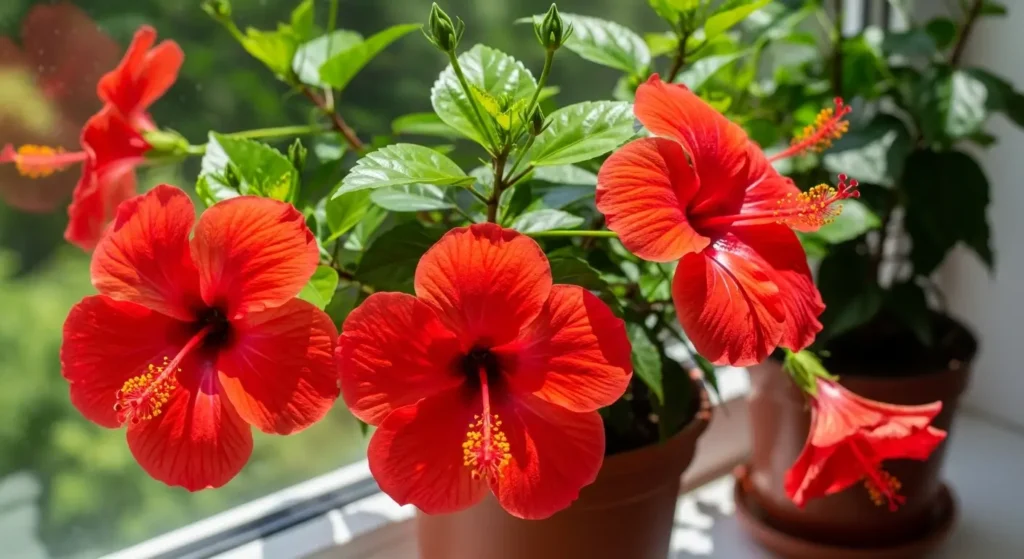
- Flowers: Large, colorful, trumpet-shaped
- Colors: Red, pink, yellow, white, orange
Red hibiscus is most commonly used in Ayurveda.
General Habit
Japa is an evergreen flowering shrub that usually grows between 1–4 meters in height. It has a bushy appearance with numerous branches and produces large attractive flowers throughout the year in tropical climates.
🔸 Root System
- Fibrous root system
- Moderately deep roots
- Helps absorb moisture efficiently
Roots support the plant in warm and humid environments.
🔸 Stem & Bark
- Woody stem with many branches
- Young stems are green and soft
- Older stems become brown and slightly rough
The shrub develops a dense leafy structure.
🔸 Leaves
- Simple, alternate leaves
- Glossy dark green color
- Oval-shaped with serrated margins
- Smooth texture with pointed tips
Leaves are rich in mucilage and beneficial plant compounds.
🔸 Flowers
- Large, colorful, trumpet-shaped flowers
- Usually 5 petals
- Prominent central staminal column
Common Flower Colors:
- Red
- Pink
- Yellow
- White
- Orange
Red hibiscus is most commonly used in Ayurvedic medicine.
🔸 Fruits & Seeds
- Fruit is a small capsule (rare in cultivated varieties)
- Contains small seeds
Many cultivated plants reproduce through stem cuttings instead of seeds.
Habitat & Distribution
Japa is believed to be native to:
- East Asia or tropical Asia
Widely cultivated in:
- India
- Southeast Asia
- Tropical and subtropical regions worldwide
Commonly found in:
- Gardens
- Parks
- Home landscapes
- Herbal gardens
Growth Conditions
- Soil: Well-drained fertile soil
- Water: Moderate watering
- Sunlight: Full to partial sunlight
- Climate: Warm tropical climate
Thrives best in humid and sunny conditions.
Growth & Lifecycle
- Type: Evergreen perennial shrub
- Growth Rate: Moderate to fast
- Flowering: Almost year-round in warm climates
- Lifespan: Long-lived ornamental shrub
Special Botanical Features
- Large ornamental flowers
- Mucilage-rich leaves and petals
- Continuous flowering habit
- High medicinal and cosmetic value
Identification in Nature
Japa can be identified by:
- Glossy green leaves
- Large trumpet-shaped flowers
- Bushy shrub structure
- Prominent central staminal tube
Important Note
The flowers and leaves of Hibiscus rosa-sinensis are the primary medicinal parts used in Ayurveda, especially for hair oils, skin preparations, and cooling remedies.
Summary
Japa (Hibiscus rosa-sinensis) is an evergreen flowering shrub known for its vibrant flowers, glossy leaves, and medicinal importance. Its nutrient-rich flowers and leaves make it one of Ayurveda’s most valued herbs for hair growth, scalp nourishment, skin glow, and natural beauty care.
Plant Description
Japa is an evergreen flowering shrub found widely in India and tropical regions. It has:
- Bright red, pink, yellow, or white flowers
- Soft green leaves
- Woody stem
- Long flowering season
Almost every part of the plant (flowers, leaves, roots) is used in medicine.
Botanical Description (Detailed)
Japa, scientifically known as Hibiscus rosa-sinensis, is a beautiful flowering shrub widely cultivated for its ornamental, medicinal, and cosmetic value. It belongs to the Malvaceae family and is especially popular in Ayurveda for promoting hair growth, scalp nourishment, and skin care.
🔹 Scientific Classification
- Kingdom: Plantae
- Order: Malvales
- Family: Malvaceae
- Genus: Hibiscus
- Species: H. rosa-sinensis
General Habit
Japa is an evergreen flowering shrub that usually grows between 1–4 meters in height. It has a bushy appearance with numerous branches and produces large attractive flowers throughout the year in tropical climates.
🔸 Root System
- Fibrous root system
- Moderately deep roots
- Helps absorb moisture efficiently
Roots support the plant in warm and humid environments.
🔸 Stem & Bark
- Woody stem with many branches
- Young stems are green and soft
- Older stems become brown and slightly rough
The shrub develops a dense leafy structure.
🔸 Leaves
- Simple, alternate leaves
- Glossy dark green color
- Oval-shaped with serrated margins
- Smooth texture with pointed tips
Leaves are rich in mucilage and beneficial plant compounds.
🔸 Flowers
- Large, colorful, trumpet-shaped flowers
- Usually 5 petals
- Prominent central staminal column
Common Flower Colors:
- Red
- Pink
- Yellow
- White
- Orange
Red hibiscus is most commonly used in Ayurvedic medicine.
🔸 Fruits & Seeds
- Fruit is a small capsule (rare in cultivated varieties)
- Contains small seeds
Many cultivated plants reproduce through stem cuttings instead of seeds.
Habitat & Distribution
Japa is believed to be native to:
- East Asia or tropical Asia
Widely cultivated in:
- India
- Southeast Asia
- Tropical and subtropical regions worldwide
Commonly found in:
- Gardens
- Parks
- Home landscapes
- Herbal gardens
Growth Conditions
- Soil: Well-drained fertile soil
- Water: Moderate watering
- Sunlight: Full to partial sunlight
- Climate: Warm tropical climate
Thrives best in humid and sunny conditions.
Growth & Lifecycle
- Type: Evergreen perennial shrub
- Growth Rate: Moderate to fast
- Flowering: Almost year-round in warm climates
- Lifespan: Long-lived ornamental shrub
Special Botanical Features
- Large ornamental flowers
- Mucilage-rich leaves and petals
- Continuous flowering habit
- High medicinal and cosmetic value
Identification in Nature
Japa can be identified by:
- Glossy green leaves
- Large trumpet-shaped flowers
- Bushy shrub structure
- Prominent central staminal tube
Important Note
The flowers and leaves of Hibiscus rosa-sinensis are the primary medicinal parts used in Ayurveda, especially for hair oils, skin preparations, and cooling remedies.
Summary
Japa (Hibiscus rosa-sinensis) is an evergreen flowering shrub known for its vibrant flowers, glossy leaves, and medicinal importance. Its nutrient-rich flowers and leaves make it one of Ayurveda’s most valued herbs for hair growth, scalp nourishment, skin glow, and natural beauty care.
Active Chemical Components
Japa contains many beneficial bioactive compounds such as:
- Flavonoids
- Anthocyanins
- Polyphenols
- Mucilage
- Vitamin C
- Amino acids
- Antioxidants
These compounds give Japa its nourishing and protective effects.
Health Benefits of Japa
1. Best Natural Remedy for Hair Growth
Japa is famous for hair care in Ayurveda.
Benefits:
- Promotes hair growth
- Reduces hair fall
- Prevents premature greying
- Makes hair soft and shiny
- Strengthens roots
Hibiscus flower and leaf paste is widely used in hair oils.
2. Improves Skin Health
Japa acts as a natural skin toner.
- Improves complexion
- Reduces wrinkles
- Moisturizes skin
- Prevents acne
- Heals wounds
It is called a natural Botox plant in herbal cosmetics.
3. Regulates Menstrual Disorders
Japa is very useful for women’s health.
- Regulates irregular periods
- Reduces menstrual pain
- Controls excessive bleeding
- Supports uterine health
It works as a natural hormonal balancer.
4. Supports Heart Health
Japa helps in cardiovascular protection.
- Regulates blood pressure
- Improves circulation
- Reduces cholesterol
- Strengthens heart muscles
Its antioxidants protect heart cells.
5. Enhances Fertility and Reproductive Health
Japa supports reproductive health.
- Improves sperm quality
- Supports ovulation
- Strengthens reproductive organs
- Improves vitality
Used in Vajikarana (aphrodisiac) therapies.
6. Controls Body Heat and Burning Sensation
Due to its cooling nature, Japa helps in:
- Reducing body heat
- Treating burning urination
- Relieving heat-related fatigue
- Managing mouth ulcers
7. Boosts Immunity
Japa strengthens immune defense.
- Protects from infections
- Reduces inflammation
- Improves stamina
- Supports recovery
8. Helps in Weight Management
Japa supports metabolism.
- Improves digestion
- Reduces fat accumulation
- Detoxifies body
- Controls appetite
Uses of Japa in Ayurveda
Japa is used in many Ayurvedic preparations such as:
- Hair oils (Japa Taila)
- Herbal shampoos
- Women health tonics
- Skin creams
- Rasayana formulations
It is also used as a single herb medicine.
Medicinal Parts of Japa
| Part | Uses |
|---|---|
| Flower | Hair, skin, uterus |
| Leaves | Wound healing, hair |
| Root | Menstrual disorders |
| Juice | Cooling tonic |
| Paste | Face & hair pack |
Dosage of Japa
Always consult an Ayurvedic doctor before internal use.
General Dosage
| Form | Quantity |
|---|---|
| Powder | 2–4 g daily |
| Juice | 10–20 ml |
| Decoction | 20–30 ml |
| Oil | External use |
Best Time to Use Japa
- For hair → 2–3 times weekly
- For menstruation → As advised
- For cooling → Morning
- For skin → Night application
Home Remedies Using Japa
For Hair Growth
Grind:
- Japa flowers + Coconut oil
Apply twice a week.
For Glowing Skin
Mix:
- Flower paste + Rose water
Apply as face pack.
For Irregular Periods
Take:
- Flower decoction under guidance.
For Heat Problems
Drink:
- Flower juice with water.
Side Effects of Japa
Excess or improper use may cause:
- Excess cooling
- Low blood pressure
- Digestive weakness
- Kapha imbalance
Avoid overdose.
Precautions
- Avoid during pregnancy (internal use)
- Do not self-medicate long-term
- Use fresh, chemical-free flowers
- Consult doctor for hormonal issues
- Avoid in severe cold/cough
Japa in Modern Research
Modern studies show that Japa has:
- Hair growth–promoting activity
- Anti-aging effects
- Antioxidant properties
- Heart-protective action
- Anti-inflammatory activity
These findings support its traditional use.
Importance of Japa in Daily Life
Regular and proper use of Japa helps in:
- Strong and shiny hair
- Healthy skin
- Balanced hormones
- Better heart health
- Improved vitality
That is why Japa is called “Queen of Hair Herbs” in Ayurveda.
Vernacular names
English : Chinese hibiscus, Chinese rose,
Rose of China, Shoe Flower
Hindi : Jasut, Jasun, Gudhal, Gurhal
Bengali : Joba, Javaphul, Jaba
Gujarati : Jasuva, Jasus
Kannada : Daasavala, Kempu daasavala,
Kempu pundrike
Malayalam : Ayamparathi, Chembarathi
Telugu : Mandaram
Tamil : Sembarattai, Semparuthi
Oriya : Mondaro
Assam : Joba
Punjabi : Jasun
Unani : Gul-e-Gurhal
Medicinal Uses
- Leucorrhoea: 3-5 flowers of japa
paste boiled in 100ml of milk till it
reduced to 50ml added with little
jaggery and 3 grams of yavani
(Trachyspermum ammi) should
be given in leucorrhoea daily
once.
- Insomnia: The petals of the
flowers of japa one part and six
parts of water is mixed and heated
on little flame and reduced to
1/4th part. Then jaggery is added
to it and prepared into syrup. This
is given in the dose of 10 ml for
urinary diseases, Insomnia and
psychiatric ailments. - Hair fall: The juice of japa petals
boiled in coconut oil till the
water content of the mixture
disappears. Application of this
oil on head gives coolness to the
entire body and a very effective
remedy for hair fall. - Dandruff: The leaves are crushed
well and squeezed to extract
the mucilaginous content. This
should be applied on head before
2 hours of head bath. It relieves
dandruff and promotes hair
growth. - Boils: The leaves and young
flower buds paste of japa is used
as a poultice on boils. - Cough: Drinking twice daily
Hibiscus tea (1-2 Flowers boiled
in 50ml of water 5 to 10 min) is
rich in antioxidants, can protect
liver, relieves cough and reduce
fever too.
Conclusion
Japa (Hibiscus) is one of the most versatile medicinal plants in Ayurveda. It plays a major role in hair care, skin nourishment, women’s health, heart protection, and cooling therapy. When used properly under guidance, it provides long-term beauty and health benefits.
From ancient Ayurvedic texts to modern research, Japa continues to shine as a powerful natural healer.
Japa, scientifically known as Hibiscus rosa-sinensis, is one of the most treasured Ayurvedic herbs for promoting healthy hair, radiant skin, and natural beauty care. Its cooling, nourishing, and rejuvenating properties make it especially effective in balancing Pitta and Vata doshas, helping manage problems such as hair fall, premature greying, scalp irritation, dryness, and skin inflammation.
Rich in antioxidants, natural mucilage, and beneficial plant compounds, Japa deeply nourishes the scalp and skin while supporting hydration, softness, and overall vitality. Whether used in herbal oils, hair masks, face packs, or traditional remedies, it offers a gentle and holistic approach to beauty and wellness.
Regular and proper use of Japa can help maintain strong hair roots, healthy scalp conditions, glowing skin, and youthful appearance naturally. With its long history in Ayurveda and modern herbal care, Japa continues to be a trusted natural remedy for enhancing both inner and outer beauty.
