


Bauhinia variegata, Caesalpiniaceae
Introduction to Kanchanara
Kanchanara is an important medicinal tree in Ayurveda widely used for treating thyroid disorders, glandular swellings, tumors, skin diseases, and lymphatic disorders. It is especially known for its ability to reduce abnormal growths and improve metabolism.
In classical Ayurvedic literature such as Bhavaprakasha Nighantu, Kanchanara is described as a powerful herb that helps in removing glandular swellings (Granthi), improving digestion, and detoxifying the body.
Because of its strong cleansing action on lymphatic tissues, Kanchanara is commonly used in the famous Ayurvedic formulation Kanchanar Guggulu, which is prescribed for thyroid imbalance and cysts.
Kanchanara is a highly valued Ayurvedic herb known for its powerful action on glandular swellings, thyroid imbalance, and lymphatic disorders. Botanically identified as Bauhinia variegata, this beautiful flowering tree is widely used in Ayurveda for managing conditions like goiter, lymph node enlargement, cysts, and tumors.
In classical Ayurvedic texts, Kanchanara is considered one of the best herbs for Granthi (glandular swellings) and Apachi (lymphatic disorders). Its ability to reduce abnormal growths, detoxify tissues, and balance Kapha dosha makes it a key ingredient in many formulations—especially Kanchanar Guggulu.
With the rise of thyroid disorders and lifestyle-related hormonal imbalances, Kanchanara offers a natural and holistic approach to restoring glandular health.
Botanical Description (Detailed)
Kanchanara, scientifically known as Bauhinia variegata, is a medium-sized deciduous tree admired for its beautiful orchid-like flowers and significant medicinal value in Ayurveda. It belongs to the Fabaceae (legume) family and is commonly found across tropical and subtropical regions.
🔹 Scientific Classification
- Kingdom: Plantae
- Order: Fabales
- Family: Fabaceae
- Genus: Bauhinia
- Species: B. variegata
General Habit
Kanchanara is a moderately sized tree that typically grows 6–12 meters in height. It has a spreading crown with irregular branches and sheds its leaves seasonally.
🔸 Root System
- Strong taproot system
- Well-developed lateral roots
- Helps in soil stabilization
🔸 Stem & Bark
- Trunk is short with irregular branching
- Bark is grey to brown, smooth when young and slightly rough with age
- Inner bark is fibrous and medicinal
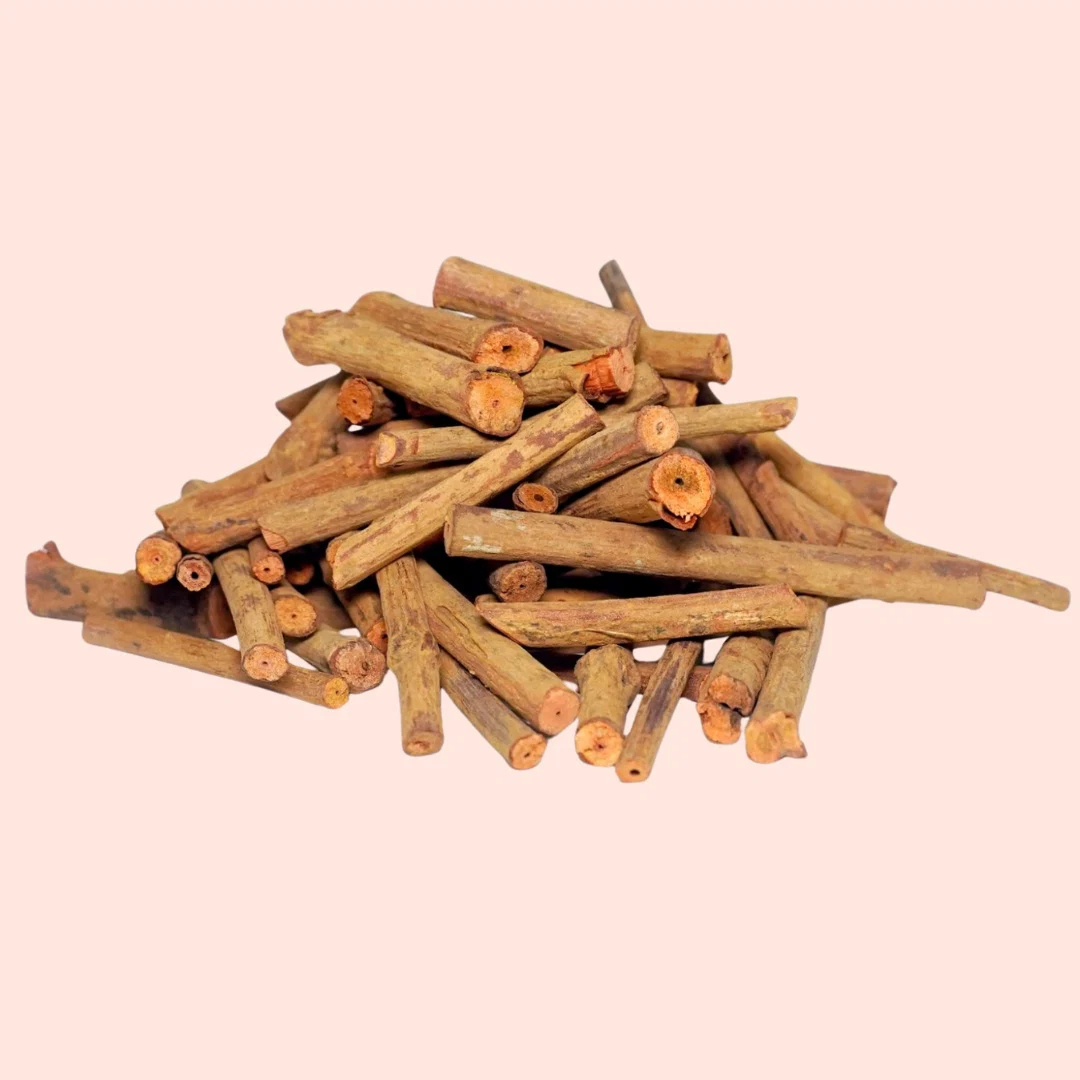
The bark is the primary part used in Ayurveda, especially for glandular disorders.
🔸 Leaves
- Bilobed (camel’s foot shape)—a key identifying feature
- Broad, rounded leaves with a central cleft
- Smooth texture and green color
- Arranged alternately
Leaves resemble a cow’s hoof, making identification easy.
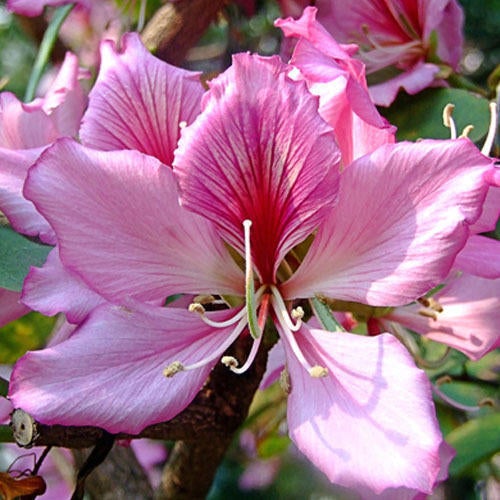
🔸 Flowers
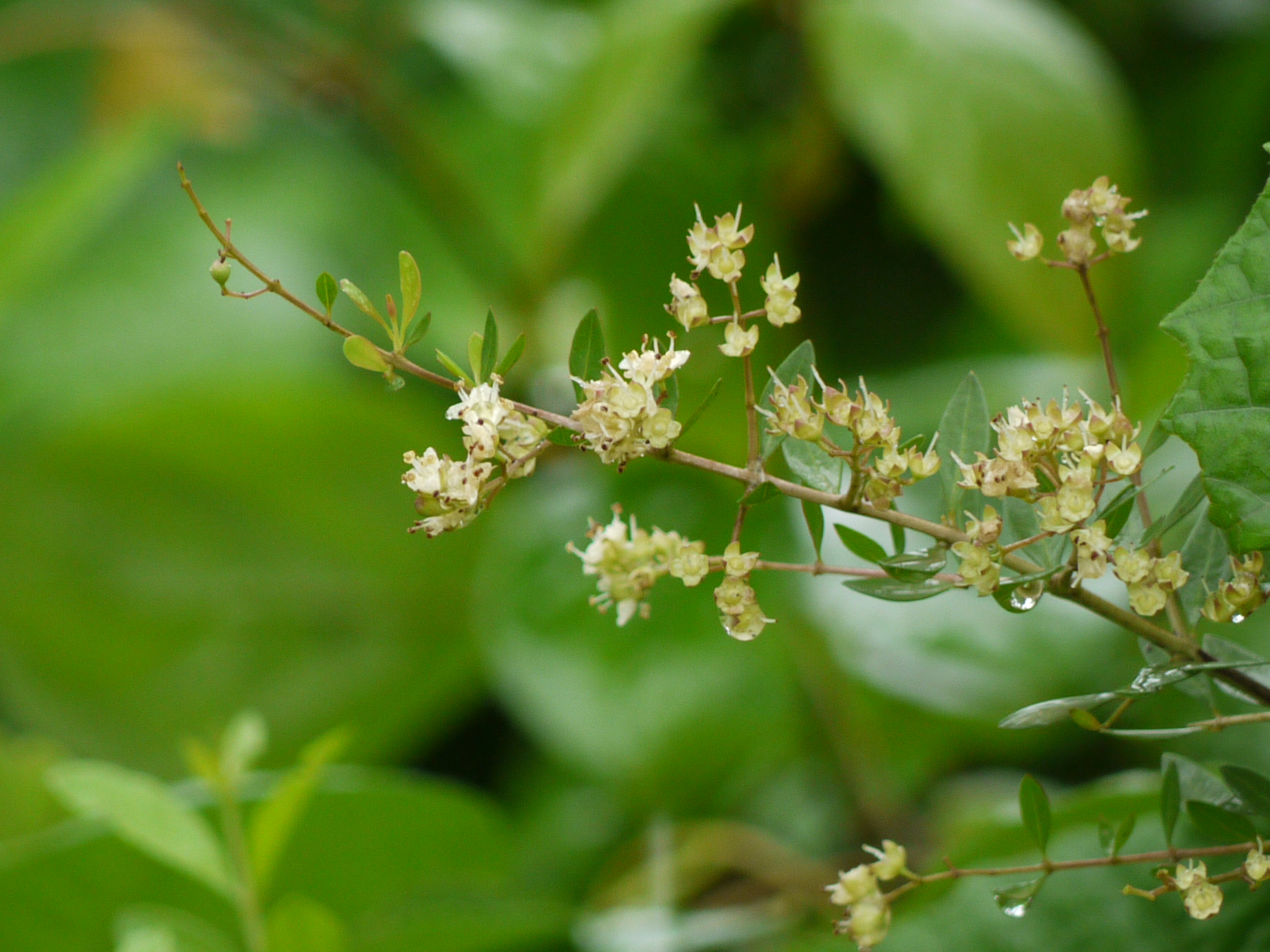
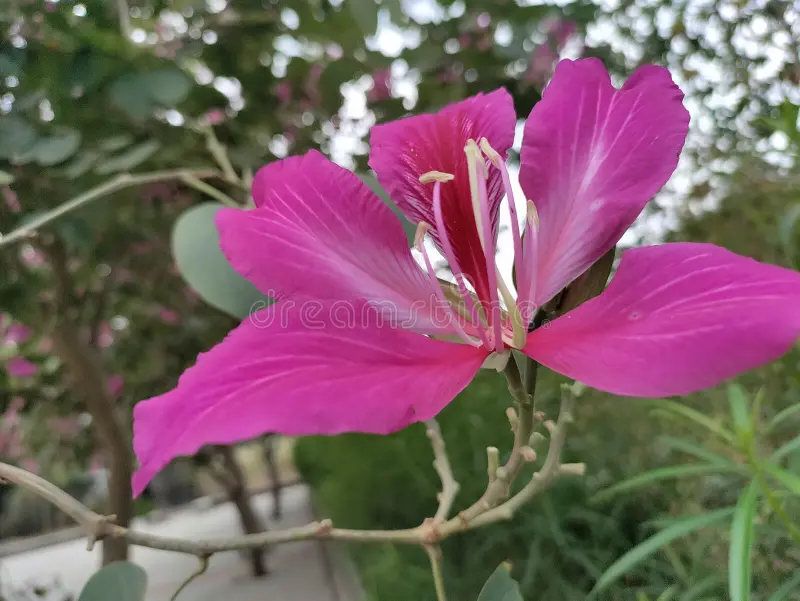
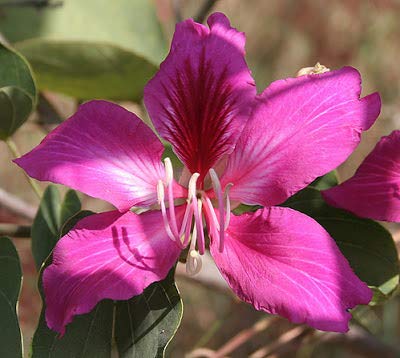
- Large, showy, and orchid-like
- Colors: pink, purple, white, or variegated
- Five petals, with one often more prominent
- Blooming season: late winter to early spring (February–April)
Flowers are highly ornamental and attract pollinators like bees and butterflies.
🔸 Fruits (Pods)
- Flat, elongated pods
- Brown when mature
- Contain multiple seeds
- Split open when dry
🔸 Seeds
- Round to oval-shaped
- Brown and hard
- Enclosed within pods
Habitat & Distribution
Kanchanara is native to:
- India
- Southeast Asia
It is commonly found in:
- Forests
- Roadsides
- Gardens and parks
Growth Conditions
- Soil: Well-drained, fertile soil
- Water: Moderate watering
- Sunlight: Full sunlight
- Climate: Tropical to subtropical
It grows well in warm climates with seasonal rainfall.
Growth & Lifecycle
- Type: Deciduous tree
- Growth Rate: Moderate
- Flowering: Late winter to spring
- Fruiting: Summer
- Lifespan: Long-lived
Special Botanical Features
- Distinctive bilobed leaves
- Orchid-like flowers
- Medicinal bark
- Nitrogen-fixing ability (legume family)
Identification in Nature
Kanchanara can be identified by:
- Camel-foot shaped leaves
- Large colorful flowers
- Flat seed pods
- Medium-sized tree structure
Important Note
While many parts of Bauhinia variegata are useful, the bark is the most commonly used medicinal component in Ayurveda.
Summary
Kanchanara (Bauhinia variegata) is a distinctive and valuable medicinal tree known for its unique bilobed leaves and beautiful flowers. Its bark plays a crucial role in Ayurvedic medicine, especially for treating glandular and thyroid-related disorders, making it both a botanical and therapeutic treasure.
Ayurvedic Properties (Detailed)
Kanchanara, botanically known as Bauhinia variegata, is a highly valued Ayurvedic herb especially effective in managing glandular swellings, thyroid imbalance, lymphatic congestion, and Kapha-related disorders. Its astringent and detoxifying nature makes it one of the best herbs for clearing abnormal growths and restoring balance.
🔹 Rasa (Taste)
- Kashaya (Astringent)
- Tikta (Bitter)
These tastes help:
- Reduce excess tissue growth (Granthi)
- Absorb moisture and secretions
- Detoxify blood and lymph
🔹 Guna (Qualities)
- Laghu (Light)
- Ruksha (Dry)
These qualities support:
- Reduction of heaviness and stagnation
- Drying of excess Kapha
- Improvement in metabolic activity
🔹 Virya (Potency)
- Sheeta (Cooling)
Cooling potency helps:
- Reduce inflammation and swelling
- Calm Pitta-related heat in tissues
- Stabilize glandular function
🔹 Vipaka (Post-digestive Effect)
- Katu (Pungent Vipaka)
This contributes to:
- Detoxification (Ama reduction)
- Clearing of blocked channels (Srotas)
- Improved metabolism
🔹 Dosha Effect (Doshic Action)
- Pacifies Kapha and Pitta
- May slightly increase Vata if overused
Particularly beneficial in:
- Kapha disorders: cysts, tumors, glandular swelling
- Pitta disorders: inflammation and heat
Functional Ayurvedic Actions
Kanchanara is renowned for its specific therapeutic actions:
🔹 Granthighna (Anti-glandular swelling)
Helps reduce:
- Thyroid enlargement (goiter)
- Lymph node swelling
- Cysts and nodules
🔹 Lekhana (Scraping Action)
Breaks down:
- Excess fat
- Abnormal tissue growth
- Kapha accumulation
🔹 Shothahara (Anti-inflammatory)
Reduces swelling and tissue inflammation
🔹 Raktashodhaka (Blood Purifier)
Cleanses blood and improves skin health
🔹 Medohara (Fat-reducing)
Helps manage excess fat and metabolic imbalance
Effect on Agni (Digestive Fire)
- Mildly stimulates Agni
- Helps digest Ama (toxins)
- Improves metabolic efficiency
Especially useful in Kapha-dominant metabolic disorders.
Effect on Dhatus (Body Tissues)
Kanchanara primarily acts on:
- Rakta Dhatu (Blood): Purifies and detoxifies
- Mamsa Dhatu (Muscle/Glandular tissue): Reduces abnormal growth
- Meda Dhatu (Fat tissue): Helps reduce excess fat
Strongest action is on glandular and lymphatic tissues.
Effect on Srotas (Body Channels)
Kanchanara cleanses:
- Raktavaha Srotas (blood channels)
- Rasavaha Srotas (lymphatic channels)
Improves circulation and removes blockages.
Dosha-Specific Benefits
🔹 For Kapha
- Reduces swelling, cysts, and heaviness
- Clears mucus and stagnation
🔹 For Pitta
- Reduces inflammation
- Supports tissue cooling
🔹 For Vata
- Use in moderation
- Combine with nourishing herbs if needed
Practical Ayurvedic Insight
- Best used in glandular and thyroid disorders
- Highly effective when combined with:
- Guggulu
- Trikatu
- Varuna
This combination enhances detoxification and metabolism.
Ayurvedic Precautions
- Avoid excessive use in high Vata conditions
- Use under professional guidance for thyroid disorders
- Maintain proper diet (Kapha-reducing)
Summary
Kanchanara (Bauhinia variegata) is a potent Ayurvedic herb with astringent and bitter taste, light and dry qualities, and cooling potency. It is especially effective in treating thyroid imbalance, glandular swelling, and lymphatic disorders by reducing Kapha, detoxifying tissues, and clearing blocked channels.
When used properly, it serves as a powerful natural remedy for maintaining glandular health, metabolism, and overall balance.
Plant Description
Kanchanara is a medium-sized deciduous tree commonly found in India and other tropical regions.
Physical Characteristics
- Height: 6–12 meters
- Leaves: Large, bilobed leaves resembling a camel’s hoof
- Flowers: Large pink, purple, or white orchid-like flowers
- Bark: Greyish brown
- Fruits: Long flat pods containing seeds
The plant blooms beautifully in spring and is also planted as an ornamental tree in gardens and parks.
Ayurvedic Properties of Kanchanara
According to Ayurveda, Kanchanara has strong cleansing and metabolic balancing properties.
Rasa (Taste)
- Kashaya (Astringent)
- Tikta (Bitter)
Guna (Quality)
- Laghu (Light)
- Ruksha (Dry)
Virya (Potency)
- Sheeta (Cooling)
Vipaka (Post-digestive Effect)
- Katu (Pungent)
Dosha Effect
Kanchanara helps balance:
✔ Kapha
✔ Pitta
⚠ Excess use may aggravate Vata
Because of these properties, Kanchanara is particularly useful in Kapha-related disorders such as tumors, cysts, and glandular swelling.
Active Chemical Constituents
Kanchanara contains several important phytochemicals that contribute to its medicinal effects.
Important compounds include:
- Flavonoids
- Tannins
- Glycosides
- Saponins
- Sterols
- Phenolic compounds
These components give Kanchanara its anti-inflammatory, antioxidant, antimicrobial, and anti-tumor properties.
Health Benefits of Kanchanara
1. Supports Thyroid Health
Kanchanara is widely used in Ayurveda for thyroid disorders.
Benefits include:
- Helps manage hypothyroidism
- Reduces thyroid gland swelling
- Supports hormonal balance
- Improves metabolism
The herb is commonly used in Kanchanar Guggulu, a classical formulation for thyroid imbalance.
2. Reduces Glandular Swellings
Kanchanara is very effective in treating glandular enlargements.
Benefits include:
- Reduces lymph node swelling
- Helps treat goiter
- Supports lymphatic drainage
- Reduces cysts and fibroids
3. Helps Manage Tumors and Cysts
Traditional Ayurvedic texts describe Kanchanara as useful for abnormal tissue growth.
Benefits include:
- Helps reduce benign tumors
- Supports treatment of cysts
- Prevents abnormal tissue growth
4. Improves Digestive Health
Kanchanara supports digestive function.
Benefits include:
- Improves appetite
- Reduces indigestion
- Supports metabolism
- Helps detoxification
5. Beneficial for Skin Diseases
Kanchanara helps in managing skin disorders.
Benefits include:
- Reduces skin inflammation
- Helps treat acne
- Improves skin health
- Removes toxins from blood
6. Supports Liver Function
Kanchanara helps maintain liver health.
Benefits include:
- Improves liver metabolism
- Helps detoxification
- Supports bile production
7. Helps in Weight Management
Kanchanara may support weight control.
Benefits include:
- Improves metabolism
- Reduces excess fat
- Supports hormonal balance
8. Anti-inflammatory Effects
Kanchanara has natural anti-inflammatory properties.
Benefits include:
- Reduces swelling
- Relieves inflammation
- Supports tissue healing
Uses of Kanchanara in Ayurveda
Kanchanara is used in several Ayurvedic formulations such as:
- Kanchanar Guggulu
- Herbal decoctions
- Skin disease medicines
- Thyroid-support formulations
It may be used both internally and externally depending on the condition.
Medicinal Parts Used
| Plant Part | Uses |
|---|---|
| Bark | Thyroid disorders and glandular swelling |
| Flowers | Digestive and skin health |
| Leaves | Wound healing |
| Roots | Detoxification |
The bark is the most commonly used medicinal part.
Forms of Kanchanara Available
Kanchanara is available in several herbal forms.
1. Powder (Churna)
Prepared from dried bark or other plant parts.
2. Decoction (Kashaya)
Herbal liquid preparation made by boiling the bark.
3. Tablets / Capsules
Modern herbal supplements.
4. Classical Ayurvedic Formulations
Such as Kanchanar Guggulu.
Dosage of Kanchanara
Always consult an Ayurvedic physician before medicinal use.
General Dosage
| Form | Quantity |
|---|---|
| Powder | 3–6 g |
| Decoction | 30–50 ml |
| Tablets | As prescribed |
Dosage may vary depending on the health condition.
Best Time to Take Kanchanara
- For thyroid support → Morning and evening before meals
- For digestive health → After meals
- For glandular swelling → As prescribed by doctor
Home Remedies Using Kanchanara
Remedy for Thyroid Imbalance
Take:
- Kanchanara bark powder
- Warm water
Use under medical guidance.
Remedy for Swollen Glands
Prepare:
- Decoction of Kanchanara bark
Drink daily as advised by practitioner.
Remedy for Skin Disorders
Mix:
- Kanchanara powder
- Neem powder
Consume in small quantity under supervision.
Side Effects of Kanchanara
Although generally safe, excessive use may cause:
- Dryness
- Digestive discomfort
- Vata aggravation
Proper dosage is important.
Precautions
–
- Avoid during pregnancy without medical advice
- Use under Ayurvedic supervision
- Avoid excessive long-term use
- Monitor thyroid conditions carefully
Kanchanara in Modern Research
Modern studies have shown that Kanchanara has:
- Anti-inflammatory activity
- Antioxidant properties
- Antimicrobial effects
- Potential anti-tumor properties
These findings support its traditional use in Ayurveda.
Therapeutic Applications
- Thyroid disorders
- Lymphatic congestion
- Cysts and tumors
- Skin diseases
Ayurvedic Formulations
Kanchanara is a key ingredient in:
- Kanchanar Guggulu
One of the best formulations for thyroid and glandular disorders
Practical Home Remedies
🔹 1. Kanchanara Decoction
- Bark boiled in water
For glandular swelling
🔹 2. Powder with Honey
- Helps detox and reduce Kapha
How to Use
- Decoction (Kwath)
- Powder (Churna)
- Tablets
Dosage Guidelines
| Form | Dosage |
|---|---|
| Powder | 3–6 grams |
| Decoction | 30–50 ml |
Side Effects & Precautions
- Avoid excessive use
- Use under expert guidance
- Not recommended during pregnancy without advice
Modern Research
Studies on Bauhinia variegata show:
- Anti-inflammatory activity
- Antioxidant effects
- Potential anti-tumor properties
Mechanism of Action
Kanchanara works by:
- Reducing tissue overgrowth
- Detoxifying lymphatic system
- Balancing Kapha
- Supporting glandular function
Habitat & Distribution
- India
- Southeast Asia
Comparison with Other Herbs
| Herb | Benefit | Strength |
|---|---|---|
| Kanchanara | Glandular health | Strong |
| Ashwagandha | Hormonal balance | Strong |
| Guggulu | Detox & metabolism | Strong |
Importance of Kanchanara in Ayurvedic Medicine
Kanchanara has been used for centuries in traditional medicine due to its ability to treat complex disorders.
Its benefits include:
- Thyroid regulation
- Lymphatic cleansing
- Tumor and cyst management
- Skin health improvement
- Digestive support
Because of these therapeutic actions, Kanchanara remains one of the most important herbs in Ayurvedic medicine.
Vernacular names
Assamese : Kancan, Kanchan
Bengali : Kanchana, Rakta Kanchana
English : Mountain Ebony
Gujrati : Champakati, Kanchnar, Kachnar
Hindi : Kachanar, Kanchanar, Kachnar
Kannada : Keyumandar, Kanchavala
Kashmiri : Kalad
Malayalam : Chuvanna Mandharam
Marathi : Kanchana, Raktakancana
Oriya : Kachana, Kaniara
Punjabi : Kanchnar
Tamil : Sigappu mandarai, Sihappu
mantarai
Telugu : Deva Kanchanam
Conclusion
Kanchanara (Bauhinia variegata) is a powerful medicinal tree widely used in Ayurveda for treating thyroid disorders, glandular swellings, tumors, and skin diseases. Its detoxifying and anti-inflammatory properties make it an important herb for maintaining overall health.
When used in proper dosage under expert guidance, Kanchanara can provide significant health benefits and support natural healing.
Kanchanara, scientifically known as Bauhinia variegata, is one of the most important Ayurvedic herbs for supporting thyroid health and glandular balance. Its unique ability to reduce abnormal growths, cleanse the lymphatic system, and balance Kapha and Pitta doshas makes it highly effective in conditions like goiter, cysts, lymph node enlargement, and metabolic disorders.
With its powerful Lekhana (scraping) and Granthighna (anti-glandular) actions, Kanchanara works at a deeper level to remove accumulated toxins and regulate tissue growth. This makes it especially valuable in today’s lifestyle, where hormonal imbalances and glandular issues are increasingly common.
When used as part of classical formulations like Kanchanar Guggulu or under proper guidance, it offers a safe, natural, and holistic approach to restoring glandular function and improving overall health.
Incorporating Kanchanara into a balanced Ayurvedic routine—along with proper diet and lifestyle—can significantly enhance metabolism, lymphatic health, and long-term wellness.
