

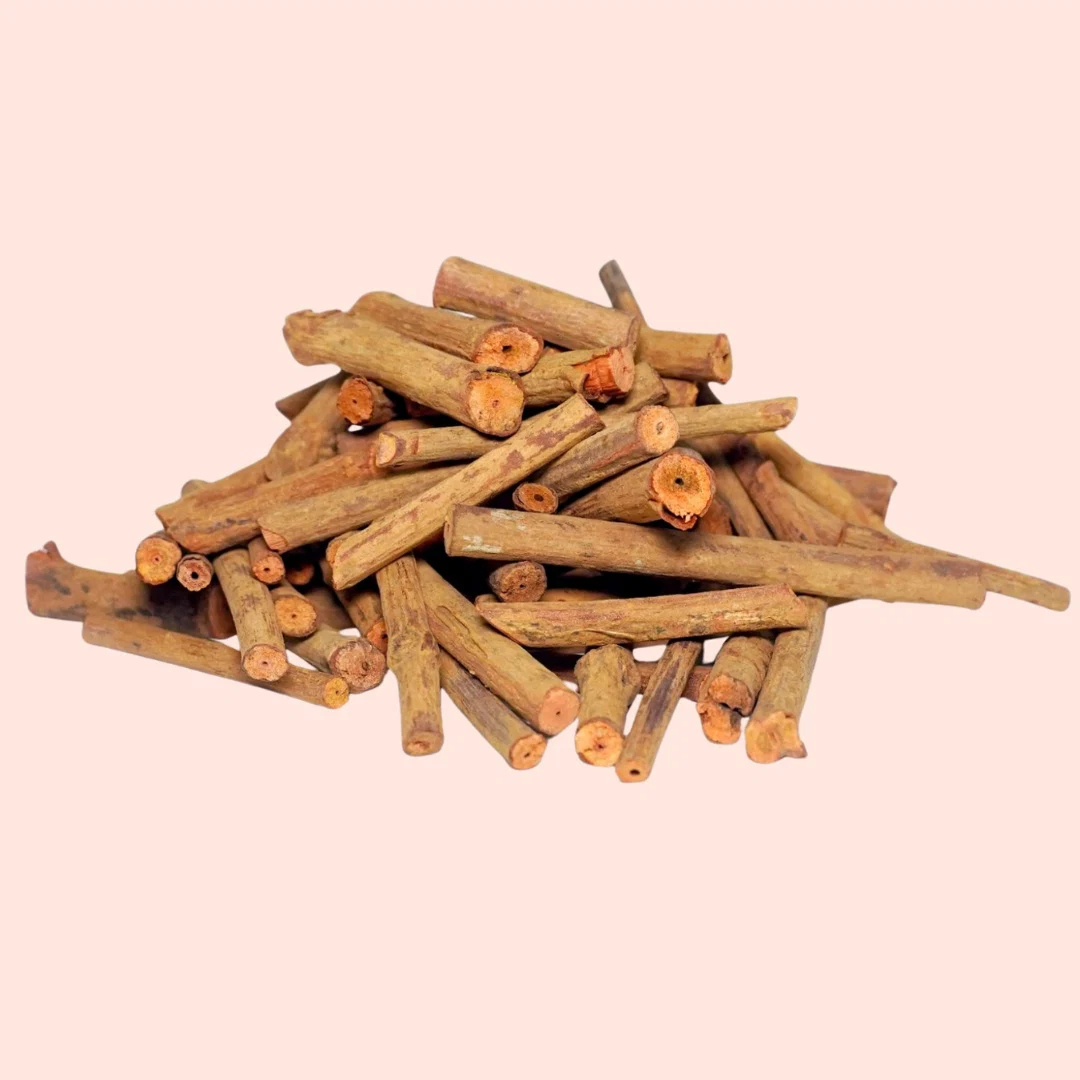
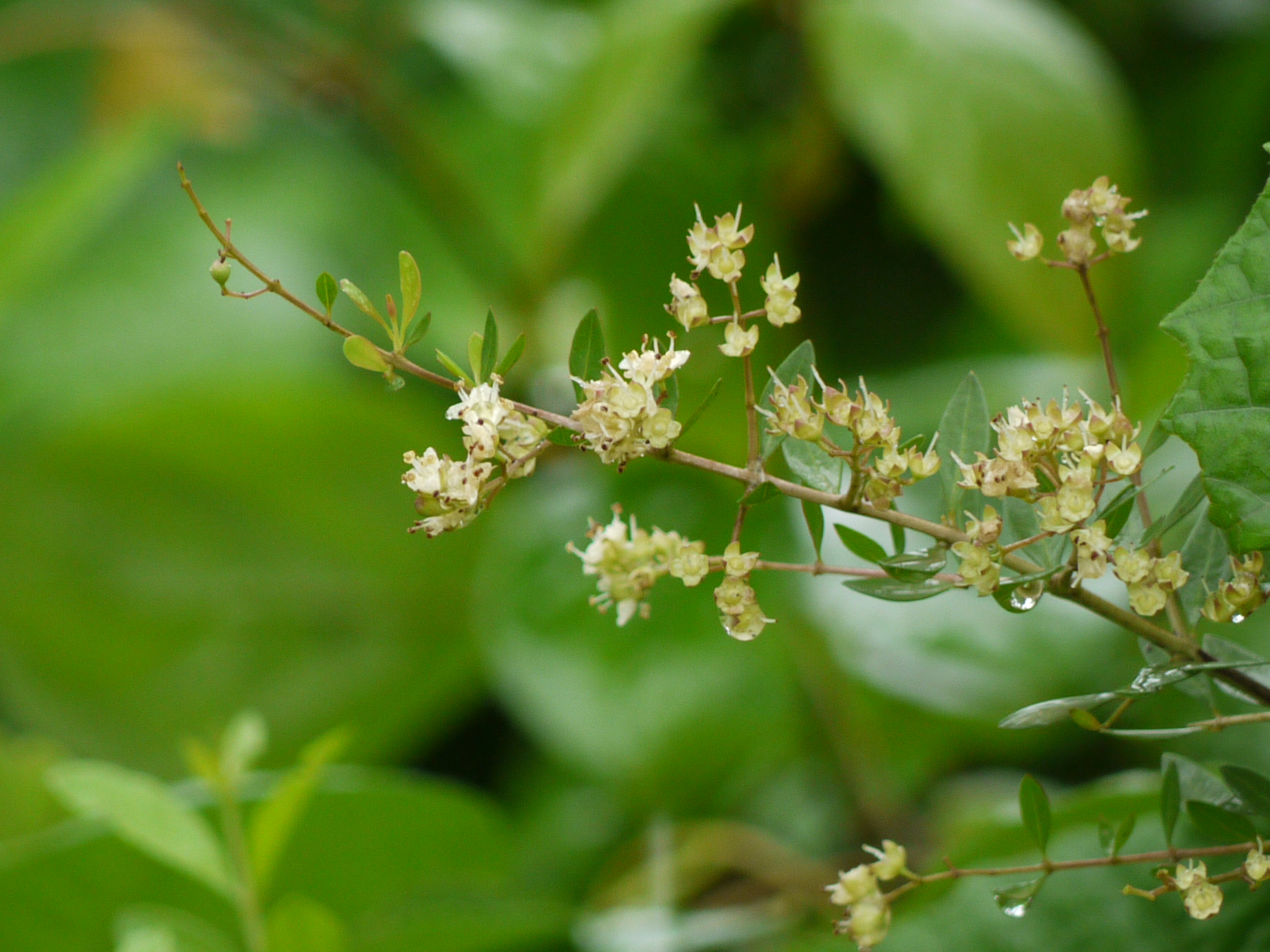
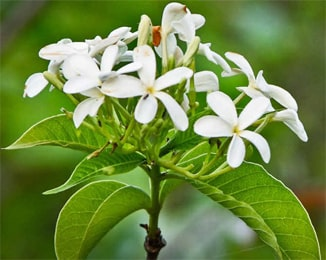

Pongamia pinnata, Fabaceae
Introduction to Karanja
Karanja is a highly valued medicinal tree in Ayurveda known for its powerful antimicrobial, anti-inflammatory, and detoxifying properties. It is widely used for treating skin diseases, wounds, infections, digestive problems, and parasitic disorders.
In classical Ayurvedic texts such as Bhavaprakasha Nighantu, Karanja is described as a potent herb used to remove toxins, purify blood, and treat various skin conditions.
Because of its strong medicinal activity, Karanja has been used for centuries in traditional Indian medicine and herbal remedies.
Karanja is a powerful medicinal plant in Ayurveda, widely used for treating skin diseases, infections, wounds, and digestive disorders. Scientifically known as Pongamia pinnata, this medium-sized tree is valued for its antimicrobial, anti-inflammatory, and detoxifying properties.
In classical Ayurvedic texts, Karanja is considered especially effective in managing Kushtha (skin diseases), Krimi (infections), and wounds (Vrana). Its seeds, leaves, bark, and oil all have therapeutic uses, making it a highly versatile herb.
With increasing skin problems and lifestyle-related disorders, Karanja provides a natural and effective solution rooted in traditional healing.
Botanical Description (Detailed)
Karanja, scientifically known as Pongamia pinnata, is a medium-sized, fast-growing deciduous to semi-evergreen tree belonging to the Fabaceae (legume) family. It is widely distributed in tropical and subtropical regions and is valued for its medicinal, agricultural, and ecological importance.
🔹 Scientific Classification
- Kingdom: Plantae
- Order: Fabales
- Family: Fabaceae
- Genus: Pongamia
- Species: P. pinnata
General Habit
Karanja is a moderately large tree that typically grows to a height of 10–20 meters. It has a broad, spreading crown and a relatively short trunk, making it suitable for providing shade.
🔸 Root System
- Deep taproot with well-developed lateral roots
- Capable of nitrogen fixation (leguminous plant)
- Improves soil fertility
Its root system makes it valuable for soil conservation and land restoration.
🔸 Stem & Bark
- Trunk is short and somewhat crooked
- Bark is greyish-brown, smooth to slightly rough
- Inner bark is fibrous
Bark is also used in traditional medicine.
🔸 Leaves
- Pinnate (compound) leaves with 5–7 leaflets
- Leaflets are ovate, smooth, and glossy
- Dark green in color
- Arranged alternately
Leaves are rich in medicinal compounds and are often used in herbal preparations.
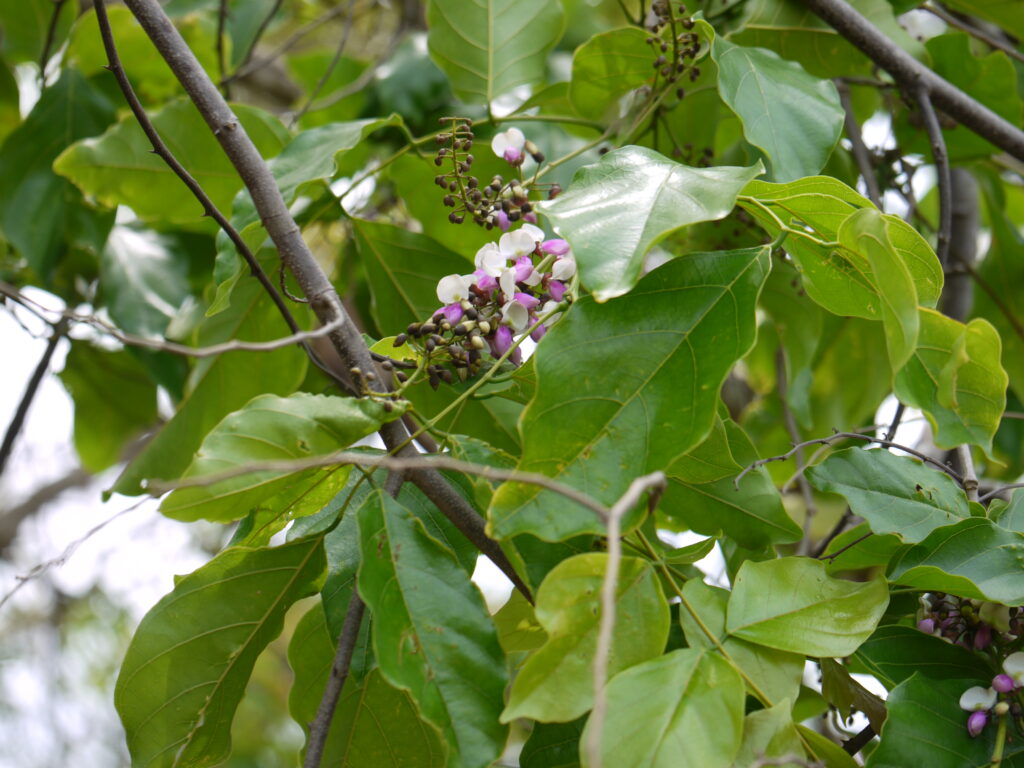
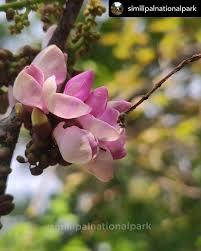
🔸 Flowers
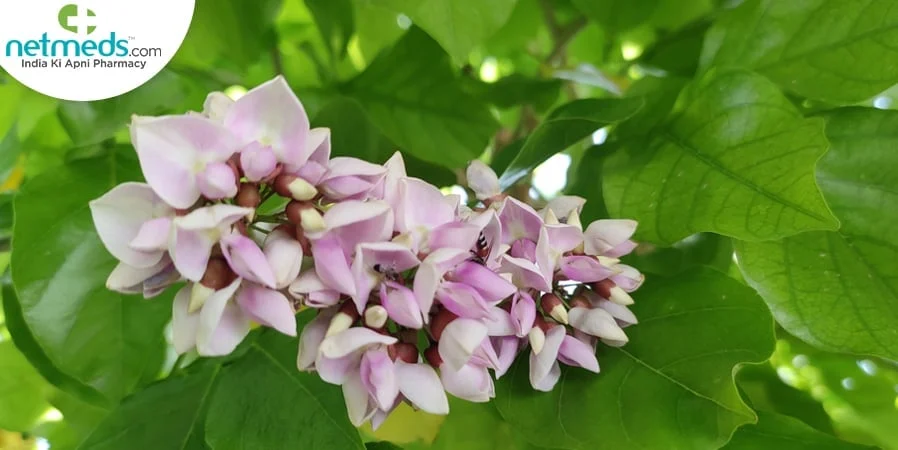
- Small, fragrant flowers
- Color: pink, white, or light purple
- Arranged in clusters (racemes)
- Blooming season: spring (March–May)
Flowers attract pollinators like bees.
🔸 Fruits (Pods)
- Flat, elliptical pods
- Thick, woody outer shell
- Usually contain 1–2 seeds
- Do not split easily when mature
🔸 Seeds
- Oval or bean-shaped
- Brown in color
- Rich in oil (Karanja oil)
- Bitter taste
Seeds are the primary source of medicinal oil used in Ayurveda.
Habitat & Distribution
Karanja is native to:
- India
- Southeast Asia
It is commonly found in:
- Coastal areas
- Riverbanks
- Roadsides
- Dry and humid regions
Growth Conditions
- Soil: Sandy, loamy, or even saline soils
- Water: Low to moderate (drought-tolerant)
- Sunlight: Full sunlight
- Climate: Tropical and subtropical
It is highly adaptable and can grow in poor soil conditions.
Growth & Lifecycle
- Type: Perennial tree
- Growth Rate: Fast
- Flowering: Spring
- Fruiting: Late summer to autumn
- Lifespan: Long-lived
Special Botanical Features
- Nitrogen-fixing ability
- High oil content in seeds
- Strong resistance to drought
- Multipurpose tree (medicinal + environmental)
Identification in Nature
Karanja can be identified by:
- Medium-sized spreading tree
- Glossy pinnate leaves
- Pinkish-white flowers
- Flat pods with hard seeds
Important Note
While parts of Pongamia pinnata are medicinal, seeds and oil should be used carefully, especially for internal consumption.
Summary
Karanja (Pongamia pinnata) is a versatile tropical tree with distinctive compound leaves, fragrant flowers, and oil-rich seeds. Its adaptability, ecological benefits, and medicinal value make it an important plant in Ayurveda and sustainable agriculture.
Ayurvedic Properties
Karanja, botanically known as Pongamia pinnata, is a powerful Ayurvedic herb primarily used for skin diseases, infections, wound healing, and detoxification. It is especially valued for its strong antimicrobial and Kapha-reducing properties.
🔹 Rasa (Taste)
- Tikta (Bitter)
- Katu (Pungent)
- Kashaya (Astringent)
These tastes help:
- Destroy toxins (Ama)
- Kill microbes (Krimighna action)
- Dry excess secretions and infections
🔹Guna (Qualities)
- Laghu (Light)
- Ruksha (Dry)
- Tikshna (Sharp/Penetrating)
These qualities support:
- Quick action against infections
- Drying of wounds and skin lesions
- Removal of excess oiliness and moisture
🔹 Virya (Potency)
- Ushna (Hot)
Ushna potency helps:
- Improve circulation
- Destroy pathogens
- Reduce Kapha-related stagnation
🔹 Vipaka (Post-digestive Effect)
- Katu (Pungent Vipaka)
This aids in:
- Detoxification
- Metabolic cleansing
- Reduction of Kapha accumulation
🔹 Dosha Effect (Doshic Action)
- Pacifies Kapha and Vata
- May increase Pitta if used excessively
Particularly beneficial in:
- Skin disorders (Kapha + Vata imbalance)
- Infections and parasites
- Chronic wounds
Functional Ayurvedic Actions
Karanja is known for several key therapeutic actions:
🔹 Kushthaghna (Anti-skin disease)
Highly effective in:
- Eczema
- Psoriasis
- Scabies
🔹 Krimighna (Antimicrobial / Anti-parasitic)
Destroys:
- Bacteria
- Fungi
- Intestinal worms
🔹 Vranaropana (Wound Healing)
Promotes:
- Faster healing
- Tissue regeneration
- Infection prevention
🔹 Kandughna (Anti-itching)
Reduces itching and irritation
🔹 Deepana-Pachana
Improves digestion
Helps remove toxins (Ama)
Effect on Agni (Digestive Fire)
- Stimulates digestive fire (Agni)
- Improves metabolism
- Helps in digestion of toxins
Useful in Ama-related disorders.
Effect on Dhatus (Body Tissues)
Karanja acts on:
- Rakta Dhatu (Blood): Purifies and detoxifies
- Twak (Skin): Heals and protects
- Mamsa Dhatu (Muscle): Supports tissue repair
Strongest action is on Rakta and Twak (blood and skin tissues).
Role in Skin Health
Karanja is one of the best herbs for:
- Chronic skin diseases
- Fungal infections
- Wounds and ulcers
Its drying and antimicrobial properties make it ideal for infected and moist skin conditions.
Effect on Srotas (Body Channels)
Karanja helps in cleansing:
- Raktavaha Srotas (blood channels)
- Swedavaha Srotas (sweat channels)
Removes toxins and improves circulation.
Dosha-Specific Benefits
🔹 For Kapha
- Reduces heaviness and mucus
- Clears infections
🔹 For Vata
- Supports healing of wounds
- Reduces dryness-related skin issues (when combined with oil)
🔹 For Pitta
- Use cautiously
- Excess may increase heat
Practical Ayurvedic Insight
- Best used externally for skin diseases
- Internal use should be limited and supervised
- Often combined with:
- Neem
- Turmeric
- Manjishta
Enhances antimicrobial and detox effects.
Ayurvedic Precautions
- Avoid excessive use due to strong potency
- Not suitable for high Pitta individuals in large doses
- Always dilute oil before application
Summary
Karanja (Pongamia pinnata) is a potent Ayurvedic herb with bitter, pungent, and astringent taste; light, dry, and sharp qualities; and hot potency. It is especially effective in treating skin diseases, infections, wounds, and toxin-related disorders, primarily by balancing Kapha and Vata.
When used properly, it acts as a powerful natural remedy for detoxification, skin healing, and overall health.
Common Names
| Language | Name |
|---|---|
| Sanskrit | Karanja |
| Hindi | Karanj |
| English | Indian Beech |
| Tamil | Pungai |
| Bengali | Karanja |
Plant Description
Karanja is a medium-sized evergreen tree that grows widely in tropical and subtropical regions.
Physical Characteristics
- Height: 10–15 meters
- Leaves: Compound leaves with shiny green leaflets
- Flowers: Small pink or white fragrant flowers
- Fruits: Brown pods containing seeds
- Bark: Rough and greyish
The tree is commonly found near riverbanks, roadsides, and coastal regions.
The seeds, oil, leaves, bark, and roots are used for medicinal purposes.
Health Benefits of Karanja
1. Excellent Remedy for Skin Diseases
Karanja is widely used in Ayurveda for treating various skin conditions.
Benefits include:
- Treats eczema
- Reduces itching
- Helps manage psoriasis
- Treats fungal infections
- Improves skin health
Karanja oil is commonly applied externally for skin problems.
2. Powerful Antimicrobial Herb
Karanja has strong antimicrobial properties.
Benefits include:
- Fights bacteria
- Prevents fungal infections
- Protects wounds from infection
This makes it useful in treating cuts and skin infections.
3. Promotes Wound Healing
Karanja helps in healing wounds faster.
Benefits include:
- Prevents infection
- Reduces inflammation
- Accelerates tissue repair
Leaves and oil are often used externally on wounds.
4. Useful in Parasitic Infections
Karanja helps eliminate parasites.
Benefits include:
- Removes intestinal worms
- Improves digestion
- Cleans digestive system
5. Supports Digestive Health
Karanja stimulates digestion and metabolism.
Benefits include:
- Improves appetite
- Reduces indigestion
- Helps relieve constipation
6. Anti-inflammatory Effects
Karanja contains compounds that reduce inflammation.
Benefits include:
- Reduces swelling
- Relieves joint pain
- Helps treat inflammatory skin diseases
7. Supports Liver Health
Karanja may help maintain healthy liver function.
Benefits include:
- Detoxifies liver
- Improves metabolism
- Supports digestion
8. Natural Insect Repellent
Karanja oil is widely used as a natural insecticide.
Benefits include:
- Repels mosquitoes
- Protects crops from pests
- Used in organic farming
Uses of Karanja in Ayurveda
Karanja is used in several Ayurvedic preparations and herbal medicines.
Common uses include:
- Skin disease treatments
- Wound healing medicines
- Blood purification remedies
- Digestive formulations
It is mostly used externally in the form of oil or paste.
Medicinal Parts Used
| Plant Part | Uses |
|---|---|
| Seeds | Oil for skin diseases |
| Leaves | Wound healing |
| Bark | Digestive and detoxifying |
| Roots | Anti-inflammatory remedies |
| Oil | Skin and parasite treatment |
The seed oil (Karanja oil) is the most commonly used medicinal form.
Forms of Karanja Available
Karanja is available in various herbal forms.
1. Karanja Oil
Used externally for skin disorders.
2. Powder (Churna)
Prepared from bark or seeds.
3. Decoction (Kashaya)
Used for digestive and detoxification purposes.
4. Herbal Extract
Used in modern herbal supplements.
Dosage of Karanja
Always consult an Ayurvedic practitioner before internal use.
General Dosage
| Form | Quantity |
|---|---|
| Powder | 1–3 g |
| Decoction | 20–40 ml |
| Oil | External application |
Dosage depends on the health condition.
Best Time to Use Karanja
- For skin problems → Apply oil twice daily
- For digestive problems → After meals
- For parasites → Morning under supervision
Home Remedies Using Karanja
Remedy for Skin Diseases
Apply:
- Karanja oil on affected skin areas.
This helps reduce itching and infections.
Remedy for Wounds
Crush:
- Fresh Karanja leaves
Apply the paste on wounds to promote healing.
Remedy for Fungal Infections
Mix:
- Karanja oil
- Coconut oil
Apply regularly.
Side Effects of Karanja
Although beneficial, excessive use may cause:
Skin irritation
Burning sensation
Digestive discomfort
Increased body heat
Proper dosage is important.
Precautions
Avoid internal use without medical advice
Avoid during pregnancy
Use pure herbal oil only
Test oil on small skin area before use
Karanja in Modern Research
Scientific studies have shown that Karanja possesses several medicinal properties:
- Antibacterial activity
- Antifungal effects
- Anti-inflammatory properties
- Antioxidant activity
- Insecticidal properties
These findings confirm its traditional Ayurvedic uses.
Importance of Karanja in Traditional Medicine
Karanja has been used for centuries in Ayurvedic medicine because of its powerful healing properties.
Its benefits include:
- Skin disease treatment
- Wound healing
- Blood purification
- Parasite removal
- Natural insect repellent
Due to these versatile medicinal uses, Karanja remains an important herb in herbal medicine.
Vernacular names
Assamese : Korach
Bengali : Nata Karanja, Dahara Karanja
English : Smooth leaved pongamia
Gujrati : Kanajo, Karanji
Hindi : Dithouri, Karuaini
Kannada : Honge, Hulagilu
Kashmiri : Kath
Malayalam : Avittal, Ungu, Unu, Pungu
Marathi : Karanja
Oriya : Karnja
Punjabi : Karanj
Tamil : Pungan, Pongana
Telugu : Lamiga, Kanuga
Urdu : Karanj
Conclusion
Karanja (Pongamia pinnata) is a powerful medicinal tree known for its antimicrobial, anti-inflammatory, and detoxifying properties. It is widely used in Ayurveda to treat skin diseases, infections, wounds, and digestive problems.
When used properly under expert guidance, Karanja provides numerous health benefits and supports natural healing.
Karanja, scientifically known as Pongamia pinnata, stands out as a powerful and versatile Ayurvedic herb with remarkable benefits for skin health, infection control, wound healing, and digestive balance. Its unique combination of bitter, pungent, and astringent properties, along with its hot potency, makes it especially effective in managing Kapha and Vata disorders, particularly those involving toxins and microbial activity.
From treating chronic skin conditions like eczema and fungal infections to promoting faster healing of wounds and supporting internal detoxification, Karanja offers a holistic approach to natural healing. Its strong antimicrobial and anti-inflammatory actions make it a valuable remedy in both traditional and modern herbal practices.
However, due to its potent nature, Karanja should be used carefully and in appropriate doses, especially for internal consumption. External applications such as oils and pastes remain the safest and most widely used methods.
Incorporating Karanja into a balanced Ayurvedic routine—along with proper diet and lifestyle—can significantly enhance skin vitality, immunity, and overall well-being. It truly represents nature’s powerful solution for maintaining health and combating infections naturally.
