


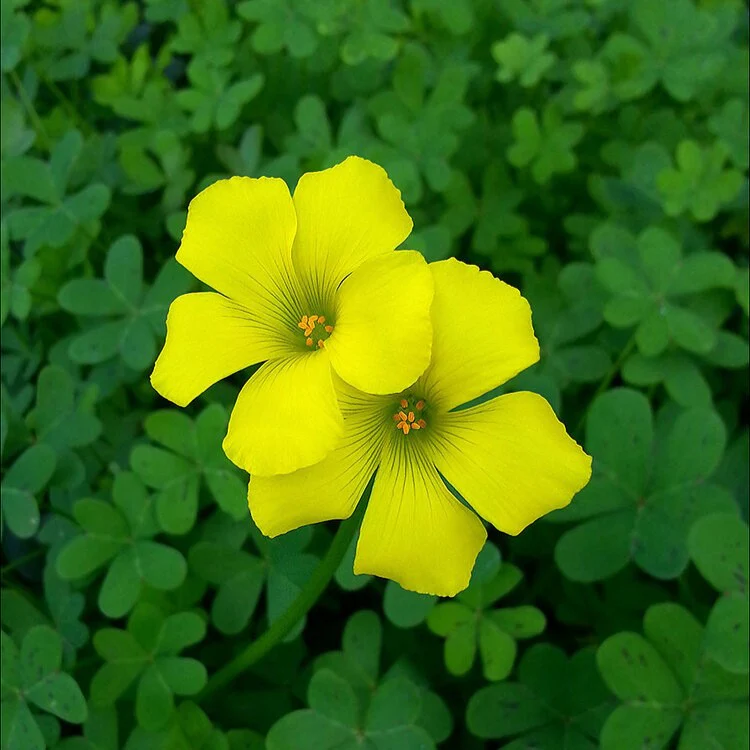
Oxalis corniculata, Oxalidaceae
Introduction
Changeri, scientifically known as Oxalis corniculata, is a small creeping herb widely used in Ayurveda for its digestive, anti-inflammatory, and healing properties. It is commonly found growing in fields, gardens, and roadsides across India. Despite being a simple plant, Changeri holds significant medicinal value in traditional healing systems.
Changeri is a traditionally important Ayurvedic herb valued for supporting digestion, appetite, acidity balance, detoxification, and overall digestive wellness. Scientifically identified as Oxalis corniculata, Changeri has been widely used in Ayurveda for conditions involving weak digestion, diarrhea, loss of appetite, excess heat, and Pitta imbalance.
Ayurveda appreciates Changeri for its digestive-supportive, cooling, and balancing properties. The herb is traditionally used to improve digestive fire (Agni), reduce discomfort caused by acidity, and help maintain proper bowel function naturally. Its leaves and whole plant are commonly utilized in Ayurvedic formulations.
Changeri is traditionally beneficial for:
- Digestive wellness
- Acidity and burning sensation
- Appetite support
- Diarrhea management
- Detoxification
- Pitta balance
- Blood purification
Its mildly sour and cooling nature helps balance excess heat while supporting healthy metabolism and internal harmony.
Botanical Description of Changeri
🔹 Scientific Classification
- Scientific Name: Oxalis corniculata
- Family: Oxalidaceae
- Common Names: Changeri, Creeeping Woodsorrel, Indian Sorrel
- Plant Type: Small creeping perennial medicinal herb
General Habit of the Plant
Changeri is a low-growing creeping herb widely found in moist grassy places, gardens, roadsides, and cultivated lands. It is traditionally valued in Ayurveda for its medicinal leaves and digestive-supportive properties.
General Characteristics:
- Creeping branched stems
- Soft trifoliate leaves
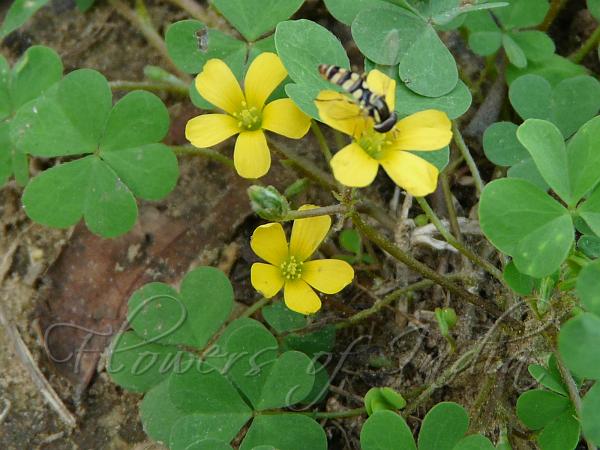
- Small yellow flowers
- Sour-tasting medicinal foliage
The whole plant is commonly used in traditional Ayurvedic preparations.
Root System
- Thin fibrous roots
- Shallow root growth
- Roots develop from creeping stem nodes
Root Characteristics:
- Fine and delicate structure
- Helps rapid spreading over soil surface
The root system allows the plant to spread quickly in moist environments.
Stem
- Thin creeping stems
- Green to reddish coloration
- Soft and flexible texture
Stem Features:
- Branched spreading habit
- Roots may emerge at stem joints (nodes)
- Smooth or slightly hairy surface
Creeping stems form dense ground cover naturally.
Leaves of Changeri
- Small trifoliate leaves
- Heart-shaped leaflets
- Clover-like appearance
Leaf Characteristics:
- Green or slightly purplish-green color
- Soft delicate texture
- Sour taste due to oxalic compounds
Leaves close slightly during darkness or touch-sensitive movement.
Flowers of Changeri
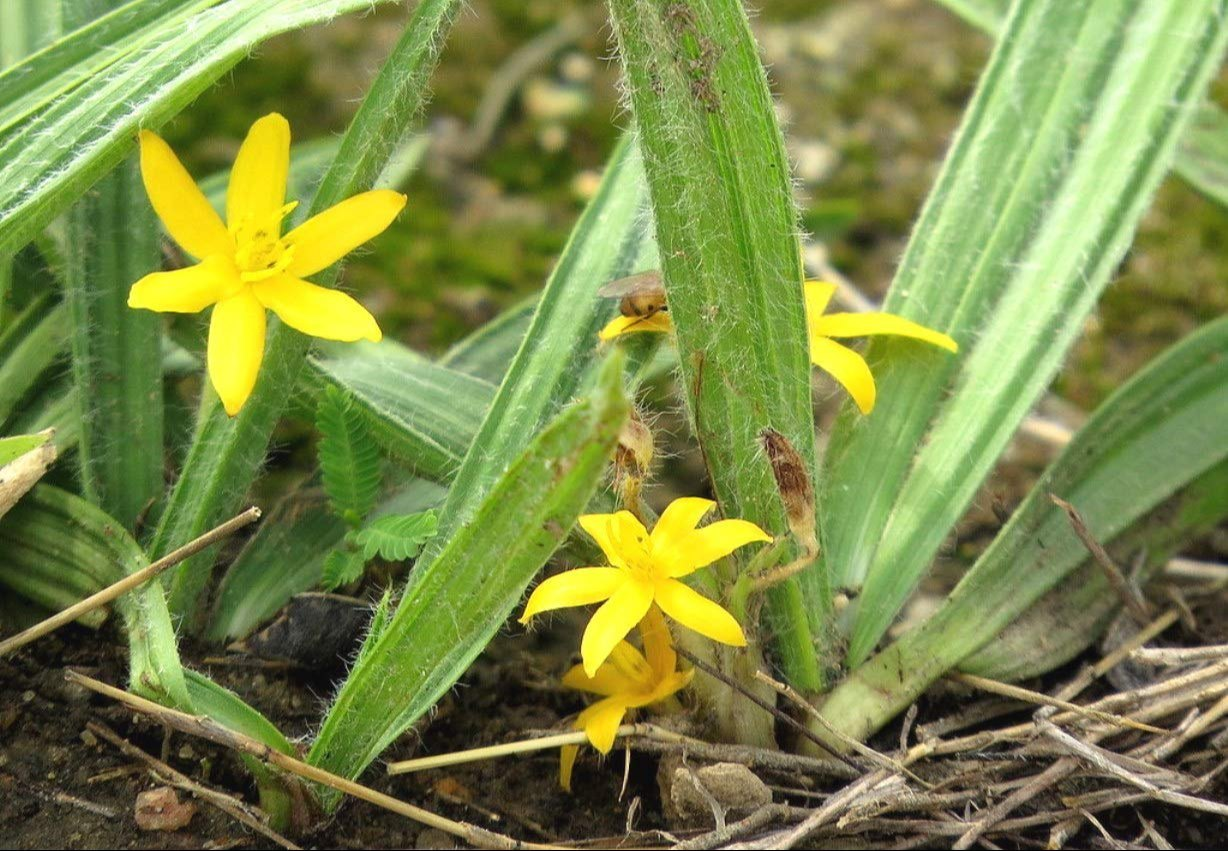
- Small bright yellow flowers
- Five-petaled flower structure
- Solitary or small clustered growth
Flower Characteristics:
- Delicate appearance
- Thin flower stalks
- Bloom throughout warm seasons
Flowering Season:
- Mainly during rainy and warm months
Bright yellow flowers are one of the easiest identifying features of the plant.
Fruits
- Small cylindrical capsule fruits
- Slender elongated shape
- Split open when mature
Fruits disperse seeds naturally over surrounding areas.
Seeds
- Very tiny seeds
- Brownish color
- Smooth surface
Seed Characteristics:
- Easily dispersed by bursting fruit capsules
- Rapid germination under moist conditions
Helps quick natural propagation.
Habitat & Distribution
Changeri naturally grows in:
- India
- Tropical Asia
- Africa
- Warm temperate and subtropical regions worldwide
Commonly found in:
- Gardens
- Moist grassy fields
- Agricultural lands
- Roadsides
- Open damp areas
Preferred Growing Conditions
🔹 Climate
- Warm tropical and subtropical climate
- Moderate moisture preferred
🔹 Soil
- Moist fertile soil
- Well-drained loamy soil ideal
🔹 Sunlight
- Partial to full sunlight
- Grows well in semi-shaded conditions
Thrives rapidly during rainy seasons.
Growth & Lifecycle
- Plant Type: Perennial creeping herb
- Growth Habit: Low-growing and spreading
- Propagation: Through seeds and creeping stems
- Growth Rate: Fast-growing under moist conditions
The plant spreads rapidly and forms green mats over soil surfaces.
Special Botanical Features
- Clover-like trifoliate leaves
- Sour medicinal taste
- Bright yellow flowers
- Creeping ground-cover growth
- Sensitive leaf movement in some conditions
Identification in Nature
Changeri can generally be identified by:
- Small creeping stems
- Heart-shaped trifoliate leaves
- Bright yellow flowers
- Sour-tasting foliage
Its clover-like leaves and sour taste make identification easier.
Important Botanical Note
Oxalis corniculata is traditionally used in Ayurveda for digestive and cooling support. Proper identification is important because several Oxalis species may appear visually similar in natural environments.
Summary
Changeri (Oxalis corniculata) is a small creeping medicinal herb recognized for its trifoliate sour leaves, yellow flowers, and spreading stems. Traditionally valued in Ayurveda for supporting digestion, acidity balance, bowel health, detoxification, blood purification, and Pitta balance, Changeri remains an important herb in traditional herbal healthcare naturally.
Ayurvedic Properties of Changeri
Overview in Ayurveda
Oxalis corniculata, commonly known as Changeri, is a traditionally important Ayurvedic herb valued for supporting digestion, acidity balance, bowel health, detoxification, blood purification, and Pitta balance. Ayurveda appreciates this herb for its cooling, digestive-supportive, and balancing properties, especially in conditions involving excess heat, weak digestion, burning sensation, loose stools, and Pitta-related imbalance.
Changeri is traditionally used in conditions involving:
- Acidity and burning sensation
- Weak digestion
- Loss of appetite
- Mild diarrhea
- Excess body heat
- Blood impurities
- Pitta aggravation
Its mildly sour, cooling, and cleansing nature helps improve digestion while calming excess heat and maintaining internal harmony naturally.
🔹 Rasa (Taste)
Changeri possesses:
- Amla (Sour)
- Kashaya (Astringent)
Ayurvedic Significance:
These tastes help:
- Stimulate appetite and digestion
- Improve bowel stability
- Reduce excess heat and irritation
- Support tissue balance
The astringent quality helps maintain healthy bowel function.
🔹 Guna (Qualities)
- Laghu (Light)
- Ruksha (Dry)
Ayurvedic Significance:
These qualities help:
- Improve digestion
- Reduce sluggishness
- Support detoxification
- Balance excess Kapha and moisture
Light quality supports healthy metabolism and digestion.
🔹 Virya (Potency)
- Shita Virya (Cooling Potency)
Benefits:
- Reduces excess body heat
- Calms burning sensation
- Helps soothe Pitta imbalance
- Supports cooling digestive balance
Cooling nature makes Changeri especially useful in heat-related digestive conditions.
🔹 Vipaka (Post-Digestive Effect)
- Amla Vipaka (Sour post-digestive effect)
Benefits:
- Supports appetite
- Helps maintain digestive activity
- Assists proper nutrient assimilation
Promotes balanced digestive function after metabolism.
🔹 Dosha Effect
Helps Balance:
- Pitta
- Kapha
Excessive use may aggravate Vata because of its drying and cooling qualities.
Particularly beneficial in:
- Acidity and burning sensation
- Digestive weakness
- Mild diarrhea
- Excess body heat
- Pitta-related digestive imbalance
Traditionally valued for cooling and digestive support.
Main Ayurvedic Actions of Changeri
🔸 Deepana
Traditionally supports:
- Digestive fire (Agni)
- Appetite stimulation
- Healthy digestion
Useful in poor appetite and sluggish digestion.
🔸 Grahi
Helps:
- Improve bowel stability
- Support proper stool consistency
- Reduce mild loose motions
🔸 Dahahara
Traditionally helps reduce:
- Burning sensation
- Excess internal heat
- Acidity-related discomfort
🔸 Raktashodhaka
Supports:
- Blood purification
- Healthy skin and tissues
Traditionally associated with cleansing and cooling support.
🔸 Pachana
Helps digest:
- Ama (toxins)
- Metabolic waste accumulation
Supports healthy metabolic balance naturally.
Effect on Agni (Digestive Fire)
Changeri gently helps:
- Improve weak digestion
- Stimulate appetite
- Reduce digestive discomfort
- Maintain balanced metabolism
Particularly useful when digestion is disturbed by excess heat or acidity.
Role in Acidity & Cooling Balance
Changeri is especially valued for:
- Reducing acidity and burning sensation
- Supporting cooling body balance
- Calming excess Pitta
Frequently used in heat-related digestive discomfort.
Role in Detoxification
Traditionally used to:
- Purify blood
- Reduce toxins and heat
- Support internal cleansing pathways
Helps maintain healthy tissue balance.
Effect on Pitta & Kapha
🔹 For Pitta
Helps:
- Reduce excess heat
- Calm irritation and burning sensation
- Maintain cooling balance
🔹 For Kapha
Supports:
- Lightness and metabolism
- Reduction of sluggishness and excess moisture
Balanced use promotes digestive and metabolic harmony.
Effect on Dhatus (Body Tissues)
Traditionally supports:
- Rasa Dhatu (nutritive fluids)
- Rakta Dhatu (blood tissue)
- Twak Dhatu (skin tissue)
Helps maintain nourishment and purification.
Effect on Srotas (Body Channels)
Supports:
- Annavaha Srotas (digestive channels)
- Raktavaha Srotas (blood channels)
Helps maintain proper digestion and circulation.
Traditional Ayurvedic Uses
Changeri is traditionally used for:
- Weak digestion
- Acidity and burning sensation
- Mild diarrhea
- Loss of appetite
- Blood purification
- Pitta imbalance
Ayurvedic Precautions
Excessive use may:
- Increase dryness
- Aggravate Vata
- Cause excessive sourness in sensitive individuals
Use cautiously in:
- Severe Vata disorders
- Joint stiffness associated with coldness
- Very dry body constitutions
Balanced Ayurvedic use is recommended.
Traditional Ayurvedic Preparations
Changeri may be used in:
- Herbal decoctions
- Fresh juice preparations
- Cooling digestive remedies
- Blood-purifying formulations
Summary
Oxalis corniculata is a cooling and digestive-supportive Ayurvedic herb traditionally valued for supporting digestion, acidity balance, bowel health, detoxification, blood purification, and Pitta balance. Its sour, astringent, and cooling properties make it especially beneficial in acidity, burning sensation, mild diarrhea, digestive weakness, and excess heat-related imbalance.
When used properly in Ayurvedic care, Changeri may help maintain healthy digestion, balanced metabolism, cooling body harmony, purified blood, improved appetite, and overall wellness naturally.
Medicinal Uses
- Diarrhoea: 15-25ml of leaves
juice of changeri is administered
twice daily bloody diarrhoea,
prolapse of rectum etc. It can
also be administered along with
butter milk for better results.
- Painful swelling: Luke warm
leaves paste of changeri used
as an external application in
the painful swelling or any
inflammation. This will provide a
cooling effect to these areas and
reduce the symptoms. - Fever: 10gms of changeri whole
plant paste boiled in 100ml of
water till it reduced to 25ml.
The decoction is taken internally
twice daily in case of fever. - Warts: Equal quantity of changeri
leaves juice and onion juice
is mixed and applied in the
areas of wart and molluscum
contagiosum. The daily use of this
will show good results. - Headache: Fine leaves paste of
changeri is applied externally over
forehead is useful in headache. - Hyperemesis gravidarum:
External application of chutney
prepared from the changeri
leaves, ground coconut, salt and
lemon juice can give relief this
condition.
Vernacular names
Assamese : Chengeritenga
Bengali : Amrul
English : Indian Sorrel
Gujarati : Ambolee, Changeri, Teen
Panaki, Rukhadi
Hindi : Tinpatiya, Changeri, Ambilosa
Kannada : Pullamouradi, Sivargee,
Purachi Soppu
Malayalam : Pulliparel
Marati : Ambutee, Ambatee, Ambti,
Bhui Sarpati
Punjabi : Khatkal, Khattibootee,
Khatmittha
Tamil : Puliyarai
Telugu : Pulichinta
Urdu : Changeri, Teen Patiya
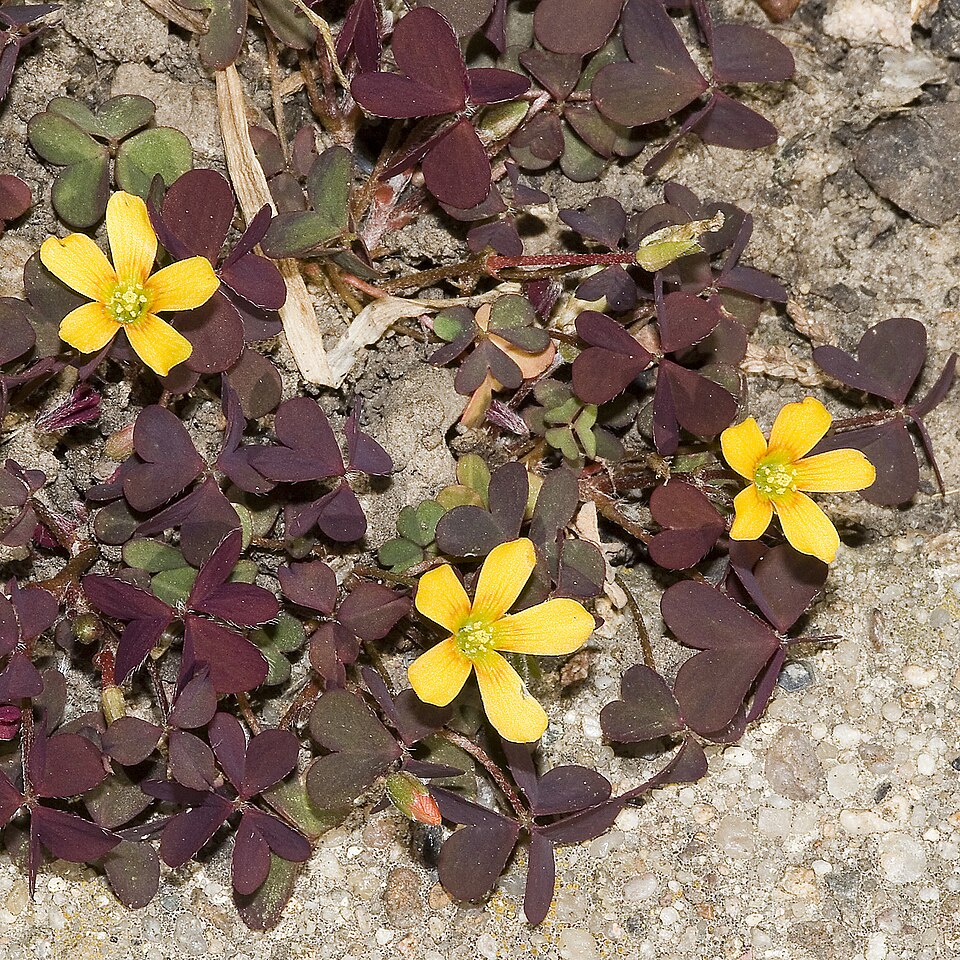
Oxalis corniculata, the creeping woodsorrel, procumbent yellow sorrel[2] or sleeping beauty, is a somewhat delicate-appearing, low-growing herbaceous plant in the family Oxalidaceae.
Oxalis corniculata is a small creeping type of woodsorrel that tends to grow well in moist climates.[3] It resembles the common yellow woodsorrel, Oxalis stricta.
Description


It has a narrow, creeping stem that easily takes root at the nodes. Its trifoliate leaves are subdivided into three rounded leaflets, resembling a clover. Some varieties have green leaves, while others, such as Oxalis corniculata var. atropurpurea, have purple leaves. There are inconspicuous stipules at the base of each petiole. The small, yellow flowers have either round-edged or sharp-ended petals. The flowers close when the plant is not within direct sunlight, hence the name “sleeping beauty”. Some specimens can have a single flower while others can have over 20.


The fruit is a narrow, cylindrical capsule, 1–2 cm (0.4–0.8 in) long, and noteworthy for its explosive discharge of the contained seeds, 1 mm (0.04 in) long. Pollen is about 34 microns in diameter.
