


Clitoria ternatea, Fabaceae
Introduction
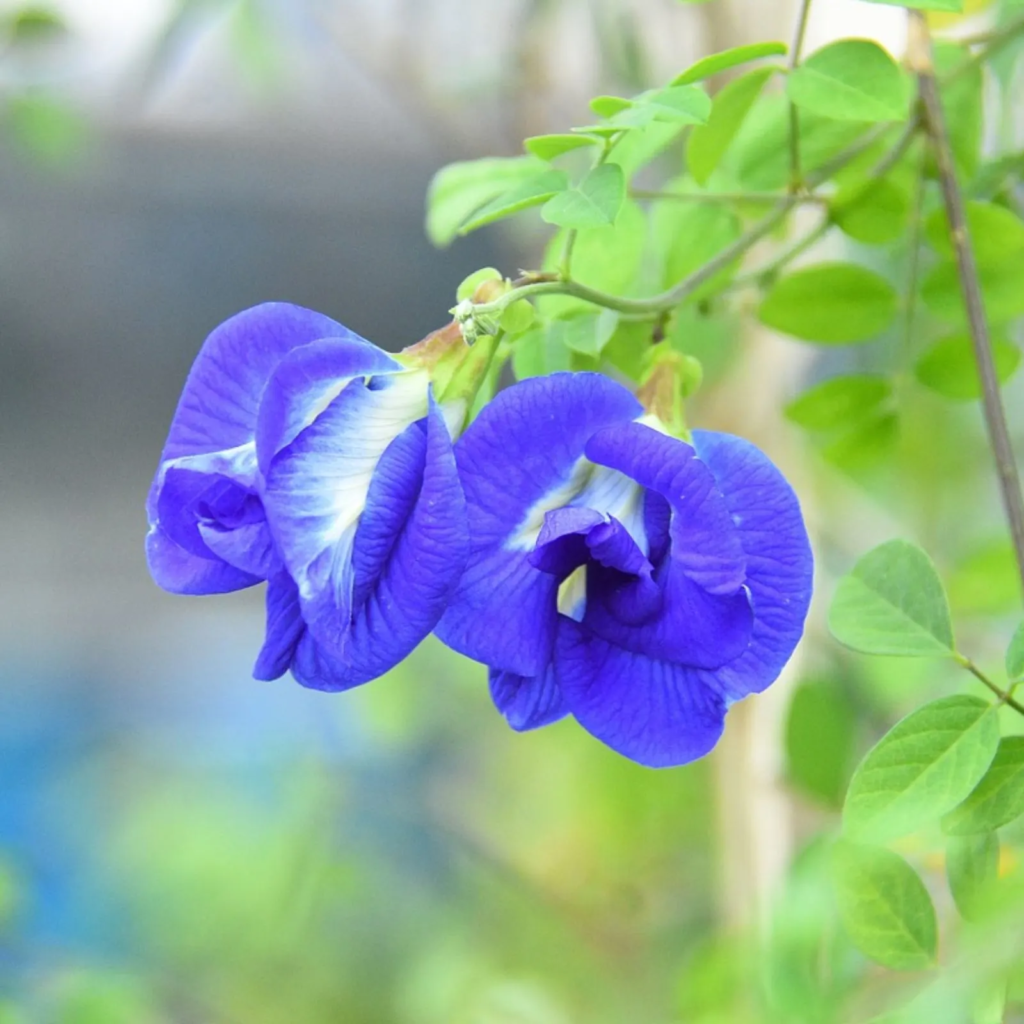
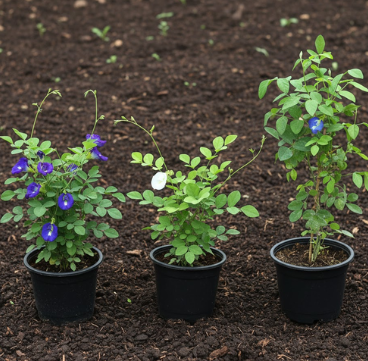
The Aparajita plant, also known as Clitoria ternatea or Butterfly Pea, is one of the most attractive flowering vines recognized for its stunning shankh or conch shell-like shape and blue or white blooms. In India, it is valued not only for its beauty but also for its deep spiritual and medicinal significance. The Aparajita plant is readily available at temples and is often found in herbal teas and Ayurvedic medicines. The plant is a superb addition to every Indian home garden, so much so that in some households, people place it next to Tulsi for Vastu purposes as well.
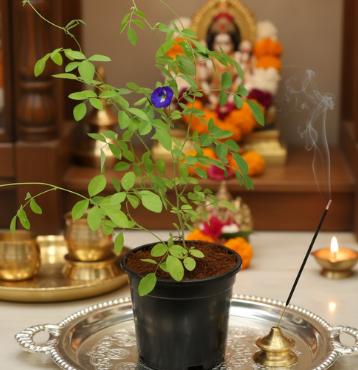
In Indian mythology, it is believed that this flower was used by the goddess Durga to kill Asuras, and hence it is kept for divine purposes as it is perceived to kill the evil that surrounds one and their loved ones.
In this article, we have mentioned everything that you need to know about Aparajita as a plant.
Clitoria ternatea, commonly known as Aparajita, is a revered medicinal herb in Ayurveda traditionally valued for supporting brain health, memory, mental clarity, nervous system function, and overall wellness naturally. The name Aparajita means “the undefeated” or “invincible,” reflecting the herb’s esteemed place in traditional Ayurvedic medicine.
Aparajita belongs to the Fabaceae family and is widely recognized for its striking blue or white butterfly-shaped flowers. Native to India and other tropical regions, the plant has been used for centuries in Ayurvedic formulations aimed at enhancing cognitive function, promoting mental calmness, supporting healthy sleep, and maintaining overall vitality.
Ayurveda highly appreciates Aparajita for its Medhya (brain-nourishing), rejuvenating, calming, and balancing properties. The roots, flowers, leaves, and seeds are traditionally utilized in various herbal preparations to support mental wellness and nervous system health.
Aparajita is traditionally associated with:
- Brain health and cognition
- Memory support
- Mental clarity and focus
- Nervous system nourishment
- Stress management
- Emotional balance
- Healthy sleep
- Overall rejuvenation
Because of its remarkable reputation as a brain-supportive herb, Aparajita remains an important component of traditional Ayurvedic wellness practices.
What Kind of Climate and Sunlight Aparajita Needs
Aparajita hails from tropical Asia, making it perfectly suited for hot, porous Indian regions.
The plant needs the following to thrive:
- It requires 5–6 hours of direct sunlight every day for abundant blooming.
- Shade tolerance: You can keep your Aparajita in a shaded area as well, but it is not recommended for long period of time, as that hampers the bloom of these plants because sunlight is the most important factor in their health.
- Protection: In very hot areas like the summers of Delhi, potting plants in a bright, shaded area during the hottest part of the afternoon is okay, as it is an excellent way to avoid leaf burning. In winter months, however, place it in bright sunlight for excellent results. The mist with the sun really brings out the shades of blue in these flowers.
Soil Preparation for Aparajita Plant
Aparajita can thrive in a variety of soils, but prefers soil that is nutrient-rich and drains water perfectly.
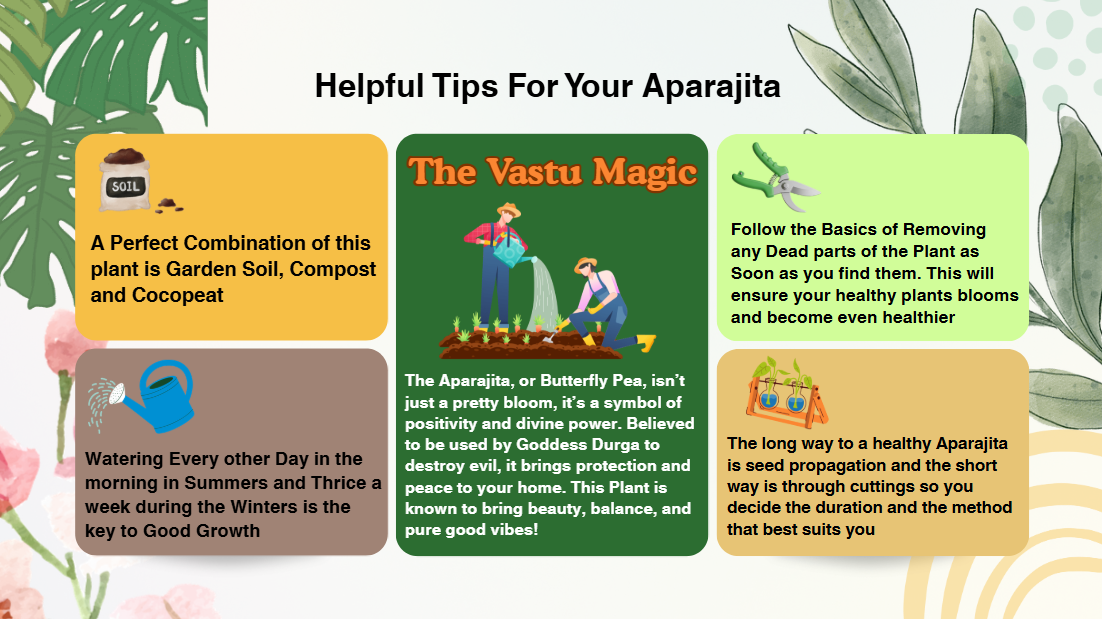
I have used all kinds of soils, and came to find that the best soil mixture is equal parts garden soil + compost + cocopeat.
Other things to focus on while choosing the soil mix are as follows:
- The most important thing that people usually ignore is the pH of the soil. According to experts, it should be mildly acidic to neutral. How to test it? Here is a method
- Alkalinity test: Take a few tablespoons of soil out of your sample and put it in a bowl. Add approximately half a cup of vinegar. If the soil fizzes, your soil is alkaline.
- Acidity test: If there was no reaction, take another sample of soil and put it in another container; add distilled water to wet the soil sample, then add half a cup of baking soda. If the soil fizzes, your soil is acidic.
- Neutral soil: If neither test fizzed, your soil is most likely neutral.
- Drainage is very important; stagnant water cannot be tolerated as it can cause root rot.
- Add vermicompost or cow dung manure to the soil before planting.
- If the container is restricting the growth, change the container and replace the top 2-3 inches of soil every few weeks.
Watering Your Plant
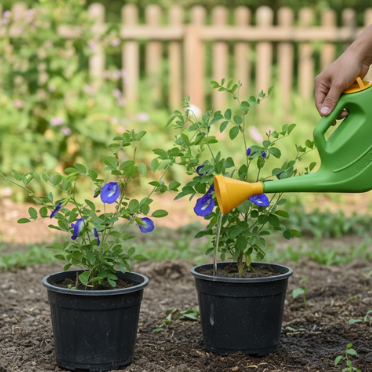
Aparajita enjoys constant moisture but does not tolerate soggy soil. Hence, the frequency of watering should be every other day in the summer, especially in excessive heat. However, reduce the watering frequency in the rainy season and winter.
If you water in the early morning, better absorption occurs.
Remember to always water only if the top inch of soil is dry.
Effective Plant Feeding Method
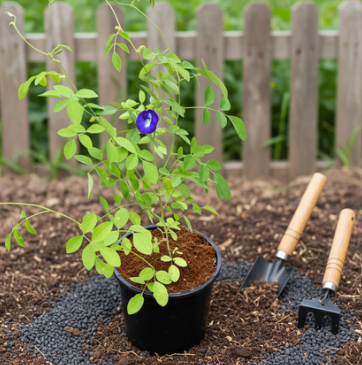
The Aparajita plant does not require a great deal of fertilizer as it thrives the most on naturally occurring soil, but consistently feeding the plant will lead to more vibrant leaf color and more blooms. The best time to fertilize the aparajita plant is during the summer and spring. One should reduce or stop fertilizing completely during winter and monsoon season.
Here is how you should go about the process:
- Monthly feeding:
As explained, Aparajita loves organic soil. Hence, the best combination for it is a handful of vermicompost mixed with cow dung fertilizer per month. This will provide all the nutrients that your plant needs and ensure growth and bloom.
- Liquid fertilizers:
If you feel that your plants are not healthy even after all the care you have put in, don’t worry; sometimes plants need extra care and nutrition. To ensure optimum growth, you can get diluted seaweed, which can be used every 2-3 weeks. Seaweed directly reaches the roots and helps in faster absorption of nutrients.
- Avoid chemical fertilizers:
Any harmful mix or chemical-induced fertilizer is like poison to Aparajita. They could burn roots and disrupt the balance of PH in the plant, which can affect the blooming and growth of Aparajita very much. So always avoid using any market-bought fertilizers.
What’s the Best Way to Prune and Care for Aparajita Plants?
Pruning encourages vigorous growth and continued blooming in a plant. Here is how you should do it.
- Light Pruning: After each blooming cycle, cut back the tips of the growth to encourage branching.
- Severe Pruning: Each year (ideally at the end of winter), prune the vines to about one-third of their length.
- Support: Give them something like a trellis, or lattice, or a wire netting for support.
- Regularly remove any faded blooms (deadheading) to keep your flowering plant looking tidy and to encourage more flowers.
Always keep an eye on the dead and infected parts of the plant. Take them out as soon as possible to avoid any spread of infection.
How to Manage Pests and Diseases in Plants?
Aparajita rarely has pest issues, but they may occasionally have very minor infestations. The different kinds of infections that you should be aware of are as follows
- Common pests: aphids, mealybugs, and whiteflies.
- Natural remedy: Mix 5ml of neem oil in 1 liter of water, add a couple drops of mild liquid soap, then spray. Use weekly until pests are under control.
- Prevention: Keep the area clean, and do not overwater plants at night.
- Applying neem cake to the soil every 2-3 months may help prevent and deter soil insects
How to Care During Each Season
The most important part for growth in any plant is how you take care of it in various seasons. Here is a quick overview for you:
- Summer: Water continuously and put mulch to suppress moisture.
- Monsoon: Reduce watering; ensure good drainage to prevent fungal decay.
- Winter: Growth slows; cut back and protect from frost in colder areas.
Aparajita flowers bloom nearly year-round in many parts of India, especially in the south. So if you provide proper care during each season, your blue butterfly will keep shining.
Here is a Quick Video for all the care tips you need to know about Aparajita
Medicinal Uses
- Leucoderma: The leaves paste
of aparajita applied thickly on
the vitiligo patches and expose
to sunlight. It has to continue for
minimum 1 month to stimulate
melanocytes.
- Filarial swelling: 5gms of
aparajita root paste should be
given internally twice daily in
filariasis to relieve the swelling. - Memory Enhancer: The fresh root
paste of aparajita should be given
in a dose of 1-3 grams with ghee
twice daily for increasing memory
and intelligence. - Menorrhagia: 1 gram of aparajita
flowers powder should be given
thrice daily with honey for
bleeding disorders of uterus. - Conjunctivitis: The flowers of
aparajita are pounded with
cow milk and applied over the
closed eyes. It alleviates the
conjunctivitis. - Toothache: Aparajita root with
black pepper should be kept in
mouth to pecify the toothache. - Wound: Fine leaves paste of
aparajita should be applied over
the wound is beneficial as it has
antifungal and anti bacterial
properties greatly reduce the
infection and heals the wound
very fast.
Propagation Methods in Aparajita
Aparajita is one of the easiest plants to propagate. You can grow new plants from seeds or from cuttings taken from the stem.
Let’s elaborate on the two methods:
- Seed Propagation
- Gather completely developed seed pods (when they are brown and dry).
- Put seeds into the water overnight to loosen a hard seed coat.
- Plant 1 inch into the soil that is damp and has good drainage.
- Put in a nice, bright, warm place. Seeds will sprout in 7 to 10 days.
This method is the most popular and reliable in the Indian climate. This will result in one-of-a-kind growth that blooms with every passing month.
- Propagation through cuttings
- Take cuttings that are 6-8 inches long from a semi-hardwood plant that is strong.
- Remove the leaves at the bottom and dip the cut end into rooting hormone or honey.
- Root in a mix of sand and cocopeat.
- Keep the mix lightly moist and covered until the cuttings start to grow again. It mostly shows growth within 2-3 weeks
- After the roots develop, transfer it into the garden or a larger pot so that the plant has enough room to grow.
This method is comparatively easier and faster than the seed method, but you have to make sure that you are taking the cutting from a healthy plant that is in the best blooming condition.
Cultural Relevance We All Should Know
The importance of the Aparajita flower in Indian tradition stems from its connotation of purity, wisdom, and victory. In Sanskrit, Aparajita means “undefeated” or “invincible.” In terms of religious significance, blue and white flowers are given to Goddess Durga and Lord Vishnu, particularly during the Hindu festival of Navratri and in special pujas.
The health benefits of its roots and flowers have been acknowledged in Ayurveda to improve memory, reduce anxiety, and detoxify the body. The very well-known Butterfly Pea Tea is created from dried petals of the flower and is a natural stress reliever. Butterfly Pea Tea also contains many antioxidants.
Because of this, Aparajita is not only decorative but also has spiritual and medicinal effects. In India, it is sacred, and you will find it in almost all Indian Gardens.
Varieties in Aparajita
Aparajita comes in so many beautiful varieties, all grown across India:
- The Most Popular one is the Single Blue: Classic deep blue blooms with a yellow center. You will find this one in many homes.
- A Pure beauty, also known as double Blue: A full bloom with layer after layer of petals. This Aparajita is widely used in the Balcony as a creeper to beautify the space.
- A serene piece of art, white Aparajita: Holy white flowers are most commonly used for temple ceremonies. Hence, you will find these flowers not just in temples but also in Indian homes. This plant also symbolizes peace and prosperity in the home.
- This one is a very rare kind, Purple Hybrid: A rarer variety with purplish blooms and a white center, it has even slender vine stems, and in some cases, multiple layers of petals in the flower.
All varieties of Aparajita are easy to grow and take care of. With minimal care, you can have this beautiful creeper beautify your home and space all year round. A mix of Blue and white Aparajita’s in the garden is a top choice in India, but you can always choose your favorite color and plant it anywhere.
Frequently Asked Questions
- Can I grow Aparajita inside my home?
Not really, Aparajita prefers bright sunlight, so be sure to put it outside on a balcony or terrace. If you have only inside space, then for indoor space, place it by a window with plenty of direct sunlight, preferably five or more hours of sunlight. In a day.
- How long does it take Aparajita to bloom?
Seedlings typically bloom in two to three months. Cuttings should bloom even faster; typically, in four-to-six weeks.
- Does Aparatijta need a big pot?
Yes, choose at least a twelve or fourteen-inch deep pot for root space. Provide a strong trellis for the vine structure to climb.
- Is Aparajita a multi-year plant?
Yes. In most of India, it is a perennial vine; it will thrive and continue to bloom from year to year with the proper care.
- How can I ensure the best health of my Aparajita flowers?
Make sure it has sufficient sunlight, regular pruning, and sufficient phosphorus-based organic fertilizer applied every month. Avoid too much nitrogen and overwatering.
- How to care for Aparajita during winter
In winter, only water your plants in the early morning and avoid watering during the night. Keep the plant in good sunlight throughout the day and use a vermicompost.
- My Aparajita plant is all droopy. What can I do?
If this is the case, move it to a brighter spot immediately. Check the soil and add some water if needed, and make sure the pot is draining enough water. Avoid over-watering and make sure a good mix of cocopeat and vermicompost in the plant.
- What to do with the black spots on my Aparajita?
The black spots on the plant are probably a fungal infection, which is caused by waterlogging or overwatering. The best way to take care of this plant is to immediately check the drainage system in the pot. Put it in sunlight and prune the leaves that are affected, and use neem oil on the less affected leaves and other leaves. If seaweed is available, then use that as well. The best thing will be to use a good soil mix in it.
Aparajita is truly a master piece of a plant. This plant is the blessing of Indian gardens and a must-have for all new as well as avid gardeners. I have had this plant in my garden for 5 years now, and I think you should have it too. To shop for this beautiful plant at lowest rates and bring the luck charm home
