


Ficus religiosa, Moraceae
Introduction
Asvattha, scientifically known as Ficus religiosa, is one of the most sacred and medicinally important trees in Ayurveda. Commonly called the Peepal tree, it is deeply associated with spirituality, longevity, and holistic healing. It has been used in traditional medicine for centuries to treat a wide range of health conditions.
Asvattha, scientifically known as Ficus religiosa, is one of the most revered and medicinally significant trees in Ayurveda. Commonly called the Peepal tree, it holds a special place in Indian culture, spirituality, and traditional medicine. Known for its longevity and sacred symbolism, Asvattha is often associated with life, wisdom, and healing.
In Ayurveda, Asvattha is valued for its wide range of therapeutic properties. Different parts of the tree—such as its bark, leaves, fruits, and latex—are used to treat various health conditions, particularly those related to the respiratory system, digestion, and skin disorders. Its cooling and astringent nature makes it especially beneficial for balancing Pitta and Kapha doshas.
Beyond its medicinal uses, Asvattha is also considered a symbol of purity and vitality, often found near temples and worshipped in many traditions. Its significance extends beyond physical healing, representing a holistic approach to health that includes mental, spiritual, and environmental well-being.
Botanical Description
Habit
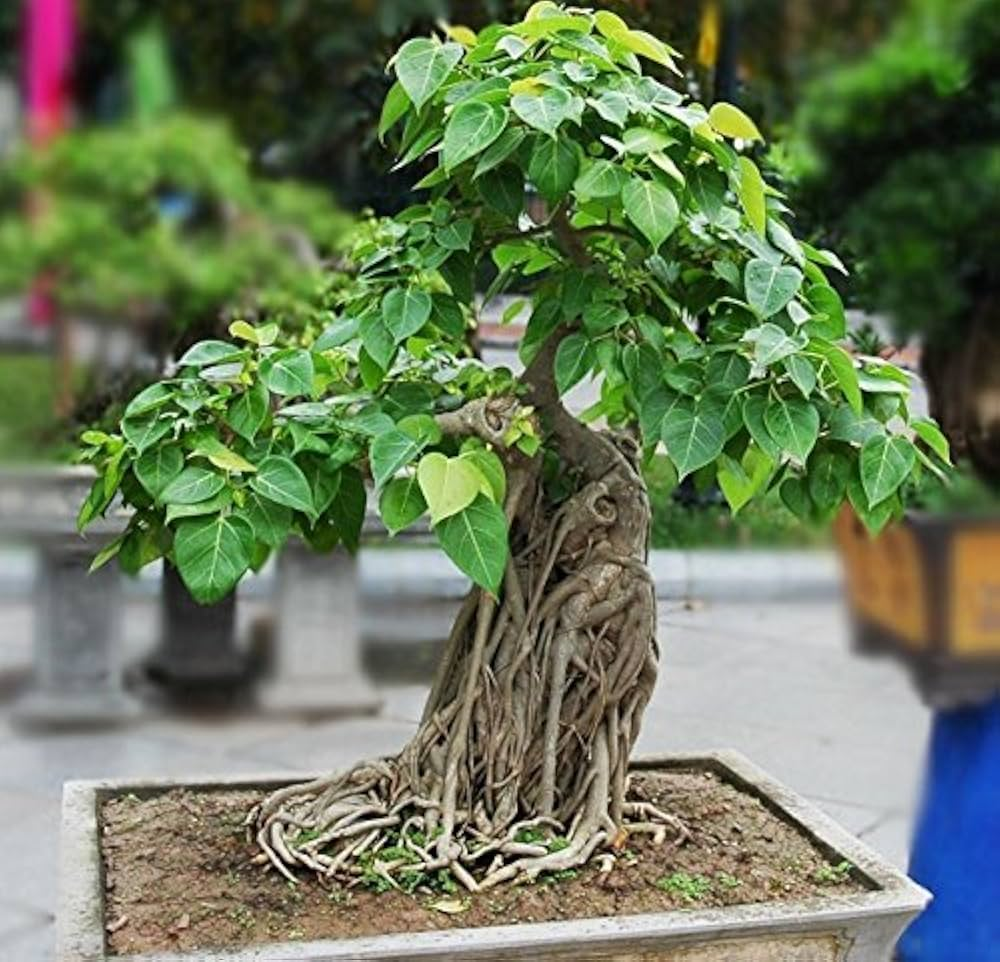
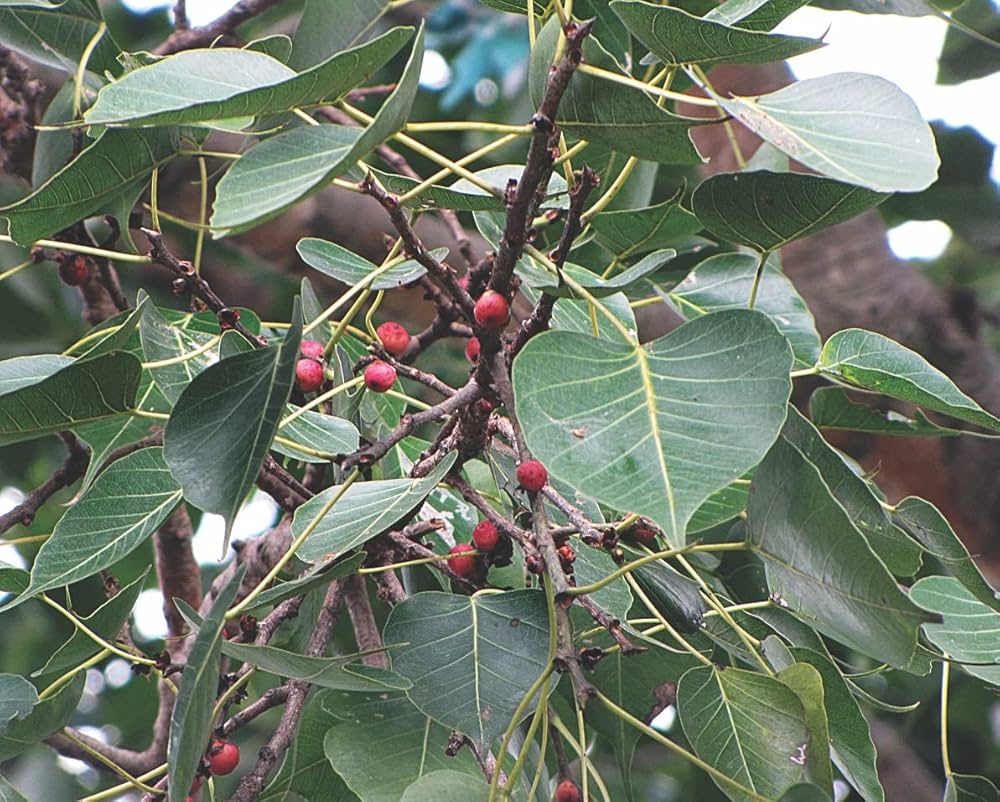
Asvattha is a large deciduous tree that can grow up to 20–30 meters in height. It has a wide-spreading canopy and a long lifespan.
Root System
- Possesses a deep taproot system
- Develops aerial roots as it matures
- Helps in strong anchorage and nutrient absorption
Stem (Trunk)
- Thick, woody, and rough in texture
- Bark is grayish-brown
- Exudes milky latex when cut
Leaves
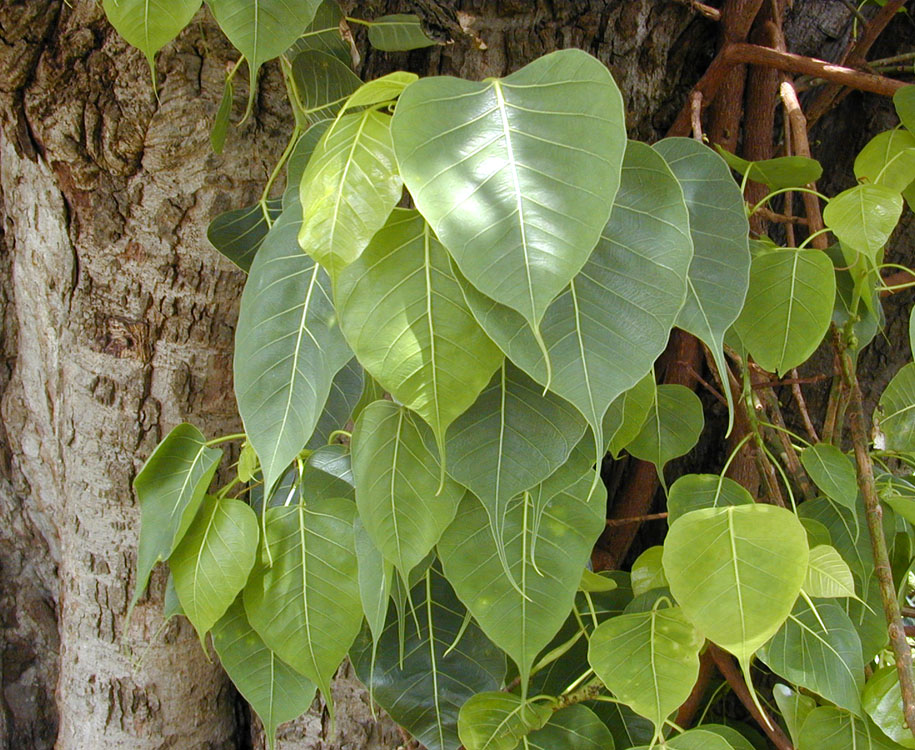
- Heart-shaped (cordate) with a long pointed tip
- Smooth, glossy surface
- Arranged alternately
- Leaves move even in slight wind (characteristic feature)
Flowers and Fruits
- Flowers are not visible externally (enclosed inside the fig structure)
- Fruits are small, round figs
- Turn purple or black when ripe
Ayurvedic Properties
- Rasa (Taste): Astringent, Bitter
- Guna (Qualities): Light, Dry
- Virya (Potency): Cooling
- Vipaka (Post-digestive effect): Pungent
- Dosha Effect: Balances Pitta and Kapha
Health Benefits
1. Supports Respiratory Health
Asvattha helps relieve cough, asthma, and breathing difficulties due to its soothing properties.
2. Improves Digestive Health
It strengthens digestion and helps manage diarrhea and indigestion.
3. Promotes Wound Healing
Its antibacterial and astringent properties help in healing wounds and ulcers.
4. Helps in Skin Disorders
Useful in treating skin infections, itching, and inflammation.
5. Controls Bleeding Disorders
Due to its astringent nature, it helps in controlling bleeding and promoting clotting.
6. Anti-inflammatory and Antioxidant
Reduces inflammation and protects cells from damage.
Traditional Uses in Ayurveda
- Bark decoction used for diarrhea and dysentery
- Leaf juice applied on wounds
- Latex used for skin problems
- Used in herbal formulations for respiratory and digestive issues
Modern Scientific Insights
Asvattha contains tannins, flavonoids, and phenolic compounds, which contribute to its antimicrobial, anti-inflammatory, and healing properties.
How to Use Asvattha
1. Bark Decoction
Boil bark in water and use for digestive problems.
2. Leaf Juice
Used internally (in small doses) or externally for wounds.
3. Powder (Churna)
Used in various Ayurvedic formulations.
Precautions
- Use in moderation
- Avoid self-medication in serious conditions
- Consult an expert before long-term use
Conclusion
Asvattha is a sacred and powerful Ayurvedic tree with a wide range of medicinal benefits. Its ability to support respiratory health, digestion, and healing makes it a valuable natural remedy. Its spiritual and medicinal importance together make it a unique symbol of holistic health.
Asvattha (Ficus religiosa), commonly known as the Peepal tree, holds a unique place in Ayurveda as well as in cultural and spiritual traditions. Renowned for its wide range of medicinal properties, it serves as a natural remedy for various health conditions, particularly those related to the respiratory system, digestion, and skin health.
Its astringent and cooling nature makes it highly effective in balancing Pitta and Kapha doshas, while its healing and anti-inflammatory properties support tissue repair and overall wellness. Traditionally, different parts of the Asvattha tree—such as bark, leaves, and latex—have been used in managing conditions like cough, wounds, ulcers, and digestive disorders.
Beyond its medicinal value, Asvattha is also deeply respected for its spiritual significance, symbolizing life, growth, and longevity. This dual importance enhances its role not only as a healing herb but also as a symbol of holistic well-being.
Modern scientific research further supports its traditional uses by identifying the presence of bioactive compounds such as tannins, flavonoids, and antioxidants, which contribute to its antimicrobial and therapeutic effects.
However, as with all medicinal plants, Asvattha should be used in appropriate amounts and preferably under expert guidance to ensure safety and effectiveness.
Incorporating Asvattha into a balanced lifestyle—along with proper diet, hygiene, and healthy habits—can help promote long-term health and vitality. Its timeless relevance in Ayurveda and continued recognition in modern science make it a truly valuable natural resource for holistic healing.
Medicinal Uses
- Wound: 50 gram of peepal stem
bark is boiled in 400 ml water till it
reduces to 100 ml. This lukewarm
decoction is used to wash the
wounds .This is helpful in infected
as well as non infected wounds
and it facilitates quick healing.
The root bark fine powder of
Asvattha is used for dusting over
the oozing skin lesions to stop
secretion.
- Mouth ulcer: 5-6 tender shoots
paste of Asvattha is retained
in the mouth and chewing for
5-10 minutes is helps to relieve
stomatitis. - Hyper Pigmentation: Early morning
fresh latex of Asvattha is collected
and is applied over the skin lesions.
This relieves hyper pigmentation
as well as discoloration of the
face. - Leucorrhoea: 2 ml of fresh latex
is added to 100ml of milk and
taken early in the morning in
empty stomach. This pacifies
long persisting non specific
leucorrhoea by 20-30 days
medication. - Colic: Internal administration of
50ml decoction of root bark of
Asvatta (10gms of bark powder
is boiled in 200ml of water till it
reduced to 50ml) added with salt
and jaggery twice daily, alleviates
severe colic.
Vernacular names
Assamese : Ahant
Bengali : Asvattha, Ashud, Ashvattha
English : Pipal tree
Gujrati : Piplo, Jari, Piparo, Pipalo
Hindi : Pipala, Pipal
Kannada : Arlo, Ranji, Basri, Ashvatthanara,
Ashwatha, Aralimara, Aralegida,
Ashvathamara, Basari, Ashvattha
Kashmiri : Bad
Malayalam : Arayal
Marathi : Pipal, Pimpal, Pippal
Oriya : Aswatha
Punjabi : Pipal, Pippal
Tamil : Ashwarthan, Arasamaram,
Arasan, Arasu, Arara
Telugu : Ravichettu
Asvattha (अश्वत्थ) is the Sanskrit name for the sacred fig tree (Ficus religiosa), known as the Peepal in India, holding deep spiritual significance in Hinduism, Buddhism, and Jainism as a symbol of the cosmic tree, knowledge, enlightenment, and the divine connection between heaven and earth, with its roots often symbolizing the divine (Brahman) and branches the material world. It’s revered as the abode of gods, associated with fertility, healing, and prosperity, and features prominently in Puranas, Upanishads, and daily rituals, sometimes even representing the human body or nervous system in esoteric traditions
.
Key Meanings & Symbolism:
- Sacred Tree: The holy fig, revered across Indian religions.
- Cosmic Tree: Represents the eternal structure of the universe, connecting spiritual and material realms, with roots above and branches below.
- Divine Manifestation: Considered a form of the Trimurti (Brahma, Vishnu, Shiva) in some texts, and the abode of deities.
- Knowledge & Enlightenment: Associated with wisdom and spiritual growth, similar to the Bodhi Tree where Buddha attained enlightenment.
- Human Body: Symbolically linked to the nervous system, with roots in the brain and branches throughout the body.
Cultural Significance:
- Rituals: Used in fertility rites, for gaining merit, curing diseases, and averting evil.
- Art & Literature: Extensively depicted in ancient Indian art, sculpture, and sacred texts like the Bhagavad Gita.
Modern Usage:
- Brand Name: Also used for modern products, such as online plant shops or incense (agarbatti).
