



Introduction
Elecampane is a traditional medicinal herb widely used for respiratory and digestive health. It has been used for centuries in European and Asian herbal medicine, especially for treating cough, bronchitis, and lung-related conditions. The root of the plant is the main part used for medicinal purposes.
Elecampane is known for its soothing, expectorant, and antimicrobial properties.
Elecampane is a traditional medicinal herb well known for its benefits in supporting respiratory and digestive health. It has been used for centuries in European and Asian herbal medicine, especially for treating cough, bronchitis, and lung-related conditions. The root of the plant is the main part used for its healing properties.
This herb contains active compounds such as inulin and essential oils, which help soothe the respiratory system, reduce inflammation, and promote the removal of mucus from the lungs. It is also valued for its ability to support digestion and improve appetite.
With its long history of use and natural therapeutic properties, elecampane continues to be an important herb in herbal medicine, particularly for maintaining respiratory health and overall well-being.
Botanical Description
- Scientific Name: Inula helenium
- Family: Asteraceae
- Plant Type: Perennial herb
- Part Used: Root
- Taste: Bitter and slightly spicy
- Nature: Warming
Common Names
- English: Elecampane
- Other Names: Horse-heal
Active Compounds
- Inulin (main compound)
- Alantolactone
- Essential oils
These compounds contribute to its expectorant and digestive benefits.
Traditional Uses
1. Respiratory Health
Elecampane is widely used to:
- Treat cough
- Reduce bronchitis
- Clear mucus from lungs
2. Expectorant Action
It helps:
- Loosen and expel mucus
- Ease chest congestion
3. Digestive Health
Traditionally used to:
- Improve digestion
- Reduce bloating
- Stimulate appetite
4. Antimicrobial Effects
Elecampane helps:
- Fight infections
- Support immune health
5. Anti-inflammatory Uses
It reduces:
- Inflammation in airways
- Throat irritation
Methods of Use
- Decoction/Tea: Root boiled in water
- Syrup: Used for cough relief
- Powder: Taken with water or honey
Precautions
- Use in moderate amounts
- Avoid during pregnancy
- Consult a doctor before use
Side Effects
- Allergic reactions (rare)
- Digestive discomfort (in excess)
Conclusion
Elecampane is a powerful herbal remedy known for its effectiveness in treating respiratory conditions and supporting digestion. Its natural expectorant and antimicrobial properties make it a valuable herb in traditional medicine. When used properly, it can provide significant health benefits.
Elecampane is a valuable medicinal herb known for its strong benefits in supporting respiratory and digestive health. It has been traditionally used to relieve cough, clear mucus from the lungs, and improve breathing, making it an effective remedy for various respiratory conditions. Its natural compounds also help enhance digestion and boost overall wellness.
When used in proper amounts, elecampane can be a safe and effective natural remedy. However, it should be taken with care and under proper guidance to avoid any unwanted effects.
Overall, elecampane remains an important herb in traditional medicine, valued for its ability to promote respiratory health, improve digestion, and support the body’s natural healing processes.
Elecampane (Inula helenium): A Powerful Herb for Respiratory Health
Elecampane is a well-known lung tonic traditionally used to clear mucus, soothe coughs, and support respiratory function. Its expectorant and antibacterial properties make it highly effective in treating various lung conditions.
Effects of Elecampane on the Respiratory System:
✅ Clears Mucus & Congestion – Acts as a powerful expectorant, helping to loosen and expel phlegm.
✅ Soothes Coughs & Irritation – Contains inulin, which coats and calms the respiratory tract.
✅ Fights Respiratory Infections – Has antibacterial properties, helping with bronchitis and lung infections.
✅ Supports Asthma & COPD – Helps relax bronchial passages, making breathing easier.
✅ Acts as a Natural Lung Cleanser – Detoxifies the lungs, beneficial for smokers and those exposed to pollutants.
✅ Boosts Immunity – Strengthens lung defenses against colds, flu, and other respiratory ailments.
How to Use Elecampane for Respiratory Health:
Elecampane Tea – Steep dried root for a soothing herbal remedy.
Tinctures & Capsules – Used for stronger effects in treating lung conditions.
Elecampane Honey Syrup – A natural cough syrup to ease irritation.
Steam Inhalation – Used to open airways and clear congestion.
Precautions:
🔹 Avoid during pregnancy.
🔹 May cause allergic reactions in individuals sensitive to Asteraceae plants.
Elecampane is a powerful respiratory herb, helping to clear the lungs, soothe coughs, and support overall lung function.
Description
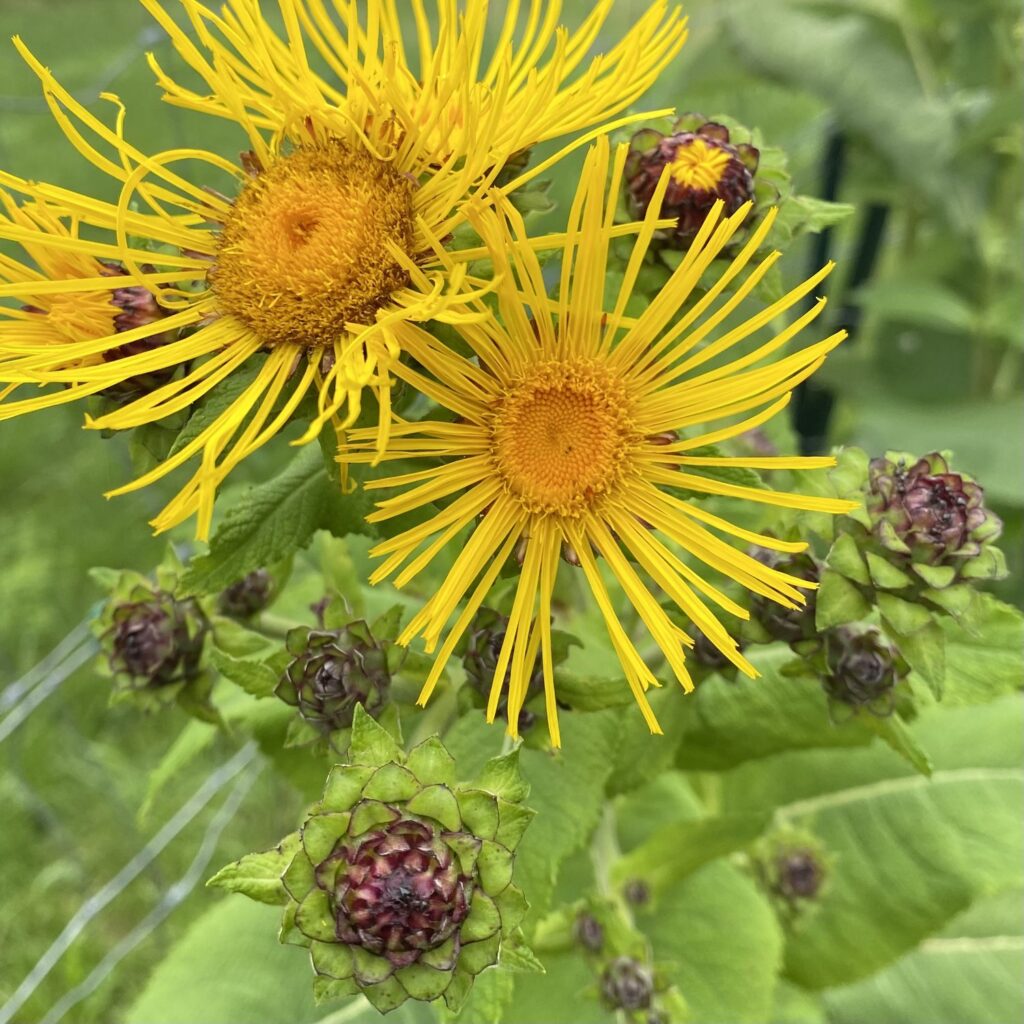
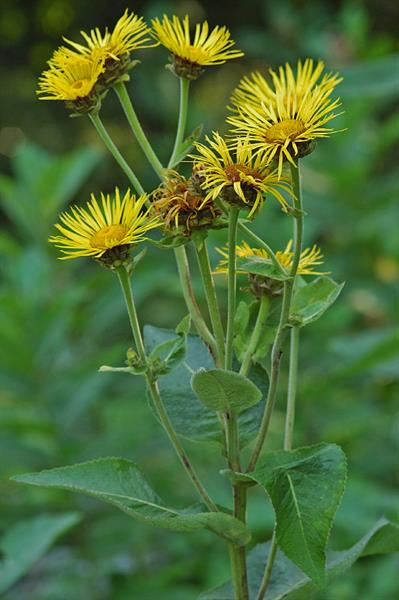
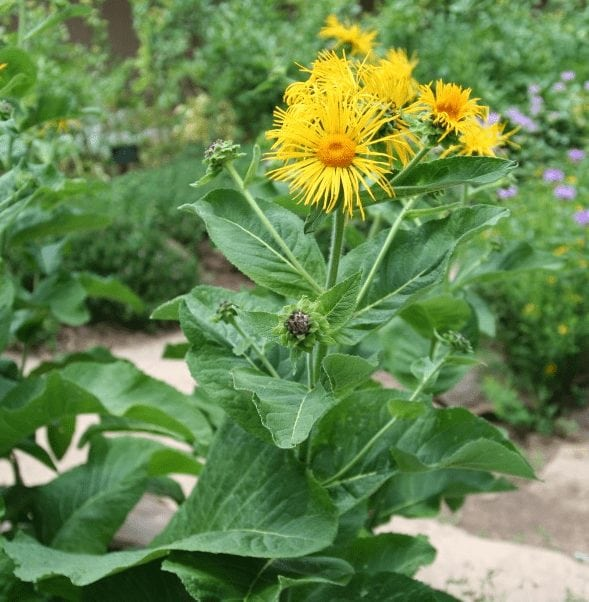
Elecampane is a rather rigid herb, the stem of which attains a height of about 90–150 cm (35–59 in). The leaves are large and toothed, the lower ones stalked, the rest embracing the stem; blades egg-shaped, elliptical, or lance-shaped, as big as 30 cm (12 in) long and 12 cm (4.7 in) wide. Leaves are green on the upper side with light, scattered hairs, but whitish on the underside because of a thick layer of wool. The flower heads up to 5 cm (2 inches) broad, each head containing 50-100 yellow ray flowers and 100-250 yellow disc flowers. The root is thick, branching and mucilaginous, and has a bitter taste and a camphoraceous odour with sweet floral (similar to violet) undertones.
Uses
The herb has been used since Ancient Greek times. Theophrastus recommended using the plant in oil and wine to treat the bites of vipers, spiders and pine caterpillars in his Historia Plantarum.
In Roman times, Apicius, a cookbook from the 1st century AD, describes it as a plant for testing whether honey is spoilt or not, the plant is immersed in the honey and then lit, if it burns brightly the honey is considered fine. The root was mentioned by Pliny in his Natural History both as a medicine and as a condiment.
In Medieval Europe, the roots were candied and eaten as confectionery.
In France and Switzerland it has been used in the manufacture of absinthe. In England it was formerly in great repute as an aromatic tonic and stimulant of the secretory organs. It is mentioned in an 1817 New-England almanack as a cure for hydrophobia when the root is bruised and used with a strong decoction of milk. It is used in herbal medicine as an expectorant and for water retention
