

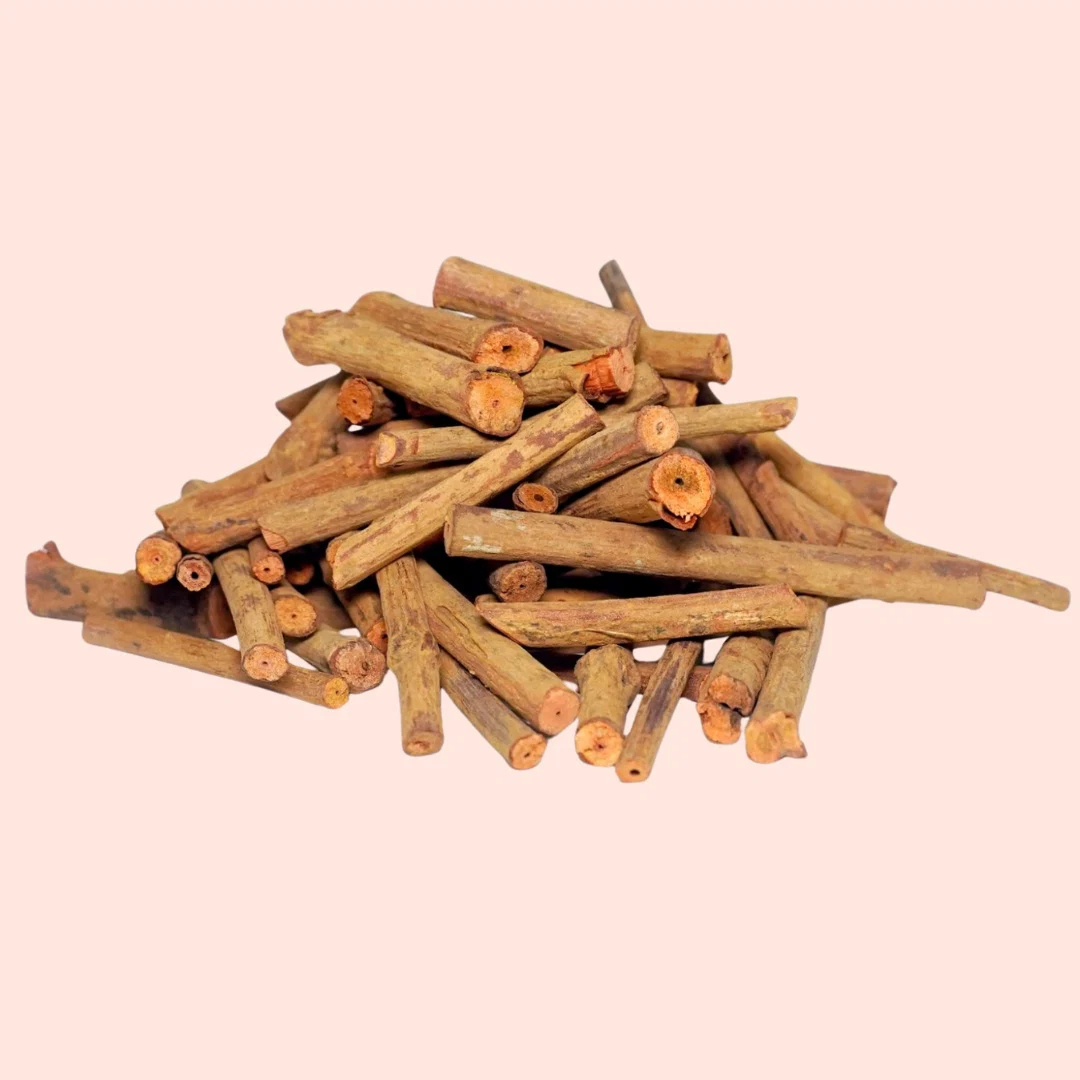
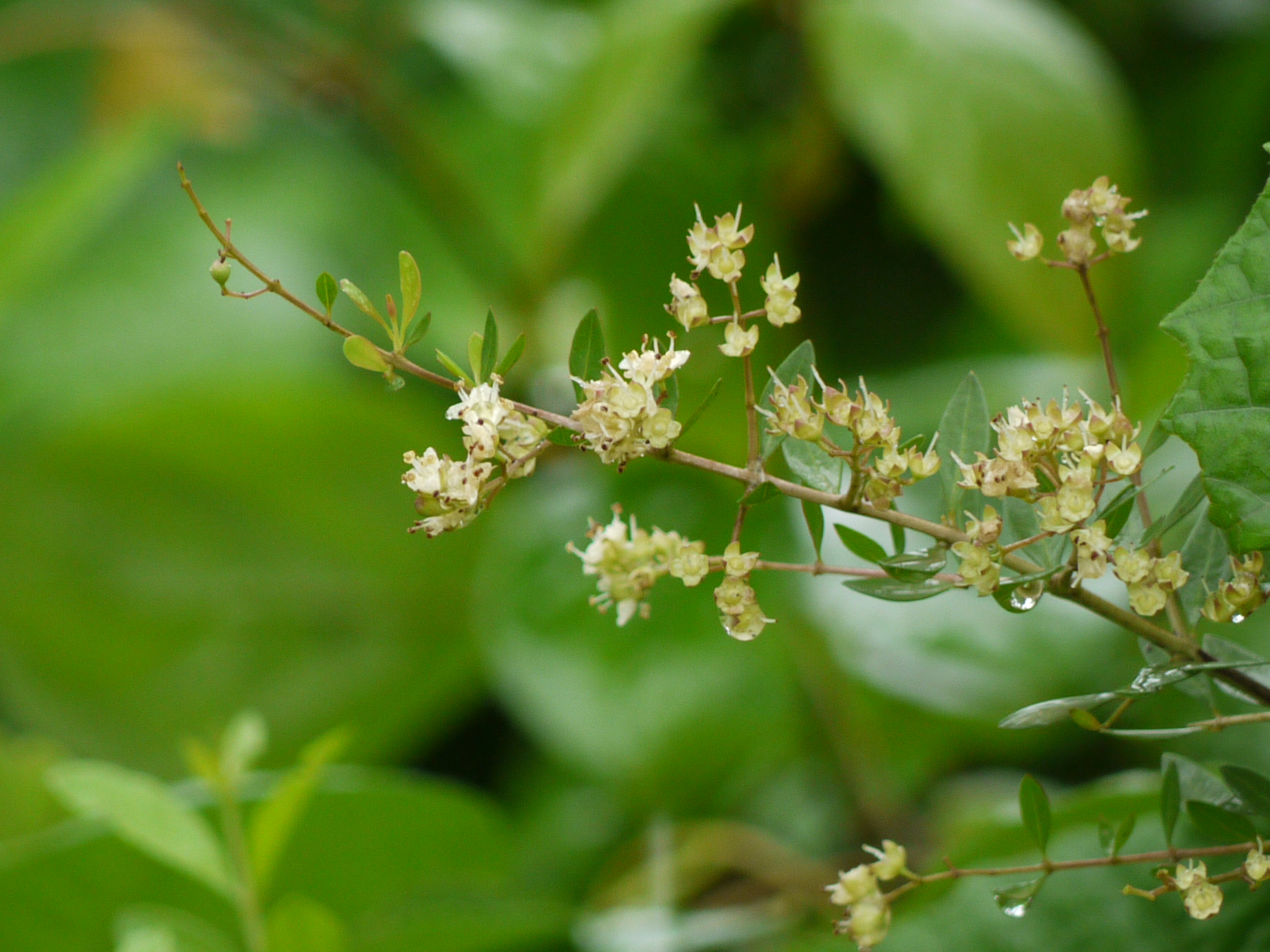
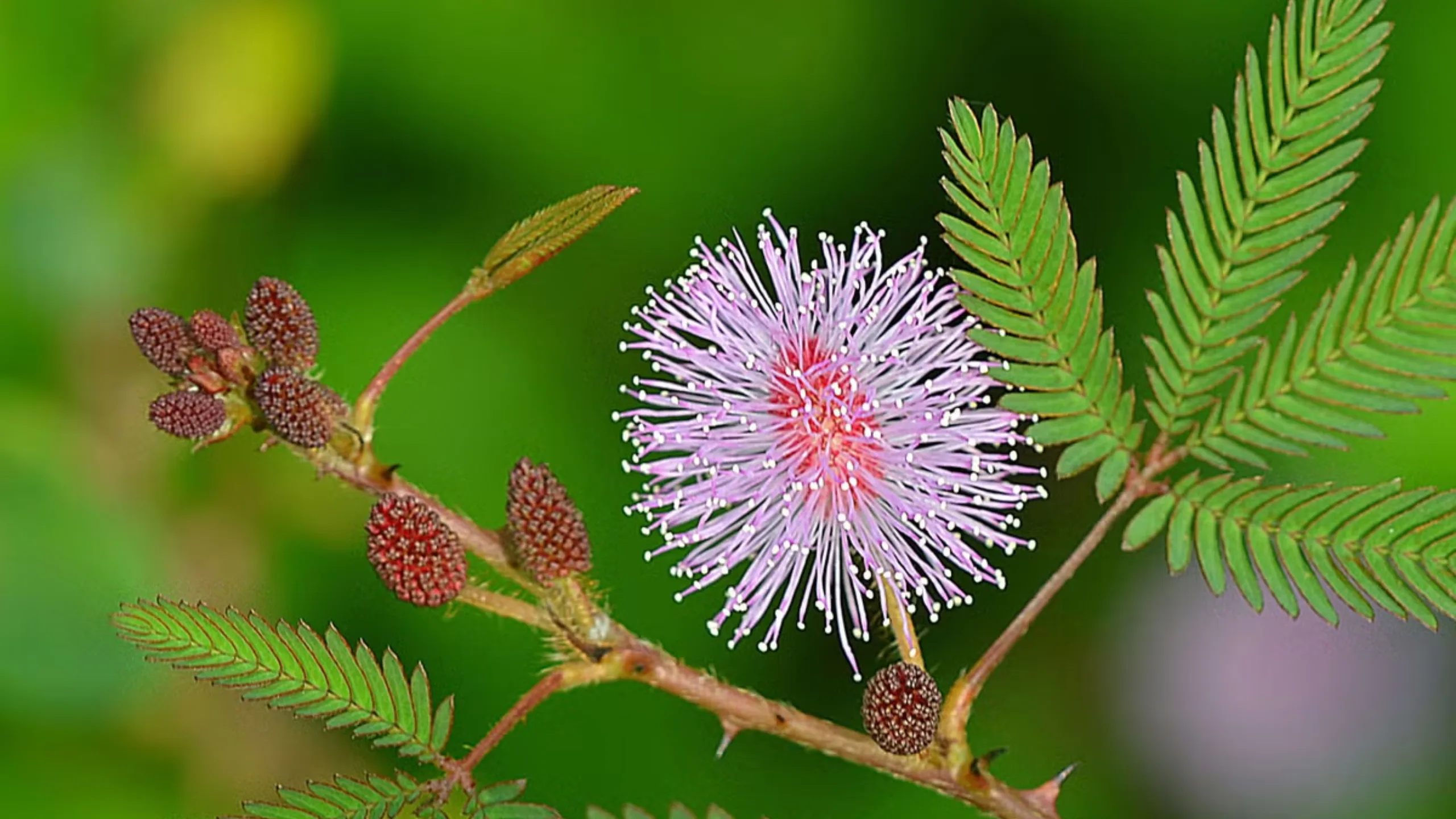

Abrus precatorius, Fabaceae
Introduction
Gunja, also known as Ratti, is a powerful and unique medicinal plant used in Ayurveda for centuries. Although Gunja is naturally toxic, when properly purified and processed, it becomes a highly effective medicine for many chronic diseases.
In ancient Ayurvedic literature such as Charaka Samhita and Sushruta Samhita, Gunja is described as an important herb in Rasashastra (Ayurvedic alchemy) and toxicology treatments.
Because of its strong medicinal nature, Gunja is always used under expert supervision and never consumed directly in raw form.
Gunja is a well-known medicinal plant in Ayurveda traditionally valued for its applications in hair care, skin wellness, joint support, and traditional therapeutic preparations. Scientifically identified as Abrus precatorius, Gunja is recognized by its striking red-and-black seeds, which have been used historically in herbal medicine, ornaments, and traditional measurements.
In Ayurveda, Gunja is carefully processed and used in specific formulations for supporting:
- Hair growth
- Skin health
- Joint comfort
- Nervous system balance
- Detoxification therapies
The roots, leaves, and purified seeds are used traditionally under expert supervision. Gunja is considered a potent herb and is generally used only after proper Ayurvedic purification (Shodhana) because raw seeds are naturally toxic if consumed improperly.
Ayurvedic practitioners traditionally use Gunja in external oils, herbal pastes, and specialized formulations for conditions related to Kapha and Vata imbalance, especially in chronic skin disorders, scalp issues, and localized pain.
Modern scientific interest in Abrus precatorius has explored its potential antioxidant, antimicrobial, anti-inflammatory, and traditional therapeutic properties, though safe medicinal use requires professional guidance due to the plant’s potent nature.
गुंजा का उपयोग किस लिए किया जाता है?
इनका उपयोग आमतौर पर बालों के तेल, हेयर मास्क या स्कैल्प ट्रीटमेंट के रूप में किया जाता है ताकि स्कैल्प को पोषण मिले, जड़ों को मजबूती मिले और बालों का समग्र स्वास्थ्य बेहतर हो। बालों की वृद्धि के लिए गुंजा के बीजों का उपयोग एक पारंपरिक प्रथा है जिसमें आमतौर पर तेल, स्कैल्प ट्रीटमेंट और घर पर बने हेयर मास्क के माध्यम से इनका बाहरी उपयोग शामिल होता है।
Botanical Description of Gunja
🔹 Scientific Classification
- Scientific Name: Abrus precatorius
- Family: Fabaceae
- Common Names: Gunja, Rosary Pea, Jequirity Bean, Ratti
- Plant Type: Perennial climbing vine
General Habit of the Plant
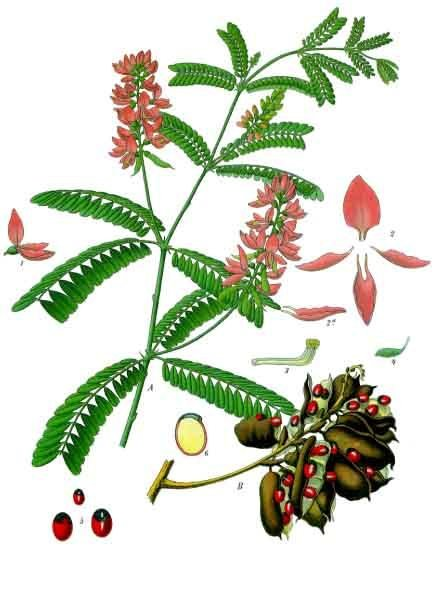
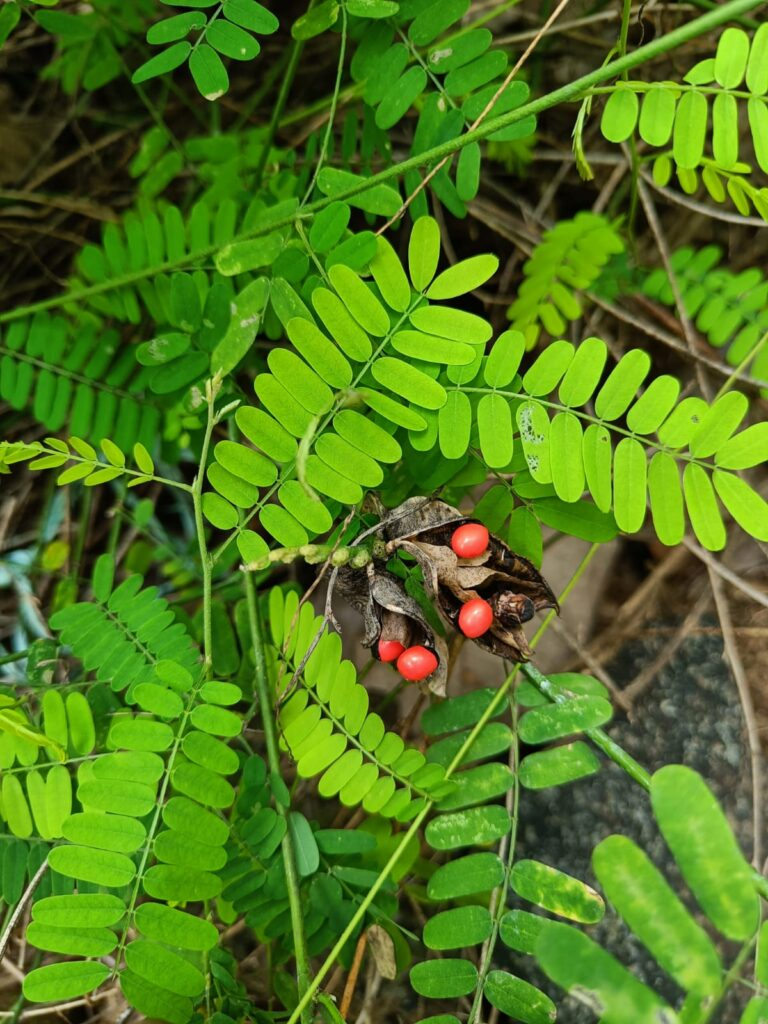
Gunja is a slender, twining perennial climber commonly found growing over shrubs, trees, fences, and bushes in tropical regions. It is best known for its highly attractive red-and-black seeds and delicate feathery foliage.
The plant is characterized by:
- Thin climbing stems
- Compound leaves
- Small clustered flowers
- Bright glossy seeds
It spreads rapidly in warm and humid climates.
Root System
- Slender woody root system
- Branched underground roots
- Moderately deep penetration into soil
Roots are traditionally used in some Ayurvedic formulations after purification.
Stem
- Thin, flexible, and twining stem
- Green when young
- Slightly woody with maturity
- Climbs using surrounding support structures
The stem allows the plant to spread extensively over nearby vegetation.
Leaves of Gunja
- Small pinnate compound leaves
- Arranged alternately along stems
- Numerous tiny leaflets on each side
Leaf Characteristics:
- Soft green appearance
- Smooth texture
- Feather-like arrangement
Leaves resemble tamarind leaves in structure.
Flowers of Gunja
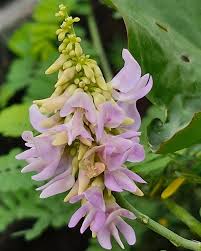
- Small pink, purple, or pale violet flowers
- Grow in short clusters (racemes)
- Butterfly-shaped flowers typical of Fabaceae family
Flowering Season:
- Usually during warm and rainy seasons
Flowers are delicate and ornamental in appearance.
Fruits & Seeds
🔸 Fruit (Pods)
- Small oblong pods
- Contain several seeds inside
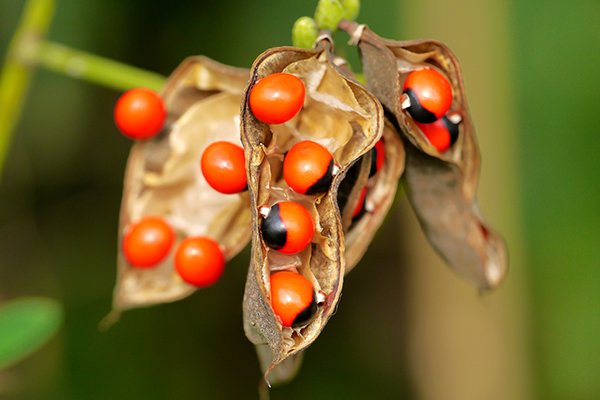
- Dry and split open upon maturity
🔸 Seeds
The seeds are the most distinctive feature of Gunja.
Seed Characteristics:
- Bright scarlet red color
- Black spot near one end
- Smooth glossy surface
- Hard and oval-shaped
Seeds are extremely attractive and historically used in ornaments and rosaries.
Important: Raw seeds are toxic and should never be consumed directly.
Habitat & Distribution
Gunja naturally grows in:
- India
- Sri Lanka
- Southeast Asia
- Tropical Africa
- Tropical America
Preferred Growing Conditions
🔹 Climate
- Tropical and subtropical climates
- Warm and humid environments preferred
🔹 Soil
- Well-drained soil
- Moderately fertile soil
🔹 Sunlight
- Full sunlight to partial shade
Thrives well in open natural environments.
Growth & Lifecycle
- Plant Type: Perennial climber
- Growth Rate: Fast-growing
- Propagation: Mainly through seeds
- Flowering Season: Summer and rainy seasons
Seeds germinate easily in warm climates.
Special Botanical Features
- Bright red-black ornamental seeds
- Slender climbing growth habit
- Feather-like leaves
- Toxic but medicinally significant plant
Identification in Nature
Gunja can generally be identified by:
- Thin climbing stems
- Small feathery leaves
- Purple-pink flowers
- Distinctive red-black glossy seeds
The seeds are the easiest identifying feature.
Important Botanical Note
Although Abrus precatorius is medicinally important in Ayurveda, the seeds naturally contain toxic compounds such as abrin and require proper purification before any traditional medicinal use.
Summary
Gunja (Abrus precatorius) is a fast-growing perennial climbing plant known for its beautiful red-and-black seeds, feathery leaves, and traditional Ayurvedic significance. The plant has been historically valued for external therapeutic applications, ornamental use, and cultural importance. However, due to the natural toxicity of its seeds, it should only be used in properly processed Ayurvedic preparations under expert guidance.
Ayurvedic Properties of Gunja
Overview in Ayurveda
Abrus precatorius, commonly known as Gunja, is a potent medicinal herb traditionally used in Ayurveda for supporting hair health, skin wellness, joint comfort, and external therapeutic care. Due to its naturally toxic nature, Gunja is used only after proper purification (Shodhana) in Ayurvedic medicine.
Ayurveda primarily values Gunja for balancing Kapha and Vata doshas, especially in chronic skin conditions, scalp disorders, localized swelling, and stiffness. The purified seeds, roots, and leaves are used in carefully prepared formulations under expert supervision.
🔹 Rasa (Taste)
Gunja possesses:
- Tikta (Bitter)
- Kashaya (Astringent)
- Katu (Pungent)
These tastes help:
- Reduce Kapha accumulation
- Support cleansing actions
- Improve circulation and tissue stimulation
🔹 Guna (Qualities)
- Laghu (Light)
- Tikshna (Sharp/Penetrating)
Ayurvedic Significance:
These qualities help:
- Penetrate deep tissues
- Stimulate local circulation
- Reduce stagnation and heaviness
Especially useful in external applications.
🔹 Virya (Potency)
- Ushna (Hot/Warming Potency)
Warming nature helps:
- Reduce Vata stiffness
- Improve circulation
- Support scalp and skin stimulation
🔹 Vipaka (Post-Digestive Effect)
- Katu Vipaka (Pungent post-digestive effect)
Traditionally associated with:
- Kapha reduction
- Cleansing action
- Metabolic stimulation
🔹 Dosha Effect
Helps Balance:
- Kapha
- Vata
Excessive or improper use may aggravate Pitta due to its heating and sharp qualities.
Main Ayurvedic Actions of Gunja
🔸 Keshya
Traditionally supports:
- Hair growth
- Hair nourishment
- Scalp wellness
Often used in medicated hair oils.
🔸 Kushtaghna
Traditionally beneficial in:
- Chronic skin disorders
- Itching
- Skin impurities
🔸 Vedanasthapana
May help support:
- Joint comfort
- Localized muscular discomfort
- Stiffness relief
🔸 Shothahara
Traditionally used to help reduce:
- Local swelling
- Inflammatory discomfort
🔸 Krimighna
Traditionally believed to help combat:
- Harmful microbes
- External skin impurities
Effect on Agni (Digestive Fire)
Gunja is not commonly used internally in general Ayurvedic practice due to safety concerns. However, its sharp and heating properties are traditionally considered metabolically stimulating after purification.
Internal use requires strict professional supervision.
Role in Hair & Scalp Care
Gunja is especially famous in Ayurveda for:
- Supporting scalp circulation
- Strengthening hair roots
- Promoting healthy hair growth
Frequently included in traditional medicated oils and external scalp applications.
Role in Skin Wellness
Traditionally applied externally for:
- Skin blemishes
- Chronic itching
- Localized skin disorders
Often combined with other soothing herbs.
Effect on Vata & Kapha Disorders
🔹 For Vata
Helps:
- Reduce stiffness
- Improve warmth and circulation
🔹 For Kapha
Supports:
- Reduction of heaviness
- Cleansing and stimulation
Effect on Dhatus (Body Tissues)
Gunja mainly affects:
- Twak Dhatu (Skin tissues)
- Mamsa Dhatu (Muscle tissues)
- Kesha (Hair tissues)
Traditionally used for external tissue stimulation and nourishment.
Effect on Srotas (Body Channels)
Supports:
- Swedavaha Srotas (sweat and skin channels)
- Mamsavaha Srotas (muscle channels)
Helps improve local circulation and tissue activity.
Traditional Ayurvedic Uses
Gunja is traditionally used in:
- Hair oils
- Scalp applications
- External herbal pastes
- Skin-supportive formulations
- Joint massage oils
Important Ayurvedic Safety Warning
Raw seeds of Abrus precatorius contain toxic compounds such as abrin.
Important Precautions:
- Never consume raw seeds
- Use only purified Ayurvedic preparations
- Avoid self-medication
- Internal use only under expert supervision
External therapeutic use is more common.
Ayurvedic Purification (Shodhana)
Before medicinal use, Gunja seeds are traditionally purified using specialized Ayurvedic methods to reduce toxicity.
Proper purification is essential for safety.
Summary
Abrus precatorius is a potent Ayurvedic herb traditionally valued for supporting hair growth, scalp health, skin wellness, and localized therapeutic care. Its warming, sharp, and penetrating qualities help balance Kapha and Vata doshas, especially in chronic skin and scalp-related conditions.
However, due to its natural toxicity, Gunja must only be used in properly purified Ayurvedic preparations and under qualified professional guidance.
Vernacular names
Assamese : Rati
Bengali : Kunch, Shonkainch
English : Jequirity
Gujrati : Rati, Chanothee
Hindi : Ratti, Ghungchi
Kannada : Galuganji, Gulagunjee
Kashmiri : Kath
Malayalam : Kunni, Cuvanna Kunni
Marathi : Gunja
Oriya : Kainch
Punjabi : Ratti
Tamil : Kuntri, Kunrimani, Kundamani
Telugu : Guriginja, Gurivinda
Urdu : Ghongcha, Ratti
Conclusion
Gunja (Ratti) is a powerful but sensitive herb in Ayurveda. When purified and used correctly, it helps in treating skin diseases, hair problems, joint pain, and nervous disorders. However, improper use can be dangerous.
Therefore, Gunja should always be used under professional Ayurvedic supervision. It represents the principle of Ayurveda where even poison can become medicine when handled wisely.
With proper guidance, Gunja can become a valuable part of holistic healing.
Gunja, scientifically known as Abrus precatorius, is a traditionally important Ayurvedic herb valued for its applications in hair care, skin wellness, scalp nourishment, and external therapeutic support. Its warming, sharp, and penetrating qualities help balance Kapha and Vata doshas, making it especially useful in traditional formulations for chronic scalp issues, localized stiffness, and certain skin-related conditions.
For centuries, properly purified Gunja has been used in Ayurvedic oils, herbal pastes, and specialized external preparations to support healthy hair growth, improve scalp circulation, and promote skin wellness. The plant also holds cultural significance due to its distinctive red-and-black seeds, which were historically used in ornaments and traditional weight measurements.
However, Gunja is a potent herb that naturally contains toxic compounds in its raw form. Therefore, it should only be used after proper Ayurvedic purification (Shodhana) and under the supervision of qualified practitioners. When used safely and correctly, Gunja may provide a natural and traditional approach to maintaining healthy hair, balanced skin, localized comfort, and overall external wellness naturally.
