

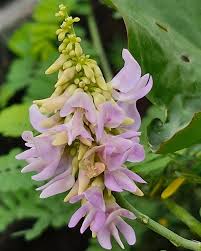

Aristolochia indica,
Aristolochiaceae
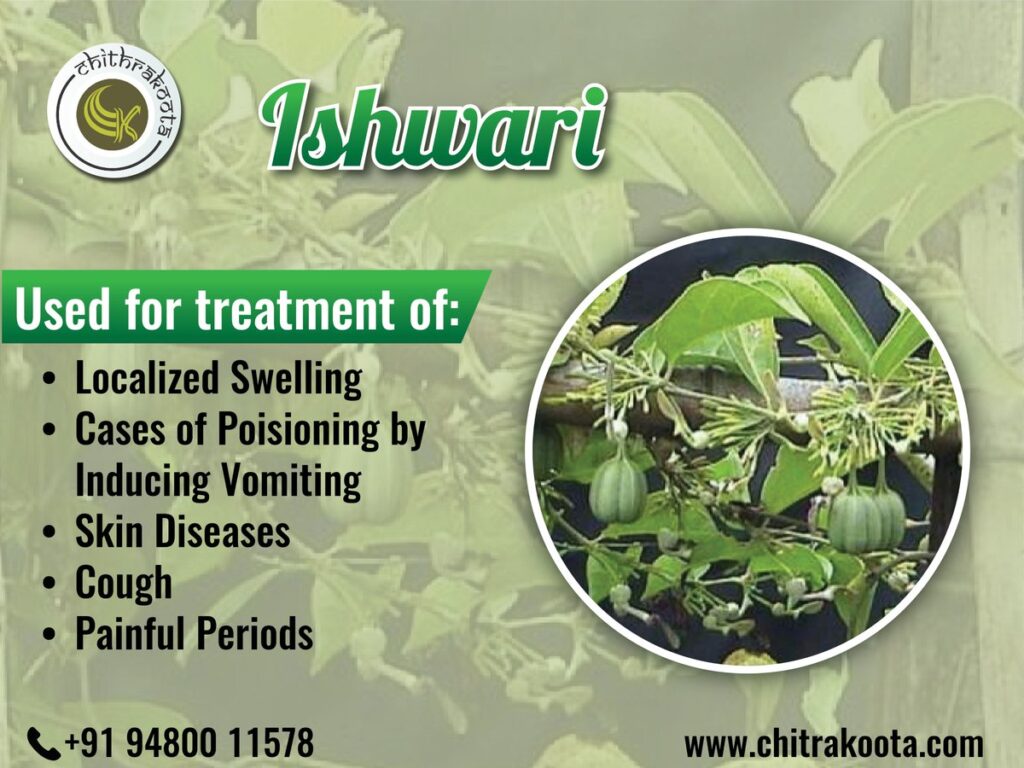
Introduction to Isvari
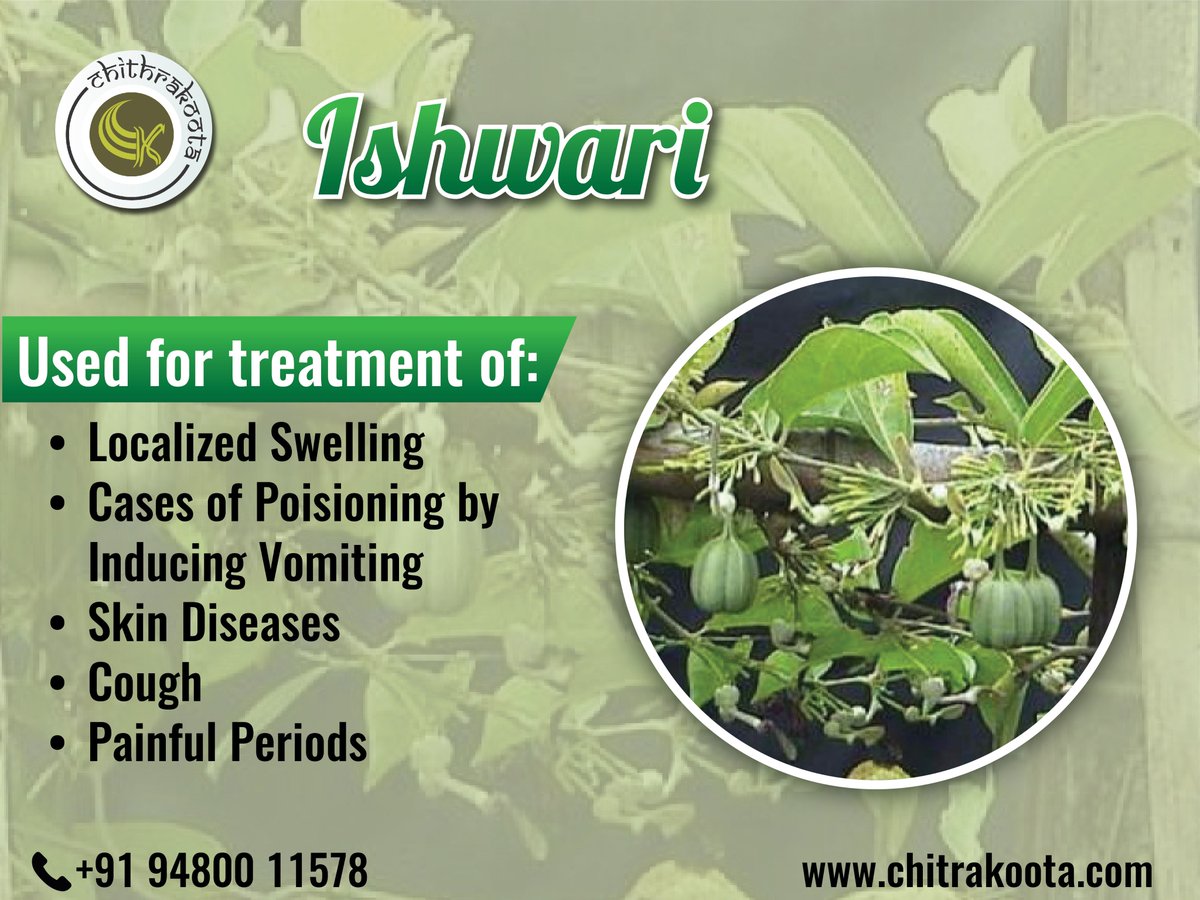
Isvari, also known as Ishvari, is an important medicinal plant in Ayurveda, mainly used for women’s health, digestion, skin diseases, and detoxification therapies. It is especially famous for its traditional use in childbirth-related problems and gynecological disorders.
In classical Ayurvedic texts such as Bhavaprakasha Nighantu, Isvari is mentioned for its cleansing, stimulating, and healing properties.
Because of its special role in female health, Isvari is sometimes called a “Herb of Women’s Wellness” in traditional medicine.
Botanical Information
- Botanical Name: Aristolochia indica
- Family: Aristolochiaceae
- Common Names:
- Sanskrit: Isvari / Ishvari
- Hindi: Isharmul, Garudbel
- English: Indian Birthwort
Plant Description
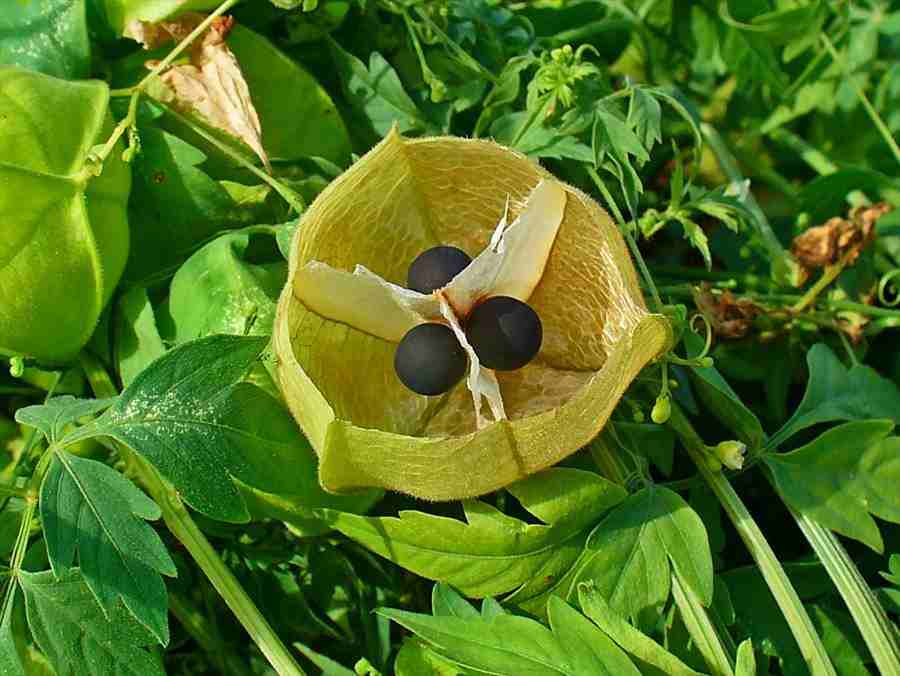
Isvari is a climbing plant with:
- Thin, twining stems
- Heart-shaped leaves
- Purple-brown tubular flowers
- Long roots with medicinal value
It grows mainly in tropical regions of India and Southeast Asia. The roots and stems are mostly used in medicine.
Ayurvedic Properties of Isvari
According to Ayurveda, Isvari has strong therapeutic qualities.
Rasa (Taste)
- Tikta (Bitter)
- Katu (Pungent)
Guna (Quality)
- Laghu (Light)
- Ruksha (Dry)
- Tikshna (Sharp)
Virya (Potency)
- Ushna (Hot)
Vipaka (Post-digestive Effect)
- Katu (Pungent)
Dosha Effect
Isvari mainly balances:
✔️ Kapha
✔️ Vata
❌ May aggravate Pitta if overused
So, it is mainly useful in Vata-Kapha disorders.
Active Chemical Components
Isvari contains important bioactive compounds such as:
- Aristolochic acids
- Alkaloids
- Glycosides
- Flavonoids
- Essential oils
- Resins
Some compounds are toxic in high dose, so careful use is necessary.
Health Benefits of Isvari
1. Supports Women’s Health
Isvari is traditionally used for gynecological problems.
Benefits:
- Helps in difficult labor
- Regulates menstruation
- Reduces uterine weakness
- Supports post-delivery recovery
(It should be used only under expert supervision.)
2. Improves Digestive System
Isvari strengthens digestion.
- Improves appetite
- Reduces gas and bloating
- Treats indigestion
- Removes intestinal toxins
It improves Agni (digestive fire).
3. Useful in Skin Diseases
Isvari helps in chronic skin disorders.
Benefits:
- Reduces itching
- Treats eczema
- Helps in psoriasis (supportive)
- Purifies blood
It is used in blood-cleansing formulations.
4. Helps in Detoxification
Isvari supports natural detox.
- Removes toxins (Ama)
- Cleans intestines
- Purifies blood
- Improves metabolism
It is used in purification therapies.
5. Reduces Inflammation and Pain
Isvari has anti-inflammatory properties.
- Relieves joint pain
- Reduces swelling
- Helps in arthritis
- Reduces muscular pain
It is useful in Vata disorders.
6. Supports Respiratory Health
Isvari helps in Kapha-related problems.
- Reduces mucus
- Helps in cough
- Supports asthma (supportive)
- Clears chest congestion
7. Antimicrobial Action
Isvari has natural antibacterial and antifungal effects.
- Protects against infections
- Improves immunity
- Supports wound healing
8. Helps in Wound Healing
External application of Isvari paste is used for:
- Cuts and wounds
- Insect bites
- Skin infections
(Under guidance only)
Uses of Isvari in Ayurveda
Isvari is used in traditional formulations such as:
- Uterine tonics
- Detox medicines
- Blood-purifying yogas
- Pain-relief formulations
It is mainly used in specialized treatments.
Forms of Isvari Available
1. Root Powder (Churna)
Most commonly used form.
2. Decoction (Kashaya)
Prepared by boiling roots.
3. Paste (Lepa)
For external use.
4. Classical Formulations
Used in traditional compounds.
Dosage of Isvari
Warning: Isvari is a potent and potentially toxic herb. Never self-medicate.
General Dosage (Under Doctor’s Supervision)
| Form | Quantity |
|---|---|
| Powder | 125–500 mg |
| Decoction | As prescribed |
| Paste (External) | As required |
Dosage varies based on patient condition.
Best Time to Take Isvari
- For women’s disorders → As advised
- For detox → During therapy
- For digestion → After meals (doctor’s advice)
Home Remedies Using Isvari
🚫 Isvari is NOT recommended for home remedies due to safety concerns.
Always consult an Ayurvedic physician.
Side Effects of Isvari
Improper or excess use may cause:
⚠️ Kidney damage
⚠️ Nausea and vomiting
⚠️ Abdominal pain
⚠️ Weakness
⚠️ Toxic reactions
Long-term misuse is dangerous.
Precautions
✔️ Never self-medicate
✔️ Avoid during pregnancy
✔️ Not for children
✔️ Avoid in kidney disease
✔️ Use only under supervision
✔️ Buy from trusted source
Isvari in Modern Research
Modern studies show that Aristolochia species contain aristolochic acids, which may be harmful to kidneys and increase cancer risk if misused.
Therefore, modern Ayurveda emphasizes:
✅ Controlled dosage
✅ Limited duration
✅ Professional supervision
Importance of Isvari in Ayurveda
Isvari plays an important role in:
- Women’s health management
- Detox therapies
- Blood purification
- Chronic disease support
It is a specialized therapeutic herb, not meant for daily consumption.
Conclusion
Isvari (Ishvari / Indian Birthwort) is a powerful but sensitive medicinal plant in Ayurveda. It is mainly used for women’s disorders, detoxification, skin problems, and pain relief. When used correctly under expert guidance, it can provide strong healing benefits.
However, due to its toxic nature in high doses, Isvari must always be used carefully and responsibly.
Vernacular names
Assamese : Jarvande
Bengali : Isheri
English : Indian Birthwort, Serpent Root
Gujarati : Ruhimool, Iswarimool
Hindi : Ishwari
Kannada : Ishwari Beru, Toppalu
Malayalam : Karaleyan
Marati : Sapsan
Oriya : Gopikaron
Tamil : Perumarundu, Ichchuramule
Telugu : Iswari, Nallaiswari
Urdu : Zarawand Hindi
Medicinal Uses
- Insects bite: Isvari leaves paste
applied or rubbed well over the
bitten area. Also 10-20 ml of leaf
juice is given with pepper powder
internally for 6-7 times daily for
insects bite and also in poisonous
bites of snakes. The leaf juice is
the best medicine for all sort of
toxic bites. - Fever: The juice of the whole
plant of Isvari in the dose of 5-10
ml given thrice a day is useful in
fever and diarrhoea etc. - Joint pains: The whole plant
paste of Isvari, mildly heated with
castor oil and applied locally is
beneficial in joint pains. - Bronchial asthma: The root
powder of Isvari is given in dose
of 3 grams with honey in cases
of toxicities, bronchial asthma,
cough and fever. - Anaemia: Administration of 5gms
of Isvari leaves powder along with
water twice daily is beneficial in
anaemia. - Headache: The paste of Isvari
leaves and turmeric is applied on
forehead twice daily is beneficial.
