

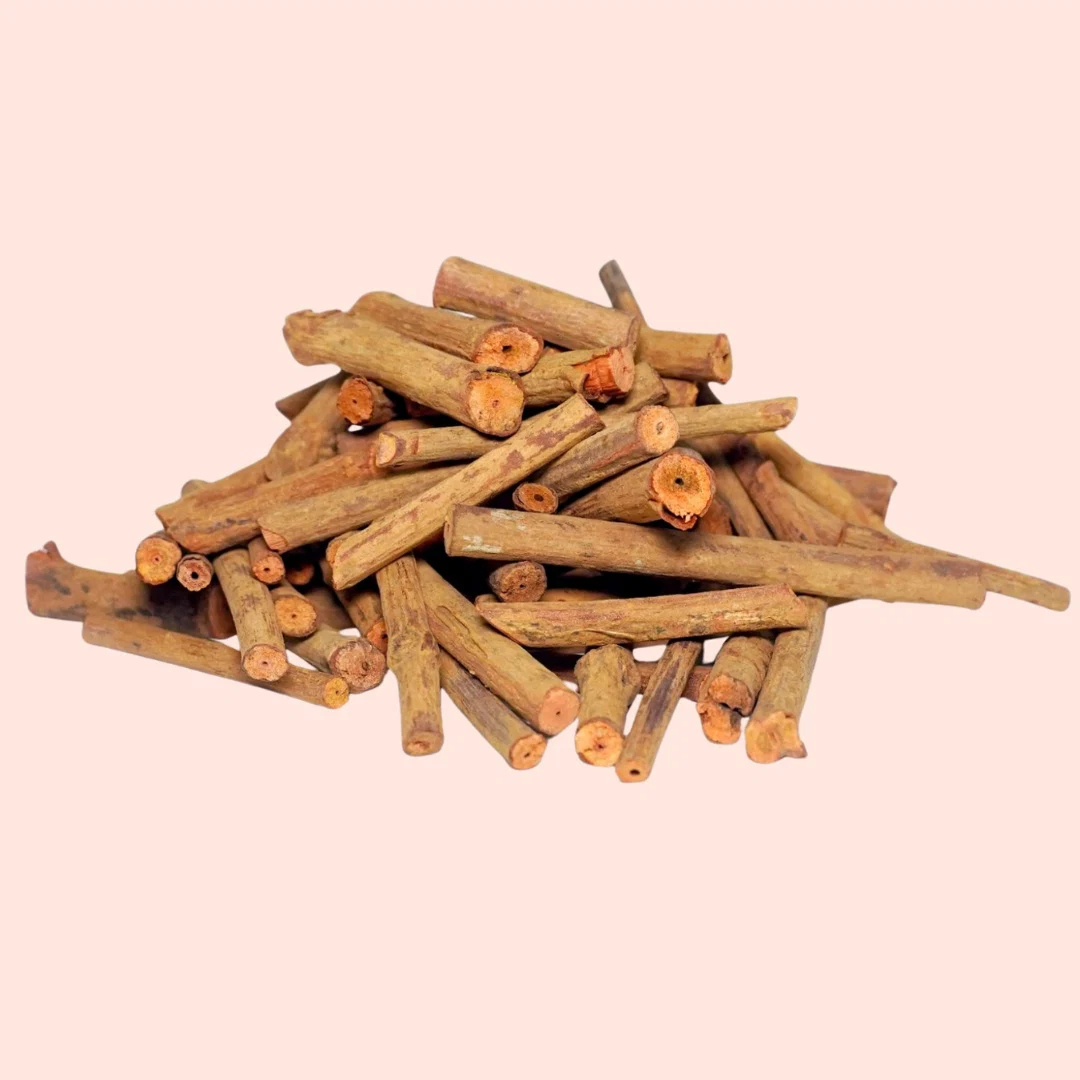
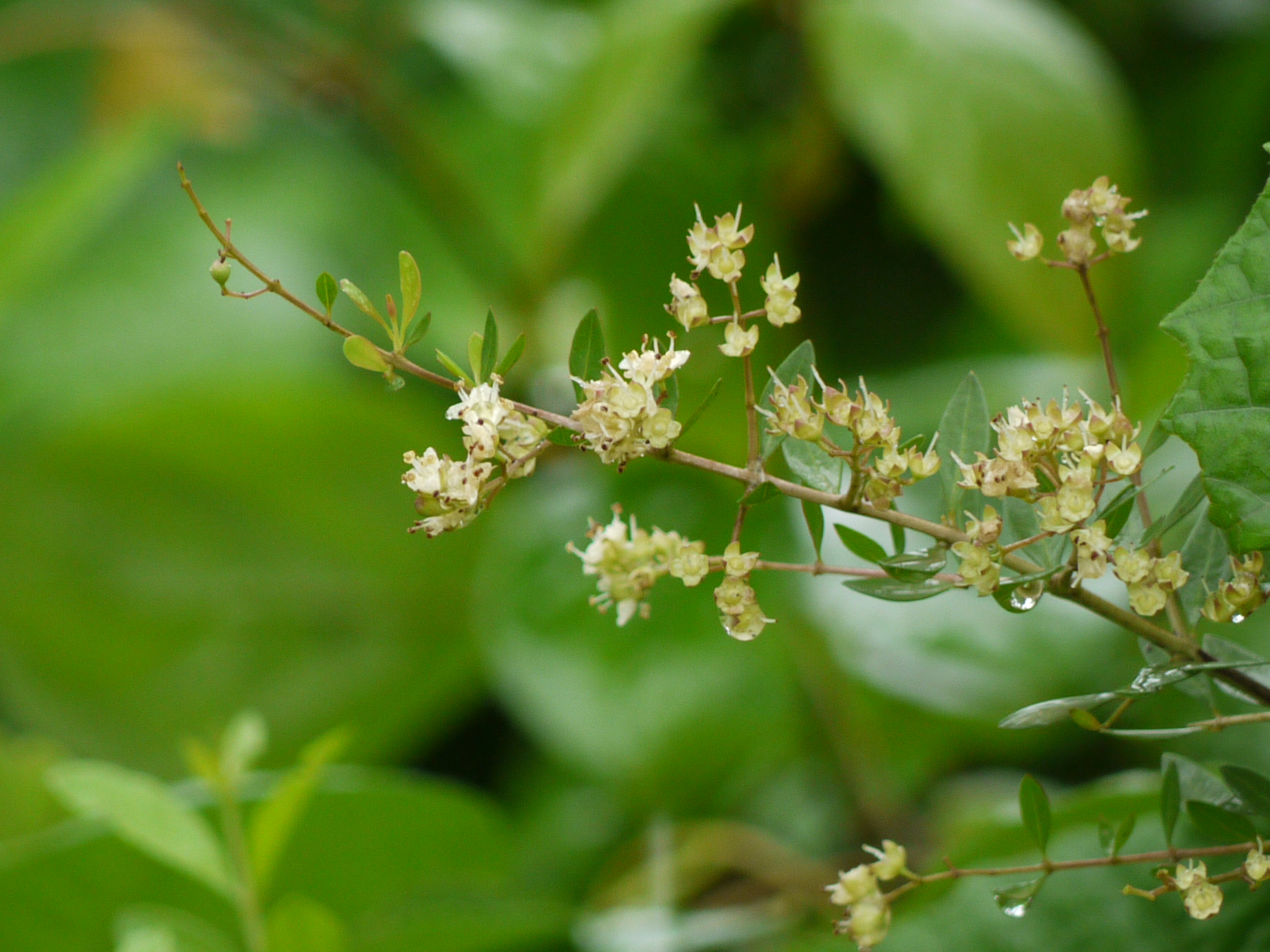

Cinnamomum camphora,
Lauraceae
Introduction
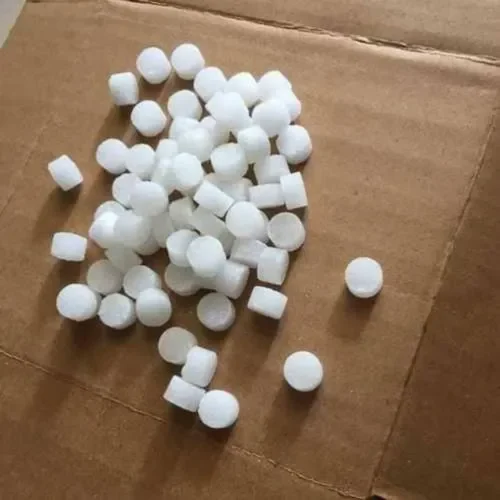
Karpura, commonly known as camphor, is a highly valued substance in Ayurveda known for its strong aroma and powerful medicinal properties. It is obtained from the camphor tree and has been used for centuries in traditional medicine, religious rituals, and daily wellness practices. Karpura is especially known for its cooling, cleansing, and soothing effects on the body.
Karpura, commonly known as camphor, is a well-known substance in Ayurveda valued for its strong aroma and powerful medicinal properties. It is obtained from the wood of the camphor tree and has been used for centuries in traditional medicine, religious rituals, and daily wellness practices.
Karpura is especially known for its cooling, soothing, and cleansing effects on the body. It contains natural compounds that help relieve respiratory problems, reduce pain, and protect against infections. It is also widely used in aromatherapy for calming the mind and promoting relaxation.
With its long history of use and wide range of benefits, Karpura continues to be an important natural remedy in Ayurveda for maintaining health, purity, and overall well-being.
Botanical Description (Detailed)
Karpura (Camphor) is derived from the evergreen tree Cinnamomum camphora, a large, aromatic species belonging to the Lauraceae family. This tree is widely known for producing natural camphor crystals from its wood and other plant parts.
🔹 Scientific Classification
- Kingdom: Plantae
- Order: Laurales
- Family: Lauraceae
- Genus: Cinnamomum
- Species: C. camphora
General Habit
Karpura is a large, long-lived evergreen tree that can grow up to 20–30 meters in height. It has a broad canopy with dense foliage and emits a strong, characteristic aroma due to the presence of volatile oils.
🔸 Stem & Bark
- Thick, woody trunk
- Bark is rough, greyish-brown
- Older bark becomes fissured
- Contains aromatic compounds
The wood is the primary source of natural camphor.
🔸 Leaves
- Simple, alternate, and glossy
- Oval to lance-shaped
- Bright green with a waxy surface
- Prominent veins (usually three main veins from the base)
- Strong aromatic smell when crushed
Leaves are rich in essential oils.
🔸 Flowers
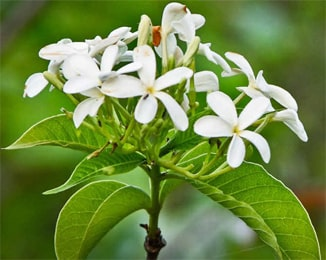
- Small, white to pale yellow
- Arranged in clusters (panicles)
- Mildly fragrant
- Bloom in spring season
🔸 Fruits
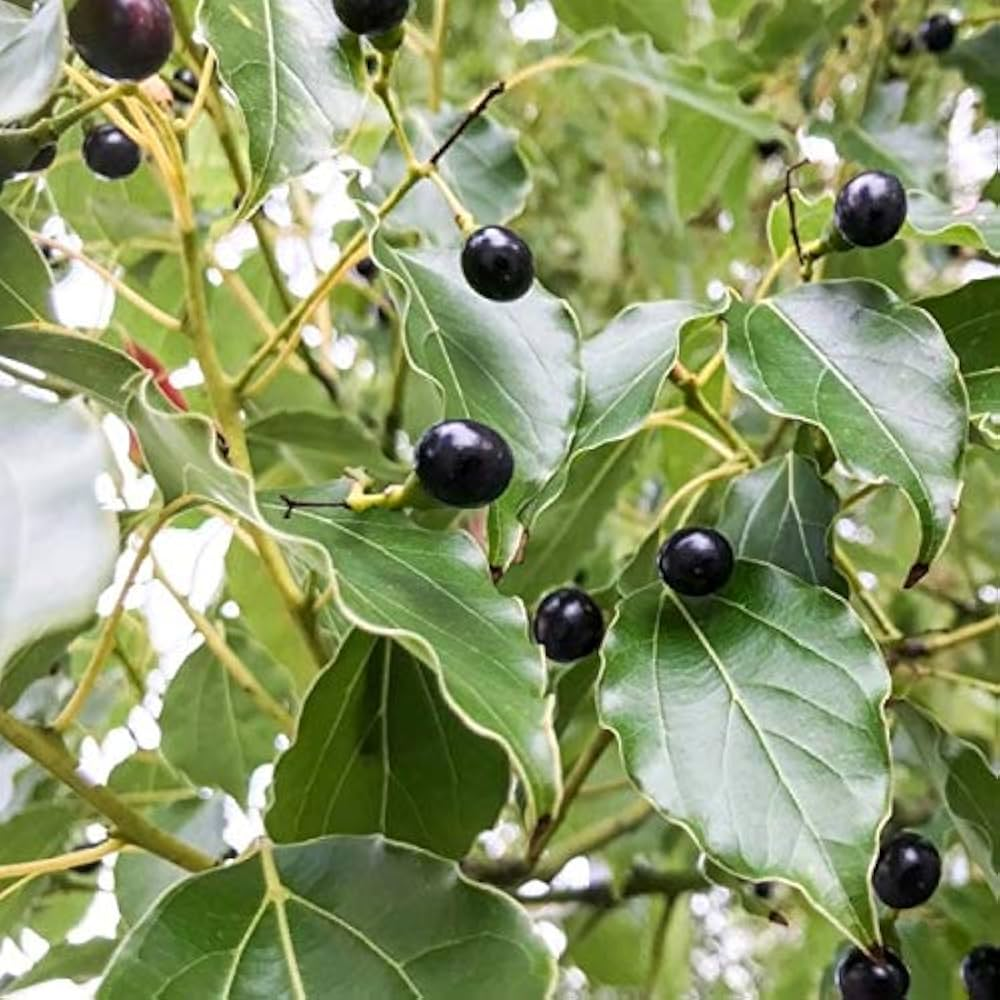
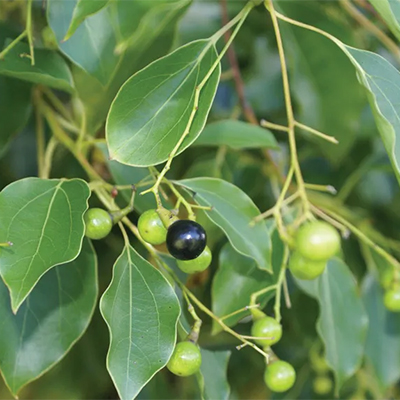
- Small, round, berry-like fruits
- Initially green, turning dark purple or black when ripe
- Contain a single seed
🔸 Camphor Formation
- Extracted from wood, roots, and branches
- Obtained through steam distillation
- Forms white, crystalline, waxy substance
- Highly aromatic and volatile
Habitat & Distribution
Karpura tree is native to:
- China
- Japan
- Taiwan
It is also cultivated in:
- India (especially Nilgiri hills)
- Southeast Asia
Growth Conditions
- Soil: Well-drained, fertile soil
- Water: Moderate rainfall
- Sunlight: Full sunlight
- Temperature: Warm, subtropical climate
The tree thrives in humid and warm environments.
Growth & Lifecycle
- Propagation: Seeds or cuttings
- Growth Rate: Moderate to fast
- Maturity: Several years required for camphor production
Special Botanical Features
- High essential oil content
- Strong aromatic nature
- Long lifespan
- Produces natural camphor crystals
Identification in Nature
Karpura tree can be identified by:
- Large evergreen structure
- Glossy aromatic leaves
- Strong camphor smell
- Small white flowers and dark berries
Important Note
Natural camphor is derived from the plant, but synthetic camphor is also commonly available. Traditional Ayurveda prefers natural plant-derived camphor.
Summary
Karpura (Cinnamomum camphora) is a large evergreen tree known for its aromatic properties and camphor-producing wood. Its distinctive leaves, fragrant compounds, and medicinal value make it an important plant in both Ayurveda and traditional healing systems.
Key Properties
- Nature: Cooling
- Taste: Pungent, bitter
- Effect: Calming, purifying
Ayurvedic Properties (Detailed)
Karpura (Camphor), obtained from Cinnamomum camphora, is a unique Ayurvedic substance known for its cooling, penetrating, and fast-acting therapeutic nature. It is widely used for pain relief, respiratory health, and purification due to its strong aromatic and medicinal properties.
🔹 Rasa (Taste)
- Tikta (Bitter)
- Katu (Pungent)
These tastes help:
- Reduce toxins (Ama)
- Clear Kapha (mucus)
- Stimulate subtle metabolic processes
🔹 Guna (Qualities)
- Laghu (Light)
- Ruksha (Dry)
- Tikshna (Sharp/Penetrating)
These qualities make Karpura:
- Fast-acting
- Effective in clearing blockages
- Useful in reducing heaviness and congestion
🔹 Virya (Potency)
- Sheeta (Cooling)
Despite its sharp action, its cooling potency helps:
- Reduce burning sensation
- Calm inflammation
- Balance excess Pitta
🔹 Vipaka (Post-digestive Effect)
- Katu (Pungent Vipaka)
This supports:
- Clearing of channels (Srotas)
- Reduction of Kapha accumulation
- Detoxification processes
🔹 Dosha Effect (Doshic Action)
- Pacifies Kapha and Pitta
- May increase Vata if overused
Particularly useful in:
- Cough, cold, congestion (Kapha disorders)
- Burning sensation, inflammation (Pitta disorders)
Functional Ayurvedic Actions
Karpura is described with several important therapeutic actions:
🔹 Vedanasthapana (Pain Reliever)
Reduces pain quickly
Used in muscle and joint pain
🔹 Shwasahara (Respiratory Support)
Clears respiratory channels
Improves breathing
🔹 Kandughna (Anti-itching)
Reduces itching and irritation
🔹 Krimighna (Antimicrobial)
Helps fight infections
🔹 Hridya (Heart & Mind Calming)
Provides calming effect on mind
Refreshes senses
Effect on Agni (Digestive Fire)
- Not typically used to directly enhance digestion
- Acts more on Prana (respiratory energy) and circulation
Its primary action is external and respiratory, not digestive.
Effect on Dhatus (Body Tissues)
Karpura acts mainly on:
- Rasa Dhatu (Plasma): Improves circulation
- Majja Dhatu (Nervous system): Stimulates nerve endings
- Pranavaha Srotas (Respiratory channels): Clears blockages
It works more on channels (Srotas) rather than deep tissue nourishment.
Action on Srotas (Body Channels)
Karpura is highly effective in clearing:
- Pranavaha Srotas (Respiratory system)
- Swedavaha Srotas (Sweat channels)
Helps remove congestion and improve airflow.
Dosha-Specific Benefits
🔹 For Kapha
- Clears mucus
- Reduces heaviness
- Improves breathing
🔹 For Pitta
- Reduces heat and burning
- Provides cooling effect
🔹 For Vata
- Use cautiously
- Excess may increase dryness
Practical Ayurvedic Insight
- Best used externally or via inhalation
- Works well in:
- Oils
- Balms
- Steam inhalation
Often combined with:
- Eucalyptus
- Menthol
- Coconut oil
Ayurvedic Precautions
- Avoid excessive internal use
- Not suitable for prolonged use in high Vata conditions
- Always use in diluted form externally
Summary
Karpura (Cinnamomum camphora) is a powerful Ayurvedic substance with bitter and pungent taste, light and penetrating qualities, and cooling potency. It primarily acts on the respiratory system, nervous system, and body channels, making it highly effective for pain relief, congestion, and inflammation.
When used properly, it provides fast relief and supports overall respiratory and physical well-being.
Health Benefits
1. Respiratory Support
- Helps relieve cough and cold
- Clears nasal congestion
- Improves breathing
2. Pain Relief
- Reduces muscle and joint pain
- Relieves headaches
3. Skin Care
- Treats acne and skin infections
- Reduces itching and irritation
4. Antimicrobial Action
- Fights bacteria and fungi
- Helps prevent infections
5. Mental Relaxation
- Calms the mind
- Reduces stress when used aromatically
Uses
- Applied with oil for massage
- Used in steam inhalation
- Burned in rituals for purification
Precautions
- Use externally only
- Avoid direct consumption
- Use in small amounts
- Keep away from children
Therapeutic Applications
🔹 Respiratory Disorders
- Cough
- Cold
- Congestion
🔹 Pain Conditions
- Muscle pain
- Joint pain
🔹 Skin Conditions
- Itching
- Minor infections
Modern Research
Studies on Cinnamomum camphora show:
- Pain-relieving effects
- Anti-inflammatory properties
- Respiratory benefits
Mechanism of Action
Karpura works by:
- Stimulating nerve endings
- Improving blood circulation
- Clearing respiratory pathways
Traditional & Cultural Importance
- Used in religious rituals
- Symbolizes purification
Medicinal Uses
- Mosquito repellent: Soaking a
bit of cloth within camphor oil as
well as leaving it in the corners
of the house. It helps drive away
mosquitoes as well as flies. - Skin Itching: Camphor oil
application is good for skin and
also removes skin itching, rashes
and also inflammation. - Joint Pains: Warm sesame oil
with camphor and massaging the
body with this oil just before a Hot
water bath will give relief to the
aching body. Camphor is actually
a rubefacient as well as energizes
the dilation of capillaries. - Fungal nail: Camphorated oil
may be used locally to cure
fungus-infected toe nails. - Burn scars: Water mixed with a
bit of camphor should be applied
regularly on burn scars till it
disappears. - Head lice: 10grams of camphor
is dissolved in 100 ml of warm
coconut oil and allowed to cool.
This is applied on the scalp at
night. Next day morning wash
the hair. It is helpful in destroying
the head lice. - Chest congestion: 5grams of
camphor added in 100 ml of warm
sesame oil and dissolved. This is
applied over the chest followed
by hot water fomentation over the
chest to relieve the congestion in
chest.
Regional Names Of Karpura
- Sanskrit name – Karpura
- Hindi name – Karpur, karpuram
- English Name – Camphor tree, Camphor laurel
- Kannada Name – Pache karpoora
- Bengali Name – Karpur
- Telugu Name – Karpooram Chettu
- Marathi name – Karpur
- Gujarati Name – Karpur
- Tamil Name – Karpooram, Pachai Karpooram
- Chinese – Xiang-zhang, Zhang-shu
- Creole – Kafm, bom zangle
- Dutch – Kamferboom
- French – camphrier, camphre, baume anglais, Arbre à camphre
- German – Kampferbaum
- Italian – Canfora,canfora
- Japanese – Nepali – Kapur kusu-no-ki, kuso-no ki, hon-sho
- Nepali – Kapur
- Portuguese – Alcanforeira
- Spanish – Alcanfor, alcanforero, alcanfor delJapón
- Swahili – Mkafuri maita
- Swedish – Kamfertraed
Conclusion
Karpura is a powerful natural substance widely used for its medicinal, aromatic, and spiritual benefits. Its cooling and healing properties make it an important part of Ayurvedic practice. When used properly, it supports physical health, mental relaxation, and overall well-being.
Karpura is a powerful and versatile natural substance known for its cooling, cleansing, and healing properties. It is widely used in Ayurveda for relieving respiratory issues, reducing pain, and supporting skin health. Its antimicrobial and soothing effects make it a valuable remedy in both medicinal and daily wellness practices.
In addition to its health benefits, Karpura also holds great importance in spiritual and purification rituals. When used in proper amounts and with care, it is generally safe and effective.
Overall, Karpura stands out as an important Ayurvedic substance that supports physical health, mental relaxation, and overall well-being.
