






Ficus religiosa,
Moraceae
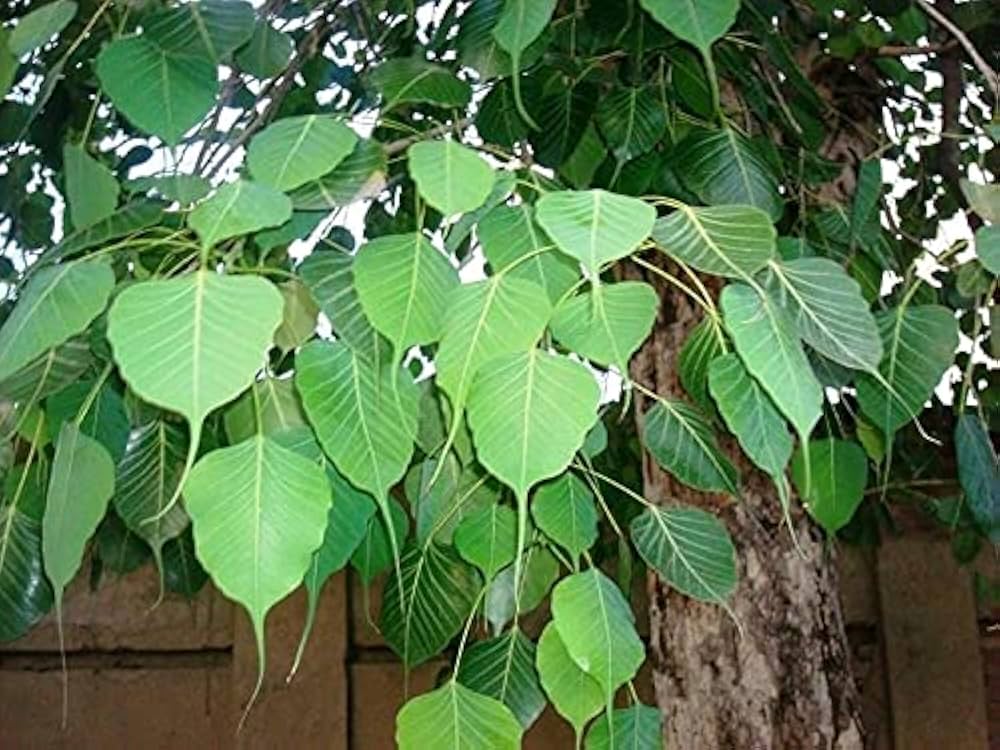
Medicinal Uses
- Wound: 50 gram of peepal stem
bark is boiled in 400 ml water till it
reduces to 100 ml. This lukewarm
decoction is used to wash the
wounds .This is helpful in infected
as well as non infected wounds
and it facilitates quick healing.
The root bark fine powder of
Asvattha is used for dusting over
the oozing skin lesions to stop
secretion.
- Mouth ulcer: 5-6 tender shoots
paste of Asvattha is retained
in the mouth and chewing for
5-10 minutes is helps to relieve
stomatitis. - Hyper Pigmentation: Early morning
fresh latex of Asvattha is collected
and is applied over the skin lesions.
This relieves hyper pigmentation
as well as discoloration of the
face. - Leucorrhoea: 2 ml of fresh latex
is added to 100ml of milk and
taken early in the morning in
empty stomach. This pacifies
long persisting non specific
leucorrhoea by 20-30 days
medication. - Colic: Internal administration of
50ml decoction of root bark of
Asvatta (10gms of bark powder
is boiled in 200ml of water till it
reduced to 50ml) added with salt
and jaggery twice daily, alleviates
severe colic.
Vernacular names
Assamese : Ahant
Bengali : Asvattha, Ashud, Ashvattha
English : Pipal tree
Gujrati : Piplo, Jari, Piparo, Pipalo
Hindi : Pipala, Pipal
Kannada : Arlo, Ranji, Basri, Ashvatthanara,
Ashwatha, Aralimara, Aralegida,
Ashvathamara, Basari, Ashvattha
Kashmiri : Bad
Malayalam : Arayal
Marathi : Pipal, Pimpal, Pippal
Oriya : Aswatha
Punjabi : Pipal, Pippal
Tamil : Ashwarthan, Arasamaram,
Arasan, Arasu, Arara
Telugu : Ravichettu
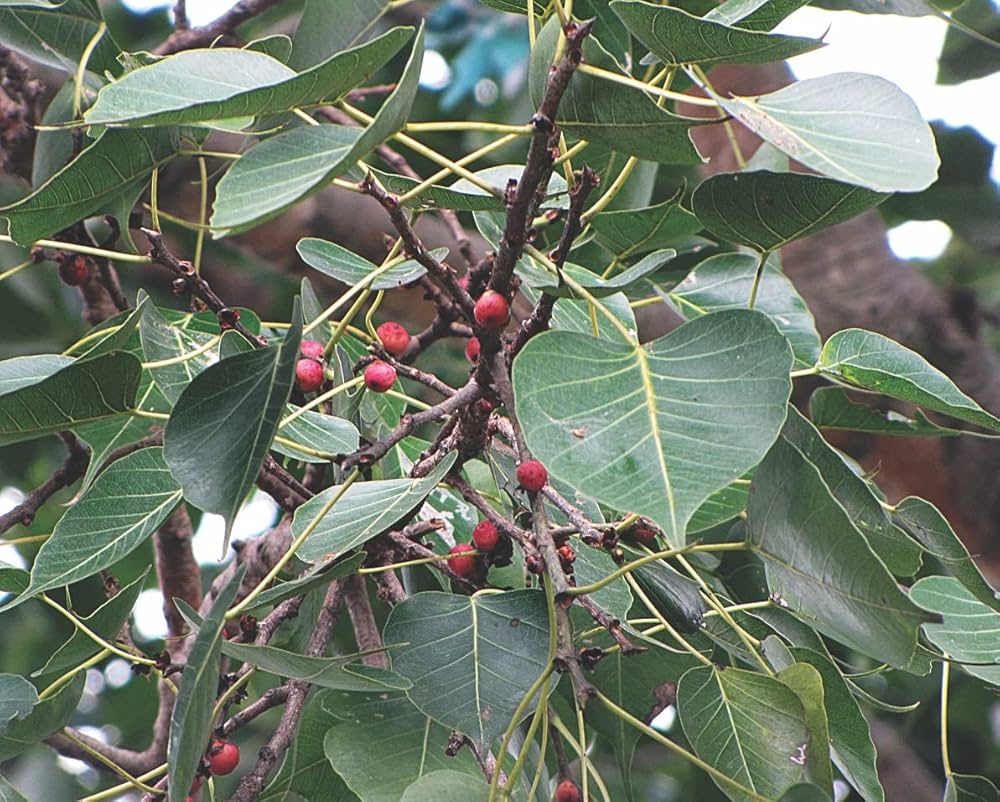
Asvattha (अश्वत्थ) is the Sanskrit name for the sacred fig tree (Ficus religiosa), known as the Peepal in India, holding deep spiritual significance in Hinduism, Buddhism, and Jainism as a symbol of the cosmic tree, knowledge, enlightenment, and the divine connection between heaven and earth, with its roots often symbolizing the divine (Brahman) and branches the material world. It’s revered as the abode of gods, associated with fertility, healing, and prosperity, and features prominently in Puranas, Upanishads, and daily rituals, sometimes even representing the human body or nervous system in esoteric traditions
.
Key Meanings & Symbolism:
- Sacred Tree: The holy fig, revered across Indian religions.
- Cosmic Tree: Represents the eternal structure of the universe, connecting spiritual and material realms, with roots above and branches below.
- Divine Manifestation: Considered a form of the Trimurti (Brahma, Vishnu, Shiva) in some texts, and the abode of deities.
- Knowledge & Enlightenment: Associated with wisdom and spiritual growth, similar to the Bodhi Tree where Buddha attained enlightenment.
- Human Body: Symbolically linked to the nervous system, with roots in the brain and branches throughout the body.
Cultural Significance:
- Rituals: Used in fertility rites, for gaining merit, curing diseases, and averting evil.
- Art & Literature: Extensively depicted in ancient Indian art, sculpture, and sacred texts like the Bhagavad Gita.
Modern Usage:
- Brand Name: Also used for modern products, such as online plant shops or incense (agarbatti).
