

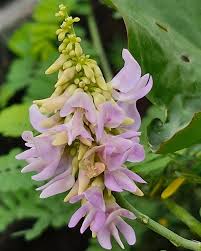

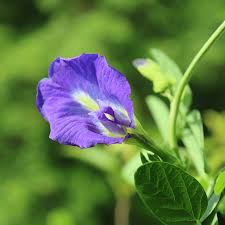
Clitoria ternatea,
Fabaceae
Medicinal Uses
- Leucoderma: The leaves paste
of aparajita applied thickly on
the vitiligo patches and expose
to sunlight. It has to continue for
minimum 1 month to stimulate
melanocytes.
- Filarial swelling: 5gms of
aparajita root paste should be
given internally twice daily in
filariasis to relieve the swelling. - Memory Enhancer: The fresh root
paste of aparajita should be given
in a dose of 1-3 grams with ghee
twice daily for increasing memory
and intelligence. - Menorrhagia: 1 gram of aparajita
flowers powder should be given
thrice daily with honey for
bleeding disorders of uterus. - Conjunctivitis: The flowers of
aparajita are pounded with
cow milk and applied over the
closed eyes. It alleviates the
conjunctivitis. - Toothache: Aparajita root with
black pepper should be kept in
mouth to pecify the toothache. - Wound: Fine leaves paste of
aparajita should be applied over
the wound is beneficial as it has
antifungal and anti bacterial
properties greatly reduce the
infection and heals the wound
very fast.
Vernacular names
Assamese : Aparajita
Bengali : Aparajita
English : Clitoria
Gujrati : Gokarni
Hindi : Aparajita
Kannada : Girikarnika Balli, Girikarnika
Malayalam : Shankhapushapam
Marathi : Gokarna, Aparajita
Oriya : Aparajita
Punjabi : Koyal
Tamil : Kakkanam
Telugu : Dintena
Uses & Benefits:
- Herbal Tea: Flowers brew into a stunning blue tea, known for calming effects, stress relief, and antioxidant properties.
- Ayurveda: Used for skin/hair care, digestive issues, and as an expectorant; also noted for its tranquilizing effects.
- Natural Colorant: Flowers provide natural blue/purple coloring for foods and drinks.
- Spiritual/Cultural: Planted for positivity, offered to deities like Vishnu and Durga in India.
- Gardening: Attracts pollinators and adds beauty to gardens.
Growing Tips:
- Light: Thrives in full sun (4-6 hours).
- Soil: Well-draining soil is essential; use a pot with drainage holes.
- Watering: Water thoroughly but allow soil to dry between waterings.
- Fertilizer: Use compost (vermicompost/cow dung) periodically; avoid high-nitrogen fertilizers.
